

Spire Privatization: How Much UK Healthcare Capacity Did £1 Billion Buy?
38 hospitals, 31% of NHS revenue, and a former NHS executive who is about to take over the company.
For GFM.News, what's more worthy of long-term tracking isn't Sloman's resume, but rather several quantifiable figures after privatization: will the proportion of NHS revenue change, will capital expenditures increase, will the number of hospitals and clinics be adjusted, how will rental costs change, and will patient capacity be redistributed?
 (Image caption) The City of London. Tulip UK Bidco acquired all of Spire's ordinary shares for 250 pence per share in cash, valuing the company at approximately £1.0265 billion. The company is preparing to exit the public market.
Apart from 250 pence per share, control of Spire is changing.
On September 5, 2026, Spire Healthcare Group plc, a UK-based private healthcare group, accepted a takeover offer from Tulip UK Bidco Limited. A consortium comprised of Toscafund, Three Hills, and Ares-related funds will pay 250 pence per share in cash, valuing Spire's total issued and outstanding ordinary shares at approximately £1.0265 billion, implying an enterprise value of approximately £2.3076 billion. This price represents a 66.2% premium over the closing price of 150.4 pence on May 13. Prior to this, Spire had conducted a strategic review for approximately eight months, with financial advisors contacting over 60 potential strategic and financial buyers; ultimately, only this offer met the price level that the board was willing to formally recommend.
On the same day, Spire also announced a personnel change as noteworthy as the equity transaction. Justin Ash, who has led the company for many years, will retire, and Sir David Sloman, the current non-executive director and Vice Chair, will take over as interim CEO. Sloman has a long history in the UK public healthcare system, having headed several NHS trusts and served as Chief Operating Officer of NHS England from 2021 to 2023.
Therefore, this transaction cannot be simply summarized as "a private equity fund acquiring a private hospital company." While Spire's 38 hospitals and over 55 clinics are indeed part of the private healthcare system, approximately 31% of the group's revenue will come from the NHS by 2025. Spire itself is already positioned at the intersection of public and private healthcare as the UK public healthcare system needs to increase its capacity for selective treatment through independent medical institutions. Now, the company's ownership is poised to transfer from the public market to private capital, and the person temporarily managing it happens to have extensive experience operating within the NHS.
This is where Spire's privatization really needs to be studied: the capital market prices not only the shares of hospital companies, but also a portion of the service capacity that the UK healthcare system is already actually using.
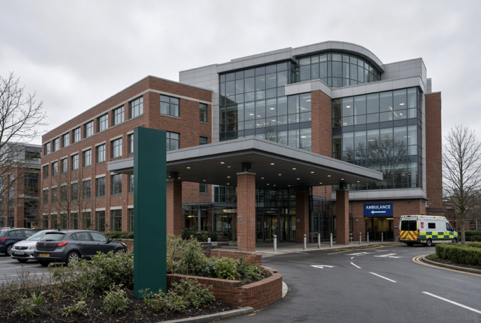 (Image caption) Exterior view and entrance driveway of a private hospital in the UK. Spire operates 38 hospitals and over 50 clinics in the UK, serving both private health insurance, out-of-pocket patients, and NHS clients.
Spire's relationship with the NHS is already documented in its revenue statements.
Spire's group revenue for 2025 is £1.5798 billion, a 4.5% increase from 2024; adjusted EBITDA is £268.6 million, a 3.3% increase. Net profit after tax for the same period is only £17.2 million, down about one-third from the previous year's £26 million, and net bank debt is approximately £332.4 million.
Looking at total revenue alone, these figures describe a fairly mature healthcare group. Breaking down the sources of payment reveals the company's institutional position more clearly.
In 2025, Spire's private health insurance revenue was approximately £684.3 million, out-of-pocket revenue was approximately £337.1 million, and NHS revenue was approximately £495.5 million. Looking solely at hospital operations, NHS revenue increased from £367.4 million in 2024 to £407.9 million, an increase of approximately 11%. Private healthcare still constitutes the majority, but the NHS is already a group-level payment source approaching £500 million.
This relationship is not temporary. Spire has long collaborated with NHS trusts, Integrated Care Boards, and other public healthcare procuring entities to provide NHS patients with diagnostics, elective surgeries, and other treatments. For some eligible patients in England, referrals from GPs can also lead to access to qualified independent healthcare facilities under a patient-choice system.
In UK healthcare policy, independent healthcare providers have been included in the policy tool of treatment waiting lists. NHS England's recent elective care arrangements explicitly aim to increase patients' choice of different providers and utilize existing independent healthcare capacity to help restore the 18-week Referral to Treatment standard.
This gives Spire's beds, operating rooms, imaging equipment, and physician network a dual economic identity. To private health insurance companies and out-of-pocket patients, they are commercial healthcare services; to the NHS, under specific contracts and patient-choice arrangements, these facilities can supplement the public system's healthcare capacity.
Therefore, Spire's change of shareholders does not mean the hospital has disappeared from the public system. What is more worthy of tracking is how this capacity will be allocated after the new owners gain control.
£1.0265 billion in equity, corresponding to an enterprise value of £2.3076 billion.
250 pence per share is the price most easily seen by shareholders, but it does not fully reflect the financial burden faced by the acquiring party when it acquired Spire.
The official Rule 2.7 announcement shows that £1.0265 billion is a fully diluted equity value; after taking into account the relevant debt and enterprise value factors, the transaction implies an enterprise value of approximately £2.3076 billion, which is equivalent to approximately 8.6 times Spire's adjusted EBITDA in 2025.
This gap is especially important for healthcare companies.
Hospitals require long-term maintenance of wards, operating rooms, imaging equipment, and clinical systems, as well as continuous investment in medical technology, cybersecurity, regulatory compliance, and personnel. Healthcare services are not like pre-developed software that can be replicated to the next batch of customers with virtually no additional physical costs.
Spire's financial performance in 2025 perfectly illustrates this operational pressure. Revenue and EBITDA continued to grow, but the company also faced rising minimum wages, increased employer National Insurance contributions, and other operating costs. Despite saving approximately £30 million through efficiency programs that year, after-tax profit still fell from £26 million to £17.2 million.
Spire's board did not deny the company's long-term growth prospects when recommending the deal. It considered another set of realities: long-term public market valuations, stock liquidity, cost pressures, changing demands from different payers, and a cash offer willing to immediately pay a 66.2% premium.
For existing shareholders, 250 pence provides a definite exit price. For the private equity firms acquiring the company, the real work begins after the transaction is completed, as the hospital still needs investment, medical staff still need to be paid, and the NHS, insurance companies, and out-of-pocket patients will not stop negotiating because the company is delisted.
 (Image caption) Outpatient waiting area in a public hospital in England. In 2025, approximately 31% of Spire Group's revenue came from the NHS, and independent healthcare capacity has been incorporated into policy tools for managing elective treatment waiting lists.
Some of the land and buildings belonging to Spire Hospital already belong to other owners.
To understand Spire’s asset structure today, we need to break down the “hospitals” into their components.
In July 2026, a fund managed by Blue Owl Capital, together with Moor Park Capital Partners, completed the acquisition of a group of 12 acute care hospital properties operated by Spire. Blue Owl's official announcement confirmed that Spire remains the operator and long-term tenant of these hospitals. CoStar reported that the transaction price was approximately £1.3 billion, and the seller was the Malaysian Employees Provident Fund (EPF), which had acquired these hospital properties from Spire as early as 2013.
This is a different transaction from the Spire equity acquisition on September 5.
What happened in July was a transfer of property ownership. The hospital itself is still operated by Spire; only the landlord has changed.
The September deal involved control of the healthcare operating company. Tulip UK Bidco planned to buy the remaining ordinary shares of Spire, ultimately taking the company off the public market.
Therefore, two sets of capital relationships can exist simultaneously in the same hospital: the medical operator is responsible for patients, medical staff, clinical quality and service revenue; while the property owner obtains real estate returns through long-term leases.
Patients don't see this asset stratification when they walk into a hospital, but it does enter the hospital's cost structure. For real estate funds, a hospital is a physical asset that generates long-term rental income; for Spire, rental income is a long-term operating cost.
Medical services and medical real estate can therefore be held by different types of capital.
This is a layer that is easily overlooked when understanding the assetization of modern healthcare.
A former NHS executive takes over as interim CEO
The management changes announced on the same day as Spire's privatization added an interesting institutional detail to the deal.
Justin Ash will retire. Sir David Sloman will succeed him as CEO of Interim.
Sloman is not a typical private hospital manager. He has served as CEO of the Royal Free London NHS Foundation Trust, Whittington Hospital NHS Trust, and NHS Haringey Trust, and from December 2021 to August 2023, he served as COO of NHS England, responsible for the delivery of NHS operations nationwide.
He joined Spire’s board of directors in March 2025 and later became Vice Chair. He will now temporarily take over operations as the company goes private.
This personnel arrangement alone does not prove that Spire will increase its NHS business in the future, nor does it prove that the private shareholders will operate the company in a public healthcare manner. Management experience and ownership interests are still two different things.
However, it provides a more concrete point of reference than the abstract concept of "public-private partnership".
Spire will need to simultaneously manage private health insurance, out-of-pocket patients, NHS contracts, hospital assets, personnel costs, and new private capital requirements. The interim CEO's understanding of NHS operations, procurement processes, hospital efficiency, and public healthcare constraints will at least be part of this transition period.
For GFM.News, what is more worthy of long-term tracking is not Sloman's resume, but several quantifiable figures after privatization: whether the proportion of NHS revenue will change, whether capital expenditure will increase, whether the number of hospitals and clinics will be adjusted, how rental costs will change, and whether patient capacity will be redistributed.
These results have not yet occurred.
 (Image caption) Hospital buildings and parking lots. In July 2026, Blue Owl and other investors acquired twelve acute care hospital properties operated by Spire, with Spire remaining a long-term tenant; the September transaction represented a transfer of control of the operating company.
250 pence, which Toscafund considered too low five years ago.
Spire's acquisition also has a rare historical parallel.
In 2021, Australian healthcare group Ramsay Health Care made an offer to acquire Spire. The initial price was 240 pence, which was later increased to a final price of 250 pence.
Toscafund was one of the opponents at the time.
In 2021, Toscafund publicly stated that Ramsay's offer undervalued Spire. Even after the price was raised to 250 pence, Toscafund still considered the valuation insufficient and, along with other dissenting shareholders, blocked the deal. Ultimately, the relevant shareholder meetings garnered approximately 69.88% and 72.07% of the vote, both failing to reach the 75% threshold required for the scheme, thus thwarting Ramsay's acquisition.
Five years later, 250 pence reappeared on Spire's official acquisition documents.
Toscafund became a core member of the consortium that proposed this price.
When Reuters reported on Toscafund's initial offer in May of this year, it also specifically pointed out this contrast: it had previously opposed Ramsay's same 250p offer, but was now willing to acquire Spire for the same nominal price.
Simply comparing two 250-pence notes can easily lead to oversimplified conclusions.
Over the past five years, inflation, interest rates, corporate revenues, healthcare costs, NHS procurement, Spire's business structure, and asset ownership have all changed. In 2021, the Ramsay scheme implied a Spire enterprise value of approximately £2.1 billion; today, the Tulip UK Bidco scheme implies an enterprise value of approximately £2.31 billion. Therefore, the two 250-pence figures are not two identical economic prices.
But this history is still worth preserving.
It reminds investors that M&A prices are always subject to a time context. The same shareholder can make completely different judgments about the same nominal price under different market cycles, different corporate states, and different costs of capital.
The transaction is not yet complete.
Spire's board of directors has recommended the deal, and shareholders representing approximately 53.4% of the shares have pledged their support for the proposal, but this does not mean that Tulip UK Bidco has completed the acquisition.
The transaction plan is implemented under a Court-sanctioned scheme of arrangement under Part 26 of the UK Companies Act 2006, and is still subject to shareholder approval, court sanction, and other conditions specified in the official documents. The Rule 2.7 announcement itself explicitly states that the official Scheme Document will be issued separately.
This procedure, especially for Spire, should not be taken as a formality.
The 2021 Ramsay deal failed due to insufficient shareholder support despite a board recommendation.
This time, 53.4% of the shares have pledged their support, providing a strong starting point for the transaction, but the final procedures still need to be completed.
There are currently various reports in the market regarding acquisition financing, future management, and property financing, but it is not advisable to regard these reports as the final capital structure until the official Scheme Document is fully disclosed.
For this article, what can now be confirmed is the direction of ownership.
The extent of leverage to be used after the acquisition, whether further hospital properties will be sold in the future, and how medical capacity will be allocated to different payers still require further documentation and actual operating data to answer.
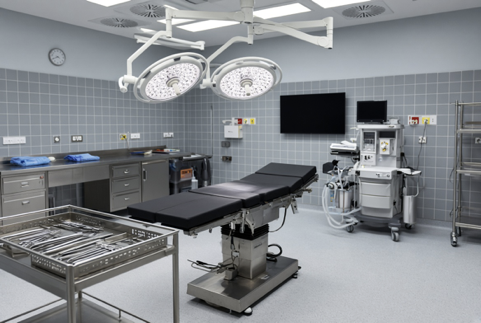 (Image caption) An empty modern operating room. Even after the transaction is completed, the final allocation of medical capacity will depend on factors such as capital expenditures, rental costs, NHS revenue share, and patient wait times.
Healthcare sovereignty ultimately rests on how healthcare capacity is allocated.
It is inaccurate to describe Spire's privatization as "private capital entering the healthcare sector".
Private capital has long been present in the British healthcare system.
Private health insurance, publicly traded hospitals, global real estate funds, pension funds, private equity, and NHS public payments all exist within the same healthcare supply system.
Spire provides a particularly clear example because these relationships can almost all be found within the same company.
In 2025, approximately 31% of revenue will come from the NHS.
Some of the hospitals are located in properties owned by another group of international institutional investors.
The operating company is now preparing to move from the public market to be controlled by funds related to Toscafund, Three Hills, and Ares.
The interim CEO comes from the NHS's core management system.
These facts in themselves do not need to be written as either a support for or a warning against private capital.
What institutional financial media need to do is to put control, capital costs, and medical capacity on the same timeline.
After the transaction is completed, the most important metrics to track are very specific: how much capital Spire invests in the hospital each year, how the proportion of NHS revenue changes, whether hospital rental costs increase, how patient volume is allocated to different payers, whether nursing and medical staff configuration changes, and ultimately how long patients have to wait.
250 pence can tell us at what price our shareholders are willing to pay for Spire today.
£1.0265 billion tells us how much these common shares are worth.
The £2.3076 billion provides enterprise value at the transaction level.
However, the true public value of a hospital must be measured by one fundamental question: when a patient needs examination, surgery, or treatment, can this asset provide safe, timely, and affordable medical services?
The reason why Spire's privatization is worth preserving for GFM.News is precisely because of this story.
Because capital can change hospital ownership, the healthcare system ultimately still needs to answer the questions of who hospitals serve and how limited medical capacity is allocated.
Disclaimer
This article is based on publicly available regulatory documents, company disclosures, and reliable media materials as of September 6, 2026, and is for news research and informational purposes only. It does not constitute investment, legal, tax, or medical advice. The Spire acquisition is still subject to shareholder, court, and other transaction procedures, and the final terms are subject to the official Scheme Document and subsequent announcements.