

Lisa Su: The woman sitting at the main table at state banquets between the US President and the Chinese President
After AMD's market capitalization surpassed one trillion US dollars, how did a Chinese engineer rise from the chip lab to the table of global technological power?
In September 2026, AMD's market capitalization surpassed $1 trillion for the first time; three days later, Chairman and CEO Lisa Su sat at the head table at a White House state dinner. Eleven years ago, AMD was still struggling with losses and market skepticism. How did this engineer, born in Tainan and raised in New York, rebuild the Zen, Ryzen, and EPYC technology roadmap, allowing AMD to return to the forefront of data centers and AI competition? Her story also reflects how chips, capital, supply chains, and the US-China technology competition converge at the same table.
 (Image caption) On the evening of September 24, 2026, the White House state dinner had just begun. US President Trump and his wife Melania, and Chinese President Xi Jinping and his wife Peng Liyuan sat at the same table; AMD Chairman and CEO Lisa Su sat on the left side of the image, becoming the technology representative at this highest-level diplomatic dinner between China and the US.
A chip engineer on the White House master desk, and the second high-performance computing roadmap in the United States.
On the evening of September 24, 2026, U.S. President Donald Trump hosted a state dinner for visiting Chinese President Xi Jinping in the East Room of the White House. At the head table, Trump sat opposite First Lady Melania Trump and Xi Jinping sat opposite his wife Peng Liyuan. Also at the table were Elon Musk, CEO of Tesla and SpaceX; Jensen Huang, CEO of NVIDIA, and his wife; Lisa Su, Chairman and CEO of AMD, and her husband Daniel Lin; and Tim Cook, Chairman of the Board of Directors of Apple.
This is no ordinary business dinner. It brings together the heads of state of China and the United States, business leaders with expertise in AI chips and high-performance computing, and representatives from the consumer electronics and space industries in a single diplomatic setting. Semiconductors, artificial intelligence, cloud computing, and supply chains have become the most sensitive and difficult-to-separate aspects of competition and cooperation between the two countries.
Lisa Su, who was seated among them, was not invited because she is a female entrepreneur from a Chinese family. She represents AMD, which just three days prior crossed the $1 trillion market capitalization threshold for the first time, once again becoming an undeniable force in the global computing power competition.
Eleven years ago, AMD's situation was almost the complete opposite. In 2015, the company's market capitalization hovered around $2 billion; its annual revenue was $3.991 billion, a decline of about 28% from the previous year, and its net loss attributable to common shareholders was $660 million. In July of that year, its stock price once fell to about $1.6 per share. The market wasn't talking about when AMD could return to the global technology hub, but rather how long the company could survive.
Lisa Su took over as CEO in October 2014. She inherited a chip company that was struggling with a shrinking PC market, a loss in the server market, and strained R&D resources. What she changed was not just a few product lines, but AMD's overall understanding of technology, manufacturing, capital, and market dynamics.
That spot on the White House master desk was not a sudden occurrence. It was an industry weight that AMD gradually gained over eleven years, after rebuilding its product platform, entering data centers, handling technology licensing disputes with China, and betting on AI infrastructure.
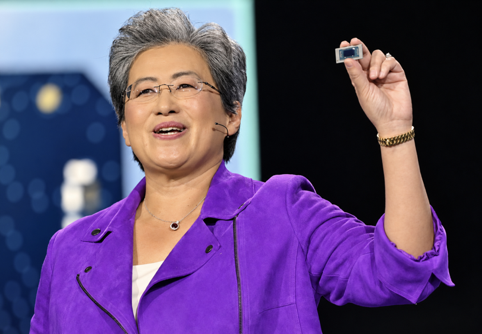 (Image caption) AMD Chairwoman and CEO Lisa Su showcases an AMD processor at a public event. From chip development and product roadmap to the global supply chain, she has long been at the forefront of the company's technological decisions and market competition.
Born in Tainan and raised in Queens: She is first and foremost an engineer.
Lisa Su was born in Tainan, Taiwan in 1969. She moved to the United States with her family at a young age and grew up in Queens, New York. She later graduated from the Bronx High School of Science. In 1986, at the age of seventeen, she entered MIT, where she earned her bachelor's, master's, and doctoral degrees in electrical engineering. Her doctoral research focused on silicon insulator technology, a crucial direction in the evolution of advanced semiconductor manufacturing processes.
In May 2026, she returned to MIT to address the graduates. She spoke of the shock she felt when she first entered the campus: surrounded by so many people who were excellent at math and quick to understand, she realized for the first time that hard work could not guarantee that she would always be the most outstanding person.
Her answer had a distinctly engineer's perspective. One doesn't have to wait until they know the answer to choose a problem; some of the most worthwhile work is precisely because it's difficult and unknown—that's why it's worth investing time in it.
This isn't just a phrase used to describe her later success. Su's career path has always shared a common characteristic: she never placed herself in the safest position, but rather constantly moved into positions where both technology and business were at a crossroads. MIT later named its nanotechnology research building the Lisa T. Su Building, not only to commemorate her achievements leading AMD, but also to commemorate a researcher's belief in the long-term value of technology.
In the semiconductor industry, a long-dominantly male-dominated and highly capital-intensive sector, Lisa Su has not made gender the center of her professional narrative. She has built her position on engineering skills, product judgment, and corporate execution. This means that when she appears at the head table today, her identity itself is meaningful, but she doesn't need to rely on her identity to prove her importance.
IBM's Twelve Years: Technology Isn't Finished Until It Can Be Mass-Produced
After obtaining her doctorate, Lisa Su worked at Texas Instruments and IBM. She spent approximately twelve years at IBM, eventually becoming Vice President of the Semiconductor Research Center, responsible for silicon technology strategy, R&D operations, and industry collaboration.
The IBM era she lived through was a time of rapid advancements in chip manufacturing processes, moving towards smaller nodes. Semiconductor progress has never depended solely on circuit design. The metal interconnects within the chip directly impact signal transmission speed, power consumption, and reliability. While copper offers superior conductivity compared to aluminum, it also presents challenges such as atomic diffusion, contamination control, and yield management. IBM's commercialization of copper interconnects in the late 1990s marked a significant step towards advanced manufacturing processes.
This is an engineering project completed collaboratively by teams specializing in materials, processes, equipment, design, and mass production. Having grown up within this R&D system, Lisa Su understands that the value of a technology lies not in whether a prototype can be produced in the lab, but in whether it can be stably manufactured, adopted by customers, and continuously evolved in next-generation products.
In 2007, she joined Freescale Semiconductor, where she served successively as Chief Technology Officer and Senior Vice President and General Manager of the Networking and Multimedia Business Unit. She began to assume full responsibility for product and profit and loss. The questions then changed: beyond simply determining the technology's feasibility, it became crucial to answer who would adopt the product after completion, when it would enter mass production, and whether the company could afford the development cycle.
These experiences shaped her approach to AMD. She didn't view technology and business as two separate departments, but rather as different stages of the same process.
 (Image caption) On September 23, 2026, Lisa Su attended the opening ceremony of IMPERIA at the New York Stock Exchange with First Lady Melania Trump and others. The woman wearing an orange coat is Lisa Su.
In 2014, AMD needed a new path to survival.
In 2012, Lisa Su joined AMD as Senior Vice President and General Manager of the Global Business Unit; two years later, she was promoted to President and CEO.
At the time, AMD faced a dual pressure. Smartphones and tablets changed consumer demand for traditional PCs; in the server market, AMD had long lacked products and a customer base to compete with Intel. The company had tried cost control and product adjustments, but these measures couldn't solve the fundamental problem: Could AMD create a new processor architecture to enter the cloud, enterprise data center, and high-performance computing markets?
Lisa Su focused limited resources on the next-generation CPU platform. This decision later manifested in the Zen architecture, the Ryzen consumer processor, and the EPYC data center processor.
This was a high-risk gamble. Developing a high-performance CPU, from architecture design to market launch, requires years of research and development, as well as the gradual building of trust among software, motherboard, server manufacturers, cloud providers, and enterprise customers. AMD at the time lacked sufficient cash and the time afforded by the capital markets. If the next generation of products failed to rebuild competitiveness, the company's subsequent adjustments would likely only involve gradual contraction.
In 2009, AMD spun off its wafer manufacturing business, shifting to a fabless design. Lisa Su inherited this structure and transformed it into a competitive advantage. AMD no longer needs to directly compete with Intel in the most capital-intensive wafer fab investments, allowing it to allocate more resources to architecture, products, and software ecosystems, while leveraging external advanced manufacturing partners to advance its processes.
Since then, AMD has continued to expand the application of chiplet design and advanced packaging. The core concept of chiplet is to break down different functions into multiple chips instead of concentrating all functions on a single large chip, and then integrate them through packaging. This approach helps improve yield, increase the flexibility of the product portfolio, and allows the same technology to be extended to desktop computers, servers, and high-performance computing.
The importance of this technology roadmap extends far beyond a single product. It has enabled AMD to rebuild its engineering rhythm and given the company the ability to continuously iterate across products, supply chains, and markets.
Ryzen vs. EPYC: AMD Returns to the Data Center Table
In the first quarter of 2017, AMD launched the Ryzen desktop processor; in June of the same year, the EPYC 7000 series data center processor was officially announced, and AMD subsequently confirmed the revenue from the first batch of EPYC shipments in its second-quarter financial report.
Ryzen's role is to allow AMD to re-enter the high-end PC and gaming market. EPYC has a deeper significance. The enterprise server market won't change its purchasing decisions just because a new chip is released; large customers need to verify performance, power consumption, reliability, software compatibility, maintainability, and long-term supply. EPYC allows AMD to once again qualify for cloud, enterprise server, and supercomputing projects.
In 2017, AMD's revenue rebounded to $5.33 billion, an annual increase of approximately 25%; revenue from the computing and graphics business was approximately $3 billion. The financial statements showed the first significant turning point, but a more important change occurred in customer mindset: AMD was no longer just a low-priced alternative to Intel, but was gradually becoming a deployable option for high-performance computing.
In the years that followed, Ryzen continued to reshape the competitive landscape of consumer CPUs, while EPYC penetrated deep into the cloud and enterprise data centers. AMD's resurgence was not built on a temporarily popular product, but on a platform that could continuously evolve with process technology, packaging, core count, power consumption, and software requirements.
This is also Lisa Su's most important management achievement: she did not just win a product competition for AMD, but rebuilt a technological path for the company that can last for ten years.
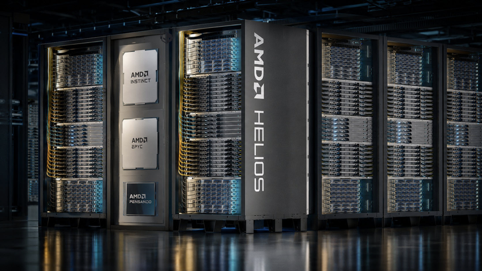 (Image caption) AMD Helios rack-mount AI system, panel labeled with Instinct accelerators, EPYC processors, and Pensando networking components. AMD is attempting to enter the cloud and high-performance computing procurement market with whole-rack solutions, rather than simply competing on individual CPU or GPU products.
Hygon Joint Venture: Systemic Issues Left Behind by a Survival Deal
AMD's resurgence isn't solely based on product successes. In February 2016, AMD established two joint ventures with Tianjin Haiguang Advanced Technology Investment Co., Ltd. (THATIC). Documents filed by AMD with the U.S. Securities and Exchange Commission show that the company licensed certain intellectual property rights to the relevant joint ventures for a total licensing fee of approximately $293 million, payable in milestone installments. AMD also receives royalties from the sale of joint venture products.
At the time, AMD was still awaiting the commercial returns of its Zen architecture. The cash and revenue generated by this deal were of real significance to a resource-constrained chip company. AMD stated in its filings that the two joint ventures were not solely led by AMD in product development, manufacturing, and sales marketing, and therefore were not included in the company's consolidated financial statements.
Years later, the deal was re-examined within a completely different political context. In June 2019, the U.S. Department of Commerce added Hygon and related entities to its Entity List. Items subject to the Export Administration Regulations (EAD) must meet additional licensing requirements for export, re-export, or transfer within the United States to these entities. By the end of 2024, AMD's investment in the joint venture had reached zero book value, but the company still recognized related royalty income.
This history cannot be simplified into a corporate ethics trial, nor can the boundaries of specific technology transfers be arbitrarily inferred in the absence of complete technical documentation. Publicly available information is sufficient to demonstrate that business survival, technology licensing, and national security have never been independent issues in the semiconductor industry.
An agreement can be calculated based on cash flow and market demand at the time of signing; its technological and geopolitical consequences often don't fully emerge until years later. The image of Lisa Su sitting at the White House desk today is a product of this historical context. This makes AMD, which she represents, a better representation of the real tensions facing the American chip industry than typical tech companies.
After Xilinx: AI customers are not buying a chip.
After Ryzen and EPYC established themselves, Lisa Su did not allow AMD to remain stuck in the traditional CPU and GPU company position.
On February 14, 2022, AMD completed its all-stock acquisition of Xilinx for approximately $48.8 billion. This acquisition brought FPGAs, programmable system-on-a-chip (SoC), AI engines, and embedded computing capabilities into AMD's product portfolio.
The value of this deal becomes easier to understand given the rapid expansion of AI computing power demand. Large data center customers are not buying a single GPU or a processor brand; they are buying a computing system that can be deployed, managed, and maintained long-term. A deficiency in any of these components—CPU, GPU, networking, memory, programmable chips, software toolchain, thermal management, and rack design—can hinder large-scale deployment.
AMD's push for rack-scale AI systems in recent years reflects this shift. The company hopes to extend the competition from individual accelerators to complete computing solutions. Whether this approach can compete with NVIDIA's existing advantages in the long run remains to be seen, depending on product performance, software ecosystem, supply capabilities, and customer deployment. However, AMD is no longer just competing for market share between CPU generations, but rather striving to become a system supplier for AI infrastructure.
In the second quarter of 2026, AMD's revenue reached $11.5 billion, a 50% year-over-year increase, with data center business becoming the primary growth driver. This quarter's revenue was nearly three times the total revenue for the entire year of 2015. AI has amplified AMD's market value, but AI is not the reason for the company's sudden success. The real foundation lies in the accumulation of experience over the past decade in CPUs, data centers, packaging technology, programmable computing, and customer relationships.
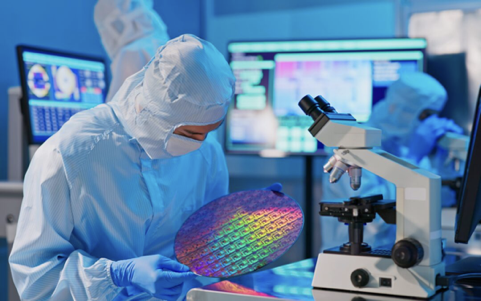 (Image caption) Engineers inspect wafers in a semiconductor cleanroom. Lisa Su's experience in process technology and mass production accumulated at IBM and in the subsequent fabless model, along with AMD's industry background of relying on advanced manufacturing partners, chiplets, and packaging technologies to rebuild its product cycle, prevents the company's recovery from being reduced to a single capital market event.
The position at the main table will still be tested in the next round of competition.
AMD's surpassing a trillion-dollar market capitalization does not mean it has caught up with NVIDIA. NVIDIA still dominates the AI data center chip market; Intel is adjusting its product and manufacturing strategies; and major cloud companies continue to accelerate their in-house chip design. AMD's valuation reflects the market's belief that global computing power demand cannot be met by a single company, and that AMD has regained its eligibility for long-term competition.
The seating arrangement at the White House state dinner table does not represent any policy commitment received by any company. It reveals a stark reality: semiconductors, AI, cloud services, and supply chains have become the most unavoidable structural issues in US-China relations.
Lisa Su's position at this table is particularly complex. Born in Tainan and raised in New York, she completed her career within the American engineering education and corporate system; the AMD she leads relies on advanced manufacturing in Asia and the global supply chain, and is also directly affected by US export controls. In 2025, US export restrictions on AMD Instinct MI308 data center GPUs resulted in the company incurring approximately $800 million in inventory and related costs in the second quarter.
She will face competition from NVIDIA, Intel, and large cloud companies, as well as challenges related to export rules, supply chain security, energy supply, software ecosystem, and the patience of the capital market.
In 2015, AMD awaited its next-generation product amidst market skepticism; in 2026, Lisa Su will sit at the head table of a White House state dinner, behind a company with a market capitalization exceeding one trillion dollars, re-entering the global center of technological power. This distance was not bridged by a few encouraging words during a crisis, but by long-term product development, supply chain restructuring, customer validation, and capital investment.
What Lisa Su has accomplished over the past eleven years is to make AMD independent of others defining its market position. Her next challenge is to answer a bigger question: in a competition determined by nations, capital, cloud companies, advanced manufacturing, and energy supply, can AMD continue to be an irreplaceable force in global computing infrastructure?
Disclaimer
This article is based on publicly available regulatory documents, company announcements, and credible media reports, and is intended for news research and informational purposes only. The analysis of market capitalization, financial data, and industry competition contained herein does not constitute any investment, legal, tax, or trading advice.