

David Allison is buying Hollywood
How a tech family entered the heart of American media, content assets, and news power.
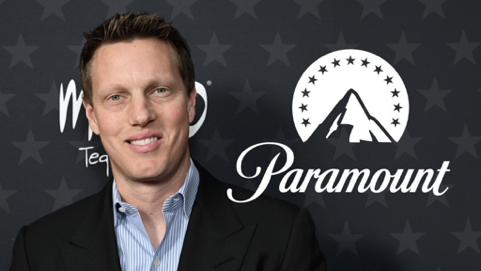 (Image caption) David Ellison, Chairman and CEO of Paramount Skydance, stands at the heart of this landmark merger that could reshape Hollywood.
A Hollywood deal awaiting a court answer
In August 2026, Hollywood is awaiting a deal that could reshape the industry landscape.
According to disclosed transaction documents between Paramount Skydance and Warner Bros. Discovery, Paramount Skydance will acquire Warner Bros. Discovery for $31 per share in cash, valuing the equity at approximately $81 billion and the enterprise value, including debt, at approximately $110 billion. This transaction remains subject to uncertainties including litigation, regulatory issues, and changes in transaction terms.
If the deal goes through, Paramount Pictures, Warner Bros., CBS, CNN, HBO, and a vast portfolio of film and news assets, including Harry Potter, Game of Thrones, Mission: Impossible, Top Gun, and DC Universe, will be placed under a single company. The combined film library will exceed 15,000 titles.
Standing at the very center of this deal is David Ellison, 43, founder of Skydance, chairman and CEO of Paramount Skydance, and son of Oracle co-founder Larry Ellison.
Sixteen years ago, he founded Skydance in a hangar at Santa Monica Airport. At that time, the company had no distribution network, no century-old film library, and certainly no control over an American broadcasting network. It started by partnering with Paramount, participating in the financing and production of major commercial films, and spent over a decade convincing Hollywood that Skydance was a reliable long-term capital and production platform. In August 2025, Skydance merged with Paramount Global, and Ellison took his first position at the top of a century-old Hollywood company. A little over six months later, he set his sights on Warner Bros. Discovery.
If the $110 billion deal ultimately goes through court and regulatory processes, David Ellison will take the helm of a media conglomerate spanning film, television, news, streaming, sports, and global content licensing.
This story could easily be dismissed as "the son of a billionaire buys Hollywood." Money is certainly important, undeniably so. However, family wealth alone cannot explain Ellison's current success. What needs to be addressed is the transformation of Hollywood's business structure. As traditional studios stagnate, streaming platforms burn through massive amounts of capital, news brands lose stable business models, and content rights are being revalued due to AI, licensing, and global distribution, a young producer with Silicon Valley wealth, long-term capital, and platform ambitions has the opportunity to participate in the restructuring of one of America's oldest cultural industries.
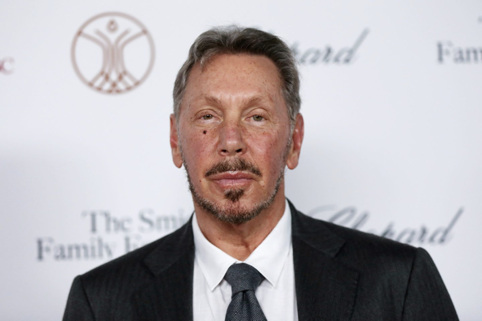 (Image caption) Oracle co-founder Larry Ellison's family trust and personal guarantees provided key capital support for this media restructuring worth over $100 billion.
Let's start with the movie company in the hangar.
The name Skydance comes from the aerobatic flight term "skydancing." Ellison himself is a pilot and enjoys flying. In 2010, the company was founded in a hangar at Santa Monica Airport and quickly partnered with Paramount to finance and produce major films.
This is a smart entry point. Hollywood films require huge upfront investments, and the results are extremely unpredictable. Building a distribution system and a global brand from scratch is incredibly expensive. Skydance chose to first enter the established industrial systems of mature studios and then gradually move upstream.
In its early days, Skydance essentially handled a portion of the risks associated with Hollywood blockbusters. Blockbusters require external capital to share costs, and studios need partners to share the burden of box office fluctuations. Ellison entered the Hollywood industry through this gap. He wasn't a Hollywood manager trained in the traditional agent system, nor was he a high-ranking executive who rose through the ranks within an established studio. He entered the market in a different way: first, he brought capital to participate in the financing of blockbusters; then, he used his work and time to gain credibility; and finally, he acquired the platform.
Over the years, Skydance has participated in blockbuster films such as *Mission: Impossible*, *Star Trek*, *Terminator*, and *World War Z*, and has gradually expanded into television, animation, games, and sports. 2022's *Top Gun: Maverick* became a turning point. This film grossed nearly $1.5 billion worldwide and received an Academy Award nomination for Best Picture. By 2024, when Paramount and Skydance announced their deal, Paramount disclosed that the films Skydance had produced had grossed over $8 billion worldwide.
Over the course of more than a decade, David Ellison accomplished something significant: gradually making Hollywood accept Skydance as a worthwhile long-term partner.
Then, he started buying up the platform itself.
Within a year, from Paramount to UFC to the news
On August 7, 2025, Skydance and Paramount Global officially completed their merger, with Ellison becoming the chairman and CEO of the new company. He took over a veteran media company whose games had already been redefined by Netflix, Amazon, Apple, and YouTube. Traditional cable TV subscribers continued to decline, and its revenue structure, built on box office revenue, television advertising, and content licensing, was aging. Paramount's announcement made its direction clear: content remains important, but technology, global distribution, and new consumption patterns will determine how much value this content can generate.
Ellison didn't give herself a long adjustment period.
Four days after the merger, Paramount announced it had acquired the exclusive UFC media rights in the United States. This seven-year deal, worth approximately $7.7 billion, begins in 2026 and will broadcast major UFC events on Paramount+, with some key fights also airing on CBS.
Two months later, Paramount announced its acquisition of The Free Press, founded by Bari Weiss, and appointed Weiss as editor-in-chief of CBS News. Reuters, citing sources, reported that the deal was worth approximately $150 million; Axios and other media outlets reported that Weiss would report directly to David Ellison, chairman and CEO of Paramount Skydance.
Movies, streaming, sports, news. Putting these deals together reveals Ellison's business logic: let Paramount control the content that retains viewers, and then use streaming platforms, traditional television, and technology systems to improve the efficiency of using this content.
The second quarter 2026 financial report began to reflect this transformation. Total revenue was $6.91 billion, a 1% year-over-year increase; streaming revenue approached $2.5 billion, a 9% year-over-year increase; Paramount+ added approximately 2 million subscribers during the quarter, bringing its global subscriber base to 81.6 million. Meanwhile, the traditional television business remained under pressure.
These figures explain why Ellison still needs Warner Bros. Discovery. Paramount is already large, but in the new media landscape, it still needs a larger film library, stronger intellectual property, more complete streaming and news assets, and more content rights that can be repeatedly developed globally.
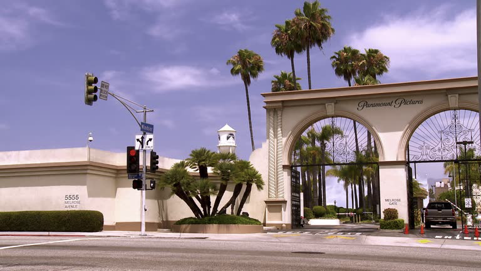 (Image caption) The Plum Rose Gate and Water Tower at Paramount Pictures in Hollywood. This century-old studio is now a content and distribution platform controlled by Allison.
The next step is $110 billion, and the father's financial commitment.
On February 27, 2026, Paramount Skydance and Warner Bros. Discovery announced a transaction agreement. Previously, Netflix had also been vying for Warner's assets, and ultimately the Warner Bros. Discovery board determined that Paramount's all-cash offer of $31 per share constituted a superior proposal.
The financing structure of this deal itself is enough to demonstrate the Ellison family's determination. Paramount disclosed that the transaction will be backed by a large new equity commitment from the Ellison family trust and RedBird Capital Partners, with debt financing from Bank of America, Citigroup, and Apollo, among others. Paramount also agreed to pay the $2.8 billion termination fee that Warner Bros. Discovery would have to pay if it terminated the Netflix deal.
Behind this funding list stands one of the most important names in David Ellison's career: Larry Ellison.
In the initial Paramount plan, Larry Ellison provided an irrevocable personal guarantee of $40.4 billion; in the subsequent revised plan, Paramount documents disclosed that the guarantee amount increased to $43.3 billion. Additionally, SEC filings revealed that Ellison-related trusts provided equity commitments of up to $46.7 billion for the transaction, with the specific amount subject to adjustment based on transaction terms and relevant definitions.
This is not ordinary family support. It directly alters how counterparties, banks, and shareholders assess the availability of funds.
David Ellison possesses many advantages that Hollywood executives lack: longer investment cycles, greater deal space, and the ability to combine private wealth, institutional capital, and bank financing. Acknowledging this doesn't negate his personal capabilities. Understanding him requires recognizing two things: he was born into one of the world's wealthiest tech families, and he spent over a decade transforming Skydance, initially reliant on family capital, into a company capable of long-term partnerships with major Hollywood studios.
Capital gave him a ticket to the game. Whether Hollywood is willing to work with him long-term still depends on his work, reputation, and time.
Now, the businesses of the father and son have reached an interesting intersection. Larry Ellison's wealth is primarily built on corporate software and databases, while David Ellison is transforming a portion of that into film libraries, television networks, streaming platforms, sports rights, news brands, and intellectual property.
The wealth created in Silicon Valley is being used to purchase the content assets that Hollywood has accumulated over a century.
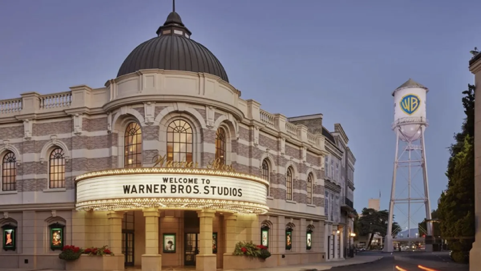 (Image caption) The entrance and water tower of Warner Bros. Studios in Burbank. This historic studio, with its vast film library and IPs from HBO, DC and other companies, is the core target that Paramount Skydance intends to include in its portfolio.
The value of Warner lies within the lifespan of its content assets.
To understand this acquisition, we need to temporarily step away from the box office.
One of Warner Bros. Discovery's most important assets is its decades-long portfolio of content rights. Harry Potter, Game of Thrones, the DC Universe, The Matrix, and numerous HBO series can be repeatedly developed across film, television, streaming, games, licensed merchandise, and themed entertainment. Paramount itself owns IPs such as Mission: Impossible, Top Gun, Transformers, Star Trek, and SpongeBob SquarePants. The combined library will exceed 15,000 films.
Unlike one-time box office revenue, a film library is more like a content mine that can be repeatedly mined. Every re-release, licensing, game adaptation, streaming distribution, data retrieval, or AI licensing can potentially allow old content to re-enter a new commercial cycle.
In the era of traditional media, content value was often calculated in terms of a single theatrical release, a single television broadcast, or a single licensing agreement. Streaming platforms have changed this timescale. Movies from twenty years ago can still help platforms retain subscribers today, characters created decades ago can be redeveloped into movies and games, and a complete film library can be repeatedly licensed to different platforms worldwide.
The emergence of generative AI adds another unpriced variable to this valuation system. Large-scale content databases with high quality, clear rights, and legal licensing may generate new commercial applications in AI search, recommendation, training licensing, and personalized content. Specific models are still developing, and legal boundaries are far from stable; therefore, it is impossible to calculate this revenue stream in advance.
However, the capital market has begun to reassess the lifespan of content libraries.
GFM.News has long focused on Content as Asset because the value of such assets can be re-established at different times. Once news, images, research materials, and intellectual property possess a complete rights chain, searchability, and the ability to be continuously licensed, their economic lifespan can far exceed the moment of their initial release or screening.
Viewed in this context, David Ellison was not only buying Warner, but also time itself.
Federal approval, state government opposition, UK conditional approval
Such a large concentration of media naturally requires regulatory oversight.
On June 12, 2026, the U.S. Department of Justice's Antitrust Division concluded an eight-month investigation, reviewing more than 2 million documents from over 80 custodians, and ultimately determined that the transactions were unlikely to harm competition or U.S. consumers.
If it were just a federal antitrust review, the transaction path would be much clearer. But media mergers and acquisitions are never just a federal process.
On July 13, California Attorney General Rob Bonta, along with 11 other states, filed a lawsuit seeking to block the deal. The state government argues that the merger of Paramount and Warner would weaken competition among major film distributors and cable television channel owners, potentially leading to higher prices, reduced content, and less bargaining power for theaters and other market participants.
A week later, a federal judge issued a temporary restraining order. On July 24, both parties further agreed not to complete the merger before the court's ruling, with a maximum suspension until June 2027. On August 4, the court set the trial date for March 2027. Ellison maintained on the earnings call that he believed the transaction could ultimately be completed and was willing to seek an out-of-court solution.
Britain offered a third answer.
On August 6, the UK government and the Competition and Markets Authority approved the deal, on the condition that David Ellison make a series of legally binding commitments: maintain investment in UK content for five years, maintain editorial independence between Channel 5 News and CNN International and CBS News, and keep relevant news archives available to qualified licensors on commercial terms.
For the same transaction, the Federal Department of Justice approved it after an eight-month investigation, twelve states believed the market concentration was too high to warrant court intervention, while the UK approved it with a commitment to the public interest attached. This difference speaks volumes more than a simple statement about monopolies or non-monopolies.
The most difficult boundary to navigate in large media mergers and acquisitions lies here. A media company is a return-seeking enterprise, but what it produces simultaneously participates in the flow of information within public culture, news, and democratic societies. Corporate value and public responsibility are never evaluated using the same set of standards.
CNN, and an ending that is still unfinished.
On August 12, 2026, the transaction took another turn.
Paramount Chief Legal Officer Makan Delrahim publicly stated at the Politico "California Agenda" conference that the company is exploring various options for resolving the California antitrust lawsuit, and selling CNN is among the considerations. He also publicly confirmed for the first time that Paramount is evaluating the possibility of moving its headquarters out of California.
CNN thus became the most sensitive asset in the entire deal.
Paramount already owns CBS News. If the Warner deal completes under its current structure, CNN will also join the same company. The idea of one entity controlling two nationally and globally influential American news brands naturally extends beyond the scope of a typical entertainment company merger, especially after CBS News has already completed its senior editorial reshuffle.
In the same week, Ellison also responded publicly to concerns about the independence of news editors, emphasizing that he would not allow his personal political stance to influence the reporting of his news organizations. According to the Wall Street Journal, Paramount had discussed establishing a board of directors or a similar mechanism to ensure CNN's independence; this also reflects that the parties involved in the deal recognized that news assets have a different level of public sensitivity in this transaction compared to ordinary entertainment IP.
This deal, up to now, feels more like an unfinished narrative.
A tech family has used capital to buy time, film libraries, and a ticket to the heart of Hollywood, but it hasn't yet bought everyone's trust. The rest—court rulings, the ownership of CNN, how editorial independence will be protected, and whether a company can succeed in both business and journalism—won't be revealed in an earnings call, but will gradually emerge over the next few quarters.
 (Image caption) CNN’s iconic red logo, as the most publicly sensitive news asset in the deal, has its editorial independence and ownership becoming a focus of regulation and public opinion.
A figure, and the gateway to an era
David Ellison's story should not be confined to the realm of family wealth.
His family fortune brought him into Hollywood and enabled him to participate in deals that others couldn't even imagine. But what he seized was an industry turning point. Traditional studios lacked capital, streaming platforms lacked stable returns, news brands lacked new business models, and large content libraries were being re-examined by the capital market due to global distribution and AI licensing.
He stands at the crossroads of these changes.
In the previous generation of the American media landscape, power was largely held by broadcast networks, studios, newspapers, magazines, and cable television groups. Today, Silicon Valley wealth, private equity, streaming platforms, sports rights, news brands, and content libraries are beginning to reshuffle. Ellison is not the only player, but he is one of the most symbolic.
He is both a new player in Hollywood and an entry point for Silicon Valley wealth to delve into content assets.
This is also why GFM.News included him in their "Financial Figures" section. People are never isolated. Those worth writing about often embody the structural changes of an era. What David Ellison is doing precisely shows us what the American media industry is experiencing: content is once again becoming an asset, news is once again confronting ownership issues, and Hollywood is once again waiting for capital to answer its future questions.
Whether the deal can be completed remains to be decided by the courts, regulators, shareholders, and the market. It's too early to say whether David Ellison can truly "buy Hollywood."
But one thing is clear: Hollywood is no longer just a world for directors, stars, and studio executives. It has also become a battleground for technological wealth, bank financing, content rights, news trust, and global platform competition.
David Ellison is at the forefront of this restructuring.
Disclaimer
This article is for news research and public discussion purposes only and does not constitute investment, legal, or transaction advice. The merger and acquisition terms, valuations, regulatory proceedings, and company arrangements mentioned herein are subject to change; please refer to company announcements, regulatory documents, and court proceedings for the most accurate and up-to-date information.