

U.S. company ownership records face erasure: 20 states and Washington, D.C. sue Treasury Department.
FinCEN has exempted U.S. companies from filing beneficial ownership reports; states are asking courts to review the boundaries of the exemption and preserve information contained in approximately 15 million existing reports.
On October 27, 20 U.S. states and the District of Columbia jointly sued the Treasury Department and FinCEN, demanding the revocation of the rule that drastically narrowed the scope of corporate ownership reporting and an end to the deletion of existing data. The Treasury Department argues that the new arrangement reduces the burden on law-abiding businesses and protects individual privacy; the states, however, maintain that the executive branch cannot use immunity to rewrite congressional law. A pressing question in this lawsuit is whether these records will still exist when the court reviews the legality of the deletion.
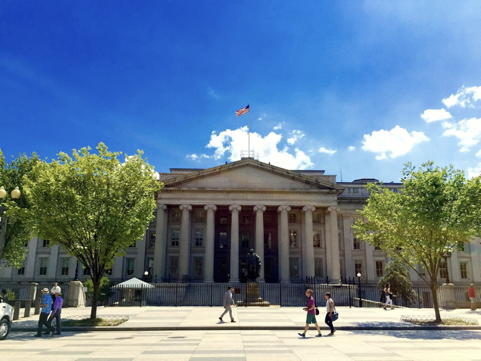 (Image caption) Exterior view of the U.S. Treasury Department building in Washington, D.C. FinCEN, an agency of the Treasury Department, is responsible for enforcing the beneficial ownership reporting system under the Corporate Transparency Act and managing related central databases; this case directly challenges the agency's decisions to significantly narrow the scope of reporting and its plan to clean up existing data.
States are demanding the preservation of a number of records that have not yet been granted access.
The attorneys general of 20 U.S. states and the District of Washington filed a lawsuit on October 27, 2026, in the Eugene Division of the U.S. District Court for the District of Oregon, seeking to overturn the 2025 interim final rule and the August 2026 final rule, and to block the agency from implementing a plan to delete existing beneficial ownership data.
FinCEN disclosed that it had received approximately 15 million beneficial ownership reports from U.S. companies before the policy shift in March 2025. These reports documented the declared controllers and eligible owners of these companies, and information that is no longer required to be reported is now the target of the government's planned cleanup.
This database is legally confidential and has never been used by the public to search for lists of company shareholders. The indictment states that states have not yet obtained access rights. They fear that records that Congress had legally authorized qualified agencies to use will be erased before state authorities have the opportunity to access them.
The case is led by Oregon Attorney General Dan Rayfield and Illinois Attorney General Kwame Raoul, with participation from California, New York, New Jersey, Massachusetts, Maryland, Virginia, and Washington. The case is titled State of Oregon et al. v. Bessent et al., case number 6:26-cv-02359-MTK.
The plaintiffs filed seven causes of action, challenging the legal basis, decision-making rationale, and drafting procedures of the two rules, and also seeking to overturn the written consents of the Attorney General and the Secretary of Homeland Security upon which the Treasury Department relied. Regarding the data deletion, the states requested court injunctions or stays of execution under Section 705 of the Administrative Procedure Act. The filing of these lawsuits does not itself reinstate the previously exempted reporting obligations.
In addition to the company name, Congress requires the identification of the natural person controlling the company.
The Corporate Transparency Act (CTA), which became law on January 1, 2021, aims to fill a long-standing information gap in the U.S. corporate system. Congress pointed out during legislation that states establish a large number of corporations and limited liability companies each year, but generally do not require the registration of the ultimate beneficial owners. Investigators, after tracing the flow of funds and obtaining shareholder information for one company, may only find another company and still be unable to identify the person controlling the assets.
The beneficial owner, as defined by the CTA, is, in principle, a natural person who has direct or indirect substantial control over the company, or who owns or controls at least 25% of the ownership interest, with some legal exceptions. The declaration includes name, date of birth, address, and identification documents. The system focuses on those who meet the control or holding threshold and does not cover every minority shareholder.
Congress also listed 23 exemptions, covering banks, securities firms, and other regulated entities, as well as eligible large operating companies and other entities. Large operating companies must meet certain criteria, including employing more than 20 full-time employees in the United States, reporting total revenue or sales exceeding $5 million in their federal tax returns, and having a physical office in the United States. Those still required to file under the old system are primarily small entities, including both legitimate businesses and shell companies that could potentially be abused.
The use of information is restricted by law. State, local, and tribal law enforcement agencies must obtain court authorization to seek information for criminal or civil investigations and must comply with security and inquiry procedures. Financial institutions must obtain the consent of the reporting company and use the information for statutory customer due diligence; financial regulatory authorities have additional conditions for obtaining information linked to their supervisory functions.
Congress also mandated that FinCEN retain relevant beneficial ownership records for at least five years after the reporting company's termination. This retention requirement has now become a key basis for states' opposition to the deregistration plan.
 (Image caption) Official portrait of U.S. Treasury Secretary Scott Bessent, taken on February 6, 2025. The Treasury Department's decision to significantly narrow the scope of beneficial ownership reporting, citing the need to reduce the compliance burden on small businesses, has become the subject of scrutiny in this lawsuit filed by various states.
Domestic companies are fully exempted, but foreign holders are also affected.
FinCEN issued its original filing rules in September 2022, effective January 1, 2024. Subsequent legal disputes disrupted enforcement, and the filing deadlines were changed several times. On March 2, 2025, the Treasury Department announced that it would no longer enforce related penalties on U.S. citizens, domestic filing companies, and their beneficial owners, and planned to narrow the filing scope to foreign companies.
The interim final rule, published and effective March 26, 2025, exempts all entities incorporated in the United States from disclosure, while allowing foreign companies still required to file to not disclose beneficial owners who are U.S. persons. On August 11, 2026, FinCEN announced the final rule; the rule was published in the Federal Register on August 14, 2026, and stated that it took effect on the same day.
The final rule continues the above arrangements and exempts foreign companies from reporting on corporate applicants who are U.S. persons—that is, those who directly submit the registration documents or are primarily responsible for instructing or controlling the submission process. U.S. persons who have already obtained a FinCEN identification number also do not need to update or correct their personal data.
For cross-border businesses, the place of incorporation is key to understanding this change. A company incorporated under U.S. state law is a domestic entity, even if it is owned by a foreigner; a "foreign reporting company" is an entity incorporated under foreign law, registered and operating in the United States, and that does not meet other exemption criteria.
This distinction directly impacts the scope of data collection. Foreign companies operating through U.S.-incorporated subsidiaries may be exempt from the domestic entity exemption; however, foreign-incorporated companies registered and operating directly in the U.S. may still be subject to reporting obligations. The plaintiff argues that this allows some foreign actors to exploit the new system to reduce the amount of ownership information they leave in the central database.
The scope of applications has been narrowed from tens of millions of companies to tens of thousands.
FinCEN's original model estimated that there were approximately 32.56 million existing filing companies in 2024, with approximately 5 million new filings each year thereafter. The final rule re-estimates that there are approximately 28,000 existing, non-exempt foreign filing companies, of which approximately 13,000 filed before the end of 2025, with approximately 1,800 new filings each year thereafter.
The plaintiff calculated, based on FinCEN's old and new estimates, that over 99.9% of the original filings were excluded. This comparison shows a contraction in regulatory coverage, while the total number of companies used is still a regulatory estimate.
For the Treasury, the significant reduction in numbers is a direct result of easing the burden. When announcing the final rule in August, Bessent stated that the government is eliminating burdensome requirements for millions of law-abiding businesses without compromising national security.
FinCEN estimates that there are approximately 17.5 million existing but unsubmitted reports, plus an estimated 10 million new reports expected in 2025 and 2026, involving a total of approximately 27.5 million companies. Using the original model's weighted average compliance cost of $665.71 per report, the agency estimates potential savings of approximately $18 billion.
This amount is calculated from a model of corporate compliance burden, and submitting a report directly to FinCEN is free. The estimate includes previously anticipated reporting activities and therefore cannot be considered a reduction in corporate expenses that have been verified on a case-by-case basis.
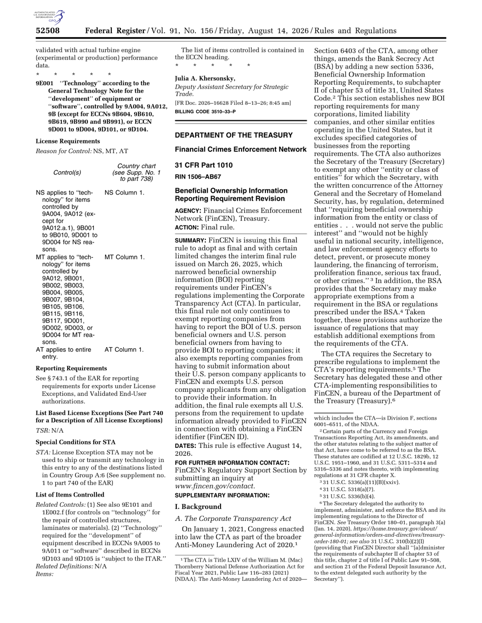 (Image caption) The Federal Register, August 14, 2026, page 52508, FinCEN's final rule amended for beneficial ownership reporting, starting from the middle column, lists the rule name, summary, and effective date. The image is a complete export from the official PDF, retaining the original layout of other rules on the same page.
The Treasury Department cited corporate burdens as a reason for the states to question the extent of their exemptions.
FinCEN's legal argument rests on the CTA's own mandate. The law requires the Treasury to minimize the compliance burden and allows the Secretary, with the written consent of the Attorney General and the Secretary of Homeland Security, to exempt any entity or category of entity from disclosure, provided that a statutory judgment is made that requiring such entities to file is neither in the public interest nor highly useful to designated national security and law enforcement efforts.
The Treasury Department believes that the law does not impose additional restrictions on the size of exempt categories beyond these conditions. The vast majority of U.S. small businesses operate normally, and the additional value generated by generally collecting their ownership information is insufficient to offset the burden on businesses; concentrating reporting on foreign entities can achieve a more appropriate risk-cost ratio. Regarding exemptions for U.S. individuals, FinCEN also invokes the general exemption authorization under the Bank Secrecy Act.
The plaintiff countered by citing the structure of the law. Congress has explicitly included companies incorporated under state law in the reporting scope, and then listed 23 categories of exemptions; states argue that the authority to allow executive agencies to handle other exceptions cannot be broad enough to exclude the most important objects of the law's regulation.
The indictment states that FinCEN removed the definition of domestic reporting companies from its rules, marked its original position as "reserved," and then included the same type of entity in the exemption clause. For the plaintiffs, this wording change indicates that the authority has altered the actual scope of the law's application.
The two sides also disagreed on whether the policy shift was adequately explained. FinCEN rejected a full exemption for small businesses in 2022, arguing that almost all filing companies were likely small entities and such an exemption would render the rule inapplicable. States have requested that the agency explain why the assessment from that year is no longer valid and why a more limited exemption arrangement was not adopted.
FinCEN stated that past analyses underestimated the burden on businesses. It acknowledged that more data could help combat shell company abuse, but argued that the incremental benefits did not justify the associated costs. Therefore, the court must examine whether the agency's new judgment meets the authorization requirements and whether there is a reasonable connection between the evidence and the policy choice.
The rule also faces another procedural objection. A report released by the U.S. Government Accountability Office (GAO) on August 31 concluded that its immediate implementation did not comply with the 60-day delay requirement under the Congressional Review Act and did not accept the exceptions offered by FinCEN. This was a legal assessment by the GAO, not a court order to revoke or suspend the rule.
The deletion of existing data requires a separate answer regarding the legal basis.
The challenges facing states with their erasure programs extend beyond the question of whether to continue filing in the future. Even if agencies can stop collecting certain types of new data, records already legally obtained may still be subject to retention clauses and federal records processing procedures.
The plaintiffs cited the CTA's five-year retention requirement, arguing that a company receiving an administrative exemption does not equate to the company's termination. The states also invoked the Federal Records Act, arguing that the erasure program lacked the necessary authorization for record disposal. The final rule states that FinCEN anticipates working with the National Archives and Records Administration (NARA) to process the data.
The public comment process is also a point of contention. The plaintiffs argue that the interim rule did not propose a removal plan, and stakeholders were not properly notified or given an opportunity to comment. Although the final rule records multiple comments requesting the removal of data, the court must still determine whether the final policy was a result reasonably foreseeable in the prior rule-making process.
The indictment also challenges the deletion arrangement based on the separation of powers and the obligation to faithfully enforce the law. FinCEN, on the other hand, explains its reasons for the cleanup based on privacy, information security, and public trust: the government's continued centralized storage of personal data that is no longer required to be declared would pose additional risks.
The specific issues facing both sides are whether these policy reasons can support the early disposal of records, and whether the disposal method complies with the legal requirements already set by Congress.
 (Image caption) Shelves and storage boxes in the U.S. National Archives storeroom in 1974. This historical photograph shows the physical environment of federal records storage; this article discusses the fate of FinCEN electronic filings, and the image is not of the beneficial ownership database or the site of this cleanup operation.
The urgency of the February 10th boundary increase has not yet been determined, and the actual deletion date is still undetermined.
The FinCEN program uses previously submitted reports and identity documents to identify targets for removal and collaborates with NARA to complete the process in one go. According to the final rules, individuals will not need to submit individual applications, and the agency does not intend to issue individual removal confirmations; instead, it will announce the removal on its official website upon completion.
The rule further states that if information relating to U.S. companies or individuals appears in documents submitted after February 10, 2027, FinCEN does not expect it to be removed. This arrangement sets a deadline for data submission for a one-time cleanup, without specifying a date on which the cleanup must be performed.
Based on this text and the one-off cleanup plan, the plaintiff inferred that the deletion was imminent and would occur on or before that date, thus requesting the court's timely intervention. February 10th was an important basis for the plaintiff's assessment of the risk, but it cannot be regarded as the actual deletion date announced by the government, nor is it a deadline for the court to complete its ruling.
Not yet available queries, compared to existing historical records.
Paragraph 127 of the indictment records that the Illinois Department of Financial and Professional Regulation applied to FinCEN for access to beneficial ownership data in October 2026. This agency, which oversees state-chartered banks and other financial institutions, already had access to other data from FinCEN.
According to the indictment, a FinCEN representative responded that access to beneficial ownership information has not yet been made available to non-federal partners; prioritizing ensuring the database complies with the revised rules before signing a new access agreement, the plaintiff argues that the restrictions also cover information on foreign companies not included in the deletion process.
The states plan to use the data for fraud investigations, consumer protection, recovering judgments and penalties, tax enforcement, and overseeing customer due diligence by financial institutions. They also argue that resources already invested in assisting with CTA implementation, such as including reporting notices in business registration and renewal processes, are now unable to serve their intended purpose. Whether these damages support standing and remedies remains to be determined by the courts.
The value of data is also time-dependent. An early filing can preserve information about the controlling shareholders that the company reported at a specific point in time; even if the company later changes its name, transfers ownership, or ceases operations, the records from that year may still help investigators identify the relationship between people and assets.
The reported information still needs to be verified, and the report itself does not prove that anyone has violated the law. After the central records are erased, other evidence may be retained in company, bank, or tax records, but investigators will need to re-find the sources and compare the timelines to piece together the ownership change. Some information may be reconstructed, while others may leave gaps.
Banks still need to identify customers, and other reporting systems also have limitations.
The Ministry of Finance believes that existing customer due diligence by financial institutions can mitigate the risks associated with corporate reporting exemptions. These obligations do indeed remain in place and include ongoing risk management.
In February 2026, FinCEN will allow financial institutions, under certain conditions, to no longer need to repeatedly identify and verify beneficial owners each time a new account is opened for the same corporate client. Institutions using this arrangement will still be required to fulfill the relevant requirements when the corporate first opens an account; if subsequent facts become sufficient to question the reliability of existing information, or if ongoing due diligence requires further verification, appropriate measures must also be taken.
However, bank data, generated based on customer relationships and risk management procedures, is distributed across different institutions and has a different coverage than the central records submitted directly by companies. The disagreement between the Treasury and critics lies in whether this data can provide a sufficient alternative. For businesses, being exempt from reporting to FinCEN will not stop banks from inquiring about who owns or controls the company.
The state-level system also fails to fully fill the gaps. New York State's limited liability company (LLC) transparency system references federal definitions and exemptions. According to state guidelines, reporting primarily applies to foreign-incorporated LLCs authorized to operate in New York and not exempt from such exemptions; New York-based companies, as well as LLCs incorporated in other states or territories, are exempt from such reporting. New York State itself is also a plaintiff in this federal lawsuit.
Another source of information in the residential real estate sector has been hampered by legal disputes. FinCEN's residential real estate rules originally required the reporting of residential transfers in which a portion was assumed by a corporation or trust and which were not financed by a qualified financial institution. The definition of financing was linked to the anti-money laundering and suspicious activity reporting obligations of lending institutions and was not limited to transactions paid entirely in cash.
FinCEN confirmed that the U.S. District Court for the Eastern District of Texas overturned the rule on March 19, 2026, and the government has appealed. During the period the overturning order is in effect, relevant filers are not required to submit residential real estate reports. Corporate filings and real estate transaction filings, which originally provided different perspectives of information, are now both subject to limitations in scope or enforcement.
 (Image caption) The Companies Registry's office building in Cardiff, Wales, photographed in March 2018. The UK uses the Companies Registry to collect information on individuals with significant control and implements identity verification, providing a concrete context for this article's comparison of corporate transparency systems in different countries.
The UK and the EU maintain registers and adjust verification and inquiry methods.
In the UK, companies are required to report "persons with significant controlling interests" (PSCs) to the Companies Registry. These typically include individuals who hold more than 25% of the shares or voting rights, can appoint or remove a majority of directors, or have other significant influence and control. The threshold for PSCs is "more than 25%", which differs from the US CTA's requirement of "at least 25%".
The UK Register of Ownership will, in principle, disclose relevant control information while protecting certain sensitive personal data and imposing individual disclosure restrictions. Mandatory identity verification for directors and PSCs will be implemented from November 18, 2025, with existing personnel completing the necessary procedures in phases over a 12-month transition period.
On November 22, 2022, the European Court of Justice rejected the requirement that beneficial ownership data be made available to the entire public on the grounds of privacy and personal data protection, but did not order the cancellation of the register. New legislation passed in 2024 instead allowed public access based on "legitimate interests," including eligible journalists and civil society organizations, while retaining the information access mechanisms of the competent authorities.
The deadline for the domestic law transposition of Articles 11, 12, 13 and 15 of the relevant directives is July 10, 2026. Progress reports published by the European Commission on October 26 show that implementation by member states remains inconsistent, thus there is still a gap between legal eligibility for information and actual use.
Recommendation 24 of the Financial Action Task Force (FATF) requires competent authorities to have effective access to sufficient, accurate, and up-to-date information on beneficial ownership of legal entities, allowing for the use of registers or effective alternative mechanisms. It does not require countries to make this information universally available to the public.
The adjustments made by the UK and the EU mainly revolve around data quality, personal protection, and access conditions; the US policy shift this time significantly narrows the scope of central reporting and prepares to dispose of existing data. Whether the remaining information sources can maintain sufficient coverage and access efficiency is key to assessing the effectiveness of the new system.
Can records still be preserved during court review?
Small business owners are concerned about duplicate reporting, compliance expenses, and the security of their addresses and documents; these burdens need to be carefully considered in the design of the system. Those who have been defrauded and are trying to recover their losses also need investigative authorities to be able to identify the natural persons controlling the companies, especially when assets are held or transferred through multiple layers of companies.
Congress's original arrangement placed reporting requirements, exemptions, confidentiality, restrictions on access, and retention periods within the same framework. The Treasury Department is now reinterpreting this balance, while states are asking courts to determine whether executive agencies are still acting within their authorized scope.
Which companies will be required to file reports in the future can be further adjusted through legislation, rule-making, and judicial rulings. However, previously submitted historical documents will not be automatically returned to the database even if the reporting obligation is reinstated in the future.
The states' requests to halt the deletion stem from a desire to retain these records until the legal disputes are resolved. Whether the court allows the cleanup plan to proceed will determine whether the case involves a set of still-usable materials or a batch of historical declarations that have been lost.
Disclaimer
This article is for news research reference only and does not constitute legal, investment, or tax advice. A litigation claim is not equivalent to a judicial determination; corporate reporting obligations and data handling should be governed by applicable law, FinCEN rules, and court rulings.