

New Greenland Agreement: What does the US want to get first?
How can a tripartite security agreement incorporate bases, rights of passage, and sensitive investments into the same set of Arctic access rules?
The new security agreement signed by the United States, Denmark, and Greenland, ostensibly addressing defense zones and Arctic security, is in reality redrawing the rules of access to the island. The US military can expand its activities, and foreign capital in sensitive industries will face stricter scrutiny. Greenland, meanwhile, is striving to incorporate autonomy, environmental protection, and local way of life into future arrangements within the framework of its sovereignty. The issue is no longer who "owns" Greenland, but who can station troops, invest, mine, and build infrastructure there, and whether Greenlanders can retain substantial decision-making power over every instance of entry.
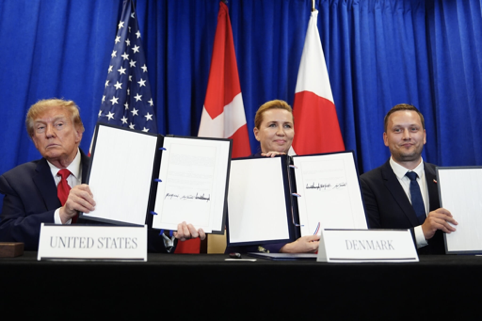 (Image caption) On September 22, 2026, US President Donald Trump, Danish Prime Minister Heiko Frederiksen, and Greenlandic Prime Minister Michel Nilsson attended the signing ceremony of a trilateral security agreement at the United Nations headquarters in New York. The agreement does not change Greenland's sovereignty, but it incorporates base activities, rights of passage, and reviews of sensitive investments into the same set of Arctic access rules.
Who has the right to enter Greenland?
In the 1940s, a cryolite mine in Ivittuut, southwestern Greenland, was a crucial node in the Allied wartime industrial system. Cryolite was used in aluminum smelting, an essential material for aircraft manufacturing. At that time, Greenland's position in the world economy did not stem from its population, consumer market, or GDP, but from an underground resource located at the far end of the global supply chain, yet capable of influencing wartime manufacturing capabilities.
This history offers a very direct reminder: when a resource becomes a bottleneck in an industrial system, a seemingly distant place can suddenly become the center of global strategy.
More than eighty years later, the world is once again looking back at Greenland in a similar but more complex way. Rare earth elements, ports, airstrips, satellite communications, underwater activities, polar navigation, and missile early warning have once again thrust this world's largest island into the view of major powers and capital. The difference is that today's Greenland is no longer a frontier that can be unilaterally controlled by external forces. It has an autonomous government, a parliament, environmental laws, mineral resource management rights, and voters, as well as a collective memory shaped by long-term external strategic needs.
On September 22, 2026, the United States, Denmark, and Greenland signed a trilateral security agreement in New York, revising and supplementing the 1951 US-Denmark arrangements regarding Greenland's defense. The agreement allows the United States to expand activities at Pituffik Space Base and establish additional defense zones in Narsarsuaq in the south and Mestersvig on the east coast; it also sets security thresholds for foreign investment in sensitive industries.
The agreement will not take effect until the Danish Parliament and the Greenlandic Parliament complete their procedures. It does not change the Kingdom of Denmark's sovereignty over Greenland, nor does it transfer mining rights to the United States. What it rewrites are the rules of entry: in the future, any actions taken to station troops, invest, undertake projects, obtain sensitive information, or even establish certain forms of commercial presence on the island will be subject to stricter security and political scrutiny.
The "island purchase" controversy and an agreement on access.
When Trump proposed buying Greenland in 2019, both Denmark and Greenland explicitly rejected the offer. At the time, many viewed it as an ill-timed diplomatic incident. After Trump returned to the White House in 2025, he once again placed Greenland at the center of the US strategic agenda, and his tough rhetoric initially unsettled Copenhagen and Nuuk.
However, the final text did not grant the United States territory, nor did it grant it the power to bypass the Greenlandic government. What the United States gained were more operational arrangements: an expanded space for its existing military presence, broader rights of passage, and an institutional safeguard against sensitive assets and foreign capital.
This is a shift worth examining closely. Acquiring territory is a 19th-century concept; controlling access, infrastructure, security information, and investment qualifications are more common forms of power in the 21st century. It doesn't require changing the national flag, but it can have long-term implications for which capital can enter a region, which projects can be implemented, and which companies can acquire key assets.
The preamble to the agreement reaffirms the sovereignty and territorial integrity of the Kingdom of Denmark and recognizes the right of the Greenlandic people to self-determination. These words are not mere formalities. Greenland's system of autonomy and the people's sense of identity are the prerequisites for the agreement's long-term legitimacy in the country.
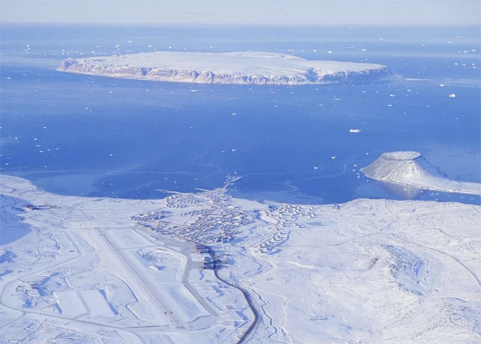 (Image caption) An aerial view of the Pitufik Space Base in northwestern Greenland, showing the runway, camp, and icebergs in the Arctic Ocean. The agreement allows the United States to expand activities at this existing base, making it a key site for understanding the extension of U.S. military deployments in the Arctic beyond existing outposts.
Nassawak and Meesterswig: Defense Maps Fall into Inhabited Areas
Nassawak is not an abstract military location. During World War II, the U.S. military built Bluie West One Airport here, and the flow of aircraft made this southern coast an important node on transatlantic routes. After the U.S. military withdrew in the 1950s, the local population gradually shrank, and the airport has long served the civilian air traffic, passengers, and communities of southern Greenland.
Meistersweg, located in the remote northeast, is currently primarily associated with the activities of Denmark's Sirius Sled Patrol. The agreement does not specify troop numbers, project scale, or activation timeline. This makes the two new defense zones more like an incomplete mandate than a fully completed blueprint for base construction.
For Washington, the expanded activity represents a security deployment in the Arctic; for local residents, it evokes a history of externally determined events with the consequences borne locally.
In 1959, the United States established Camp Century under the Greenland ice sheet. Ostensibly a scientific research and polar engineering facility, later declassified documents revealed that the base was also related to a secret military concept called Project Iceworm. The United States had studied the possibility of establishing a mobile nuclear missile deployment network under the ice sheet, but ultimately abandoned the project because the ice was not as stable as the planners had anticipated.
This is not a Cold War story used to add mystique to the article. It illustrates that the Arctic is not a blank canvas on military planning maps. Ice sheets shift, climates change, and facilities age; a deployment that seems effective now may leave behind problems of pollution, cleanup, and accountability decades later.
In 1968, a U.S. B-52 bomber carrying nuclear weapons crashed near Thule. Conventional explosives detonated, causing radioactive contamination, but fortunately, a nuclear explosion did not occur. This history serves as a reminder to today's policymakers that any new facilities, base expansions, and transportation arrangements cannot solely focus on safety benefits; they must also answer the following questions: Who will bear the long-term environmental risks? How will data be made public? How will the community participate? In the event of an accident, who will be responsible for compensation and cleanup?
Following the signing, Greenlandic Prime Minister Nelson emphasized that Greenland must be respected, its territory inviolable, and the local way of life, hunting, and fishing must be taken into account. His position highlights a reality most easily obscured by defense terminology: Greenland needs security guarantees, but security arrangements must not again override the consent and dignity of the Greenlanders.
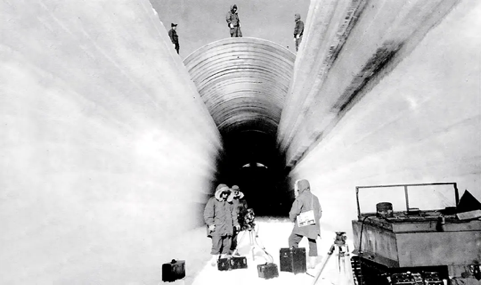 (Image caption) In 1959, the United States built Camp Century under the Greenland ice sheet. This base, intended for scientific research and polar engineering, was later confirmed to be related to the Cold War-era Project Iceworm. The project was ultimately not implemented, but it left behind long-standing issues of Arctic military deployment, environmental risks, and historical responsibility.
Article 10: Bringing investors into the security review room
For the financial markets, the most significant part of the agreement is not necessarily the addition of new defense zones, but rather Article 10.
The treaty stipulates that countries and investors from non-NATO members, non-NATO partners, or non-EU member states are prohibited from gaining control or significant influence in Greenland's "particularly sensitive" activities, and from accessing non-public information that may endanger national security and public order. The treaty lists critical infrastructure and resource extraction as sensitive areas, but does not explicitly define the boundaries.
Greenland will implement this requirement through existing or future investment review laws and in cooperation with Denmark. The provisions themselves do not grant the United States unilateral authority to approve investments; however, under the system of "consent by all parties" and security exceptions, the actual influence of the United States on sensitive projects will significantly increase.
In the past, the core issues for a mining project were typically ore grade, mining costs, energy supply, port distance, environmental permits, and financing capabilities. After the agreement takes effect, investors must also face another set of questions: Who controls the equity? Is there any suspicious influence on the board? Who has access to the technical data? Does the funding come from jurisdictions that could be considered security risks?
This is not an abstract compliance burden. For polar projects with long financing cycles and complex equity structures, a single delay in review can alter the development window, loan costs, and the confidence of downstream buyers.
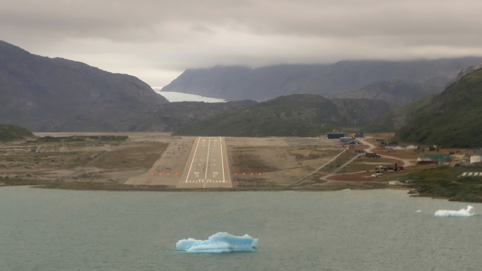 (Image caption) The runway at Nassawak Airport in the south cuts into the mountains from the fjord shore, with floating icebergs visible in the foreground. This area was formerly the U.S. Army Airfield Bluie West One during World War II and is now included in the newly added defense zone, indicating that the military map of the new agreement falls on inhabited areas that also support civilian aviation and community functions.
Tanbreez: A mine yet to go into production, already entering the race among major powers.
The Tanbreez rare earth project is one of the most concrete windows into this investment red line. Located in southern Greenland, the project has attracted market attention due to its heavy rare earth potential. In April 2026, the Greenlandic government approved the acquisition of the final 50.5% stake in Tanbreez Mining Greenland A/S by the US-listed company Critical Metals Corp., increasing its stake to 92.5%; European Lithium retained 7.5%.
This is an approved equity transfer, but it does not mean that a mine has started production, nor does it mean that the Western supply chain is secured. Critical Metals subsequently announced its intention to acquire European Lithium for approximately $835 million, thereby consolidating ownership of Tanbreez; whether the transaction can be completed still depends on the company's financing, market conditions, and regulatory procedures.
The real challenges for Tanbreez remain on the ground: how to coordinate roads and ports, the reliability of energy, the length of the polar construction window, where to place processing capacity, whether downstream buyers are willing to sign long-term contracts sufficient to support financing, and whether the environment and communities can accept the scale of the project. None of these issues can be replaced by a safety agreement.
The Kvanefjeld project in the south offers another perspective. Once considered a leading candidate for rare earth development, it has been hampered for a long time by associated uranium, Greenland's restrictions on uranium mining, and subsequent legal controversies. It serves as a reminder that the value of Greenland's mineral resources cannot be measured solely by geological reports or policy slogans. Resource development here must withstand scrutiny from local politics, environmental laws, indigenous rights, and commercial returns.
A 4.1 billion crown ledger determines the practical scale of autonomy.
Greenland covers approximately 2.16 million square kilometers and has a population of about 57,000. There are virtually no road connections between towns. Fisheries remain the mainstay of exports, and the public sector accounts for a significant portion of the economy. A lump-sum subsidy from Denmark is one of the most stable pillars of Greenland's finances; in 2023, it amounted to approximately 4.14 billion Danish kroner.
The 2009 Greenland Autonomy Act transferred the management of mineral resources to the autonomous government and also included a substantial financial arrangement: when Greenland’s annual mineral revenue exceeds 75 million Danish kroner, Danish subsidies will be reduced by half of the excess.
This design makes resource revenue a path to fiscal independence, but it also limits the immediate fiscal leap it can bring. Increased mining revenue does not mean the Greenlandic government can keep all the incremental revenue. Moreover, a mine often takes many years from exploration, environmental impact assessment, construction to stable production, and the costs of living, housing, healthcare, education, port maintenance, and workforce training are all daily expenses.
This is why Greenland's autonomy cannot be romanticized into a simple narrative of independence. It is first and foremost a set of fiscal issues concerning how to sustain the community, retain talent, maintain public services, and ensure that the benefits of resources remain equitably in the local area.
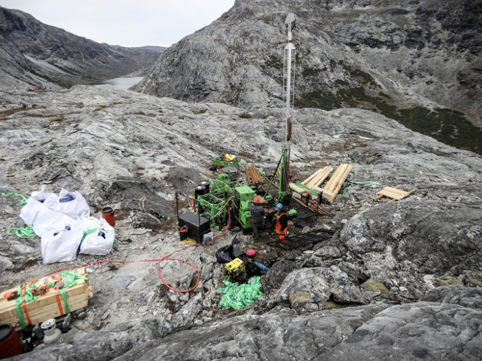 (Image caption) Drilling operations at a rare earth exploration site in southern Greenland, with equipment and personnel scattered across the bare rock slopes. The image echoes the article's analysis of mines like Tanbreez that are not yet in production: safety reviews have already entered the equity and data access phase, but road, port, energy, and environmental permits still determine whether a project can be implemented.
Opportunities in the Arctic shipping routes lie in the key points, not the shortcuts.
Shipping data does indeed show that Arctic activity is increasing. Statistics from the Arctic Council’s working group show that in 2025, a total of 1,812 different vessels will enter the Arctic waters to which the Polar Code applies, an increase of 40% compared to 2013; during the same period, the cumulative sailing distance will be close to 11.9 million nautical miles, an increase of 95% compared to twelve years ago.
However, this does not mean that the Arctic has become a mature global shipping shortcut. Ice conditions, low temperatures, prolonged darkness, limited nautical charts, and communication and search and rescue capabilities still make navigation risks far higher than traditional main routes. While reduced sea ice may extend navigable time in some areas, it does not automatically translate into stable, low-cost, and insurable logistics.
Greenland's more realistic opportunity may lie in becoming a node in the Arctic network: a supply port, search and rescue coordination hub, satellite communications provider, sea condition monitoring facility, runway, maintenance and insurance service provider. These facilities have long payback periods, but they are the underlying conditions for the coexistence of mining, fishing, tourism, and security activities.
Arctic warming is also adding another burden. NOAA estimates that the Greenland ice sheet will lose a net 129 billion tons of ice in the year ending in the summer of 2025. This figure is lower than the average annual loss over the past two decades, but the long-term retreat trend has not been reversed. For foreign capital, climate change may mean more accessible sea areas; for coastal communities, it also means coastal erosion, infrastructure stress, changes in fishing grounds, and higher public costs.
This is Greenland's deepest contradiction: it is attracting more attention from capital and strategic forces because of its retreating ice and snow, but it also faces greater survival risks because of this retreat. Any Arctic plan that only calculates shipping routes, mineral resources, and military benefits, but ignores climate costs, will ultimately underestimate its true financial and social costs.
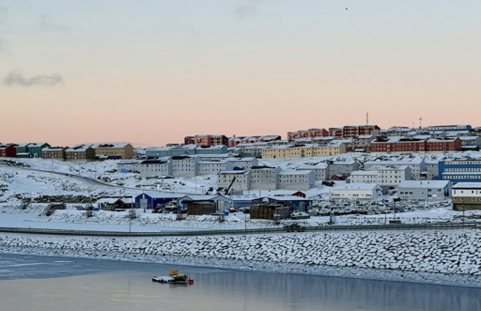 (Image caption) Colorful houses in a Greenland coastal town are built along the slope, with ice forming on the shore and public facilities clinging to the coast. The image reminds the viewer that the agreement will ultimately face not only radar and mining rights, but also the lifestyles, financial dependence, and true control over every external entry point for approximately 57,000 residents.
Who is changing the rules of sustainability in the Arctic?
The political skill of this agreement lies in allowing the United States, Denmark, and Greenland to all claim to have upheld their bottom lines. The United States gained greater room for defense activities and a sensitive investment screening line; Denmark retained its sovereign framework and NATO order; and Greenland, as a co-signatory, incorporated self-determination, local way of life, and environmental considerations into a document that might otherwise have been decided by the two capitals.
The problem is that security restrictions, without corresponding funding, engineering capabilities, processing arrangements, and long-term procurement commitments, may only narrow Greenland's available sources of capital. Allies who want sensitive assets to remain within high-risk controls must demonstrate their willingness to bear the costs of development, rather than simply demanding that Greenland reject others.
Nielsen stated that Greenland hopes to cooperate with countries that recognize democratic and human rights values, and also hopes to complete its investment review system as soon as possible. This statement highlights the most important, yet easily overlooked, fact of the new agreement: Greenland is not passively waiting to be chosen as a mineral reserve, but is attempting to transform external competition into its own negotiating power.
The strategic value of an island should ultimately not be determined solely by radar, shipping lanes, or rare earth tonnage. It also depends on whether the locals can say "yes" and "no" to those who enter, and whether they truly possess sufficient institutional, capital, and choices when they do so.
What the United States wants to acquire first is not Greenland itself, but rather to enshrine itself in the rules governing access to bases, passage, investment, data, and supply chains before the new Arctic order is established.
But Greenland's story shouldn't end with "who got in first." From its cryolite mines during World War II and its ice sheet bases during the Cold War, to its critical mineral resources, satellites, and shipping lanes today, every time the outside world rediscovers Greenland, it comes with new commitments and new costs.
When the ice and snow recede, humanity will face not only a more accessible map, but also a more difficult question: Are we capable of pursuing security, resources, and economic interests while respecting the people on the land, repairing historical responsibilities, and establishing truly sustainable rules for a changing Arctic?
Disclaimer
This article is based on publicly available information as of September 25, 2026, and is for news research and informational purposes only. It does not constitute investment, legal, tax, or transaction advice. The agreement is subject to the completion of relevant parliamentary procedures, and its implementation and policy effects are still subject to change.