

The woman behind Musk: Mother, wife, and the underlying character of a tech empire
Maye Musk gave him his adventurous and survival instincts; his wife and partner, on the other hand, revealed his controlling nature, loneliness, and civilizational ambitions within intimate relationships.
Editor's Note (Jeff Morgan):
Elon Musk is a figure easily stereotyped. Rockets, electric cars, Starlink, AI, X, Mars, valuation, and power constitute almost the entirety of the outside world's understanding of him. However, a truly complex person never exists solely within the confines of company empires, technological roadmaps, and capital narratives. He also exists in his mother's eyes, in the cracks in his marriage, in the silence of his partner, and in the distance between his children and his father that cannot be fully seen by the outside world.
GFM's "People" section publishes this article not to exploit the private lives of celebrities, nor to relegate these women to the role of "behind successful men." On the contrary, we hope to reopen the concept of "behind": they are not mere silhouettes, footnotes, or emotional accessories to some tech empire. Maye Musk, Justine Wilson, Talulah Riley, Grimes, and Shivon Zilis each have their own lives, choices, traumas, and brilliance. Their intersection with Musk does not reveal who made whom, but rather the deep structures of individuals amidst power, intimacy, control, loneliness, and civilizational ambition.
Musk's greatness and controversy may both stem from the same force: his unwillingness to accept the original boundaries of the world, and his difficulty in accepting that relationships themselves cannot be completely designed. This force can drive industry, but it can also erode intimacy; it can send rockets into the sky, but it can also bring people back to the oldest human moments: family, mother, partner, and children.
To understand Musk, we can't just look at the launch pad; we also need to go back to the ground. This is precisely where this article begins.
 (Image caption ) A giant rocket ascends vertically, flames shooting out of its nozzle, symbolizing Musk's adventurous spirit—derived from his South African family background—in turning the "impossible" into reality. It represents the survival instinct and fearless composure he inherited from his mother in his early years.
Where do rockets take off?
People almost always remember Musk starting with the same image.
The massive rocket stood vertically on the launch pad, the countdown echoing over the loudspeaker. The audience held their breath as flames erupted from the nozzle, the ground trembled, then it rose, then the clouds rose, then the darkness of the edge of space. If they were lucky, the recovery platform at sea would catch the falling metal column with such precision that even the engineers couldn't help but shed tears.
This scene makes one believe one thing: a person can turn the impossible into a timetable.
But I still believe that people who only watch rockets don't understand Musk.
To truly understand this person, we must go back much further. Go back to before the launch pad was built, to a family in South Africa, to a mother rebuilding her life after her marriage broke down, to the silent moments when a teenager, in a room where no one had arranged things for him, began to make his own decisions.
Rockets have their own fuel.
There are people too.
This fuel isn't in the factory, on the board of directors, or in the financial statements.
It's in an earlier place—in how a woman copes with a broken life, and how that way subtly shapes a child's understanding of the world.
For Musk, that earliest fuel depot was very likely his mother, Maye Musk.
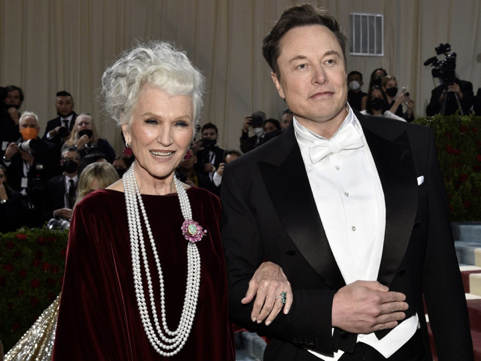 (Image caption ) An elegant photo of Maye Musk and her adult son Elon Musk, showcasing the strong bond between mother and son. Her realism as a single mother rebuilding her life shaped Musk's fundamental understanding of crisis, as the article states, "She gave him not shelter, but realism."
Behind should not just be a silhouette.
The topic of "the woman behind Musk" has its appeal, but also its dangers.
The appeal lies in its ability to bring a man surrounded by rockets, electric cars, AI, satellite networks, and social media back to reality. Let's look at him as a son, husband, ex-husband, partner, and father.
The danger lies in the fact that the phrase "behind the scenes" easily portrays women as mere tools in a man's narrative of success. It's as if their sole purpose is to make a man successful, explain a man, bear the burden of a man, or become a footnote in a man's legend.
This is not what GFM's "Characteristics" aims to do.
The use of the word "behind" in this article is to borrow a powerful entry point in the public discourse; but what we really want to do is to bring them back to the people themselves from behind.
Maye Musk is not just a figure in the background.
Justine Wilson is not shown from behind.
Talulah Riley is not a silhouette.
Grimes is not a silhouette.
Shivon Zilis is not just a silhouette.
They all have their own lives, choices, traumas, light, and costs. Their intersection with Musk is only a part of their lives, not the whole of them.
Therefore, this article is not about "which women made Musk successful".
This statement is too simplistic and unfair.
What's truly worth writing about is how several important women in Musk's life collectively illuminated the structure of this man's personality.
Through Mayer, we see his survival instincts.
Through Justine, we see his controlling language in intimate relationships.
Through Talulah, we see his deep emotional loneliness.
Through Grimes, we see his futuristic impulse to symbolize everything.
Through Shivon Zilis, we see how technological power in the AI era is redefining the shape of intimate relationships.
They were neither the reason for his success nor the reason for his failure.
They are mirrors reflecting Musk's perspective.
These mirrors reflect the deepest human nature within a technological empire.
 (Image caption ) The confident image of 74-year-old Maye Musk on the cover of Sports Illustrated Swimsuit reflects her calm and resilient spirit as she repeatedly starts from scratch and restarts her life.
Maye: What she gave him wasn't shelter, it was realism.
Maye Musk's story has never been one of a loving mother protecting a genius.
Born in Canada and raised in South Africa, she worked as a model in her youth, later became a nutritionist, and then returned to the forefront of the fashion world and public media in her later years. Several times in her life, she has almost started from scratch—not in a rhetorical sense, but in a real migration, reorganization, and restart.
She wasn't a mother who completely retreated behind her children in the traditional sense. She had her own career, her own battlefield for survival, and her own public image. In her later years, she remained active in the fashion world, appearing on the cover of "Sports Illustrated Swimsuit" at the age of 74, making her a public symbol about age, women, self-renewal, and a fresh start in life.
Such a woman is unlikely to give her child a childhood filled with comfort and comfort.
In 1979, Maye and Errol Musk divorced. After the divorce, she supported her family as a single mother for a considerable period of time. The three children later followed different paths in life, and Elon also chose to live with his father for a time. However, the economic, relocation, emotional, and family rebuilding pressures that Maye faced formed an important background to Musk's early life experiences.
Money isn't always plentiful, time isn't always abundant, and there may not always be someone to share your emotions. She has to work, her children need to eat, and life has to move forward; it won't stop just because she's tired.
Elon Musk came to understand a certain reality early on in this kind of family environment.
Life isn't a scene laid out for you by someone else. You have to find your own corner, figure out the rules yourself, and decide your own next step.
This perception may seem "independent" to outsiders; but at a deeper level, it is an understanding of the nature of the world: instability is the norm, crises are the norm, and no one will always be there to shield you from all the impacts.
A person who develops this kind of understanding at an early age is likely to exhibit a certain personality profile as an adult.
They aren't easily afraid to push the company to the edge of a cliff, because in their perception, the cliff isn't the end, but rather the terrain. They don't entirely believe that waiting brings safety, because they know too early that waiting often only postpones the crisis. They can treat explosions as data, criticism as background noise, and desperate financial reports as another wall to be breached.
This is not a gift of personality.
This is more like a way of survival taught by life in one's early years, which was later amplified into an industrial activity by one person's great will and vast resources.
SpaceX suffered multiple rocket launch failures, yet Musk continued to try again. When Tesla was mired in so-called "production hell," he announced he was sleeping in the factory. Some called it a performance, others called it greatness. But from a character perspective, it might be a skill he honed long ago—to keep moving forward even when things are at their worst.
Because stopping is more dangerous.
What Mayer gave him was probably the earliest version of this ability.
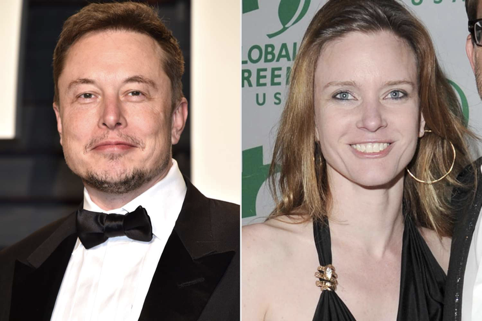 (Image caption ) Justine Wilson was Musk's early partner and witnessed his anxiety and unease before he became a god.
Mother is the starting point, father is the shadow.
To understand Maye's significance to Musk, one cannot completely ignore the shadow of her father, Errol Musk.
In publicly available information, Maye has repeatedly discussed her painful, controlling, and violent experiences in that marriage; while Errol Musk has offered differing accounts or denied some of the related allegations. For GFM, the important thing is not to re-examine an old family case in a biographical piece, but to understand a more fundamental context: Musk did not grow up in a stable, docile, and predictable family environment.
This is crucial.
His mother's realism, along with his father's shadow, formed the early context for his understanding of power, risk, and control.
In the stories of many brilliant entrepreneurs, the outside world often attributes their later behavior to "talent." But people are not merely products of talent. They are also shaped by the family environment, early fears, uncertainties in close relationships, and the power structure between parents.
Musk's later displays of a strong sense of control, extreme risk-taking, resilience to crises, and an impulse to almost constantly reshape the external world cannot be simply attributed to any one family factor.
But early family background is not insignificant.
It's like groundwater.
Though it doesn't appear in the picture, it has a long-term influence on how a tree grows, how it stretches, how it withstands storms, and how it forms its own twists.
Mayer is the starting point.
The father is a shadow.
Musk's later life, to some extent, was a constant push towards the horizon between his starting point and his shadow.
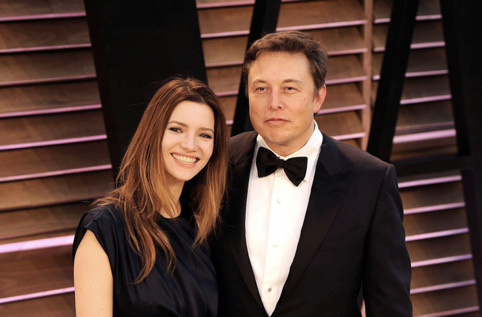 (Image caption ) A photo of Talulah Riley and Elon Musk. The article describes her two separate relationships, reflecting Musk's emotional instability and deep loneliness, and his inability to easily remain in everyday intimacy.
Unyielding composure is another kind of legacy.
There is something about Mayer that is difficult to name precisely.
It's not simple optimism, because her understanding of reality is too clear. It's not strength in the ordinary sense, because that word is too light and too easily misinterpreted as a lack of feeling. Nor is it the "resilience" in emotional platitudes, that word has been overused.
What she possesses is more a calm demeanor that refuses to admit defeat.
Of course, there will be emotions and pain, but after the emotions and pain, we still need to sort ourselves out, move on to the next thing, and continue to maintain a ready-to-act attitude towards the world.
This calmness is not numbness or repression, but rather a low enough center of gravity to prevent even the greatest impact from easily overturning you.
Judging from Musk's later behavior, this unyielding composure seems to have left a deep mark on him.
His public image is characterized by a great deal of intensity: verbal clashes on social media, forceful pushes of imagination at press conferences, and the rapid dismantling of much of the old order after acquiring Twitter and transforming it into X. People who see this perceive him as emotional, capricious, and even a self-centered troublemaker.
On the other hand, this person almost never truly abandoned his core direction because of external attacks.
For him, failure was not the end, but a means of correcting variables.
This isn't perfect, nor is it a defense of all his actions. But it does help us understand why he was able to get back up so many times when he was almost down.
For him, failure is not the end.
Failure is like part of the engineering process.
This cold treatment of failure is perhaps the deepest echo of Meyer's realism in him.
 (Image caption ) Grimes (Claire Boucher)'s artist-style portrait, full of futurism and cyberpunk aesthetics. She and Musk share a symbolic imagination, and the article points out that this relationship brings futurism into love, as well as a clash between parenthood and everyday reality.
Justine: She had seen him before he became a god.
Justine Wilson appeared before Elon Musk was a global tech icon.
She witnessed his anxiety, his unease, and those early nights when he was completely uncertain if he could even make it to tomorrow. She wasn't someone who appeared after he had already reached the top. She was an early witness, one of the closest readers of Musk's personal story.
They built a family together and shared the devastating loss of their child.
Their first child, Nevada Alexander, was only ten weeks old. That was a void that no amount of commercial success could fill, nor was it a family trauma that outsiders could easily understand.
Later, Justine wrote about that marriage from her own perspective.
That text should not be simply regarded as a judgment, nor should it be crudely reduced to gossip. It is more like a first-person account from someone who experienced it firsthand, describing the power dynamics within the marriage, the imbalance of intimacy, and the private costs behind the entrepreneurial myth.
In her article, she recalled that early in their relationship, Musk expressed a strong sense of dominance: if they disagreed, he was right, and she needed to adjust her worldview. This kind of statement is still frequently quoted years later, not because it can define a marriage on its own, but because it reflects a very real personality dilemma:
How can someone who is incredibly successful in their career deal with another consciousness in an intimate relationship that they cannot control?
A company can be unified by a shared vision.
Employees can be driven by goals.
The capital market can be persuaded by storytelling.
But someone who loves you cannot be unified by a vision, driven by goals, or persuaded by a story. She has her own feelings, her own judgments, and her own imagination of what life should be like.
This clash is the most memorable thing about Justine's relationship.
It reminds us that behind the heroes of technology lies a quiet price to pay, which never appears on the presentation slides or in the footnotes of financial reports.
This is not a moral judgment against Musk.
Rather, it is an unavoidable issue in character writing: when a person treats the world as a system that can be modified, can he still truly acknowledge that the people around him are not systems, variables, tasks, or worldviews waiting to be adjusted?
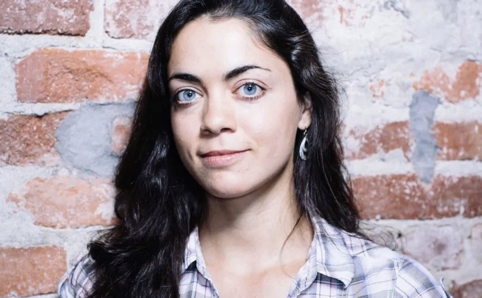 (Image caption ) A professional portrait of Shivon Zilis, who juggles the dual roles of a core technology worker and a family member. The image corresponds to the article "New Structures of Intimacy in the AI Era," reflecting how technological power is redefining intimacy and civilizational narratives.
Talulah: His inconsistency in relationships isn't a game, it's a predicament.
Talulah Riley's relationship with Elon Musk can most easily be simplified into a dramatic headline on an emotional page: meeting, marriage, divorce, remarriage, and divorce again.
Public records show that Talulah Riley and Elon Musk married in 2010, divorced in 2012, remarried in 2013, and finalized their second divorce in 2016. They have no children together, and their relationship did not descend into prolonged public conflict like some other couples.
This is precisely why it reveals a quieter problem in Musk's emotional world.
Musk is not an emotionally detached person.
He may be the opposite—he has a deep need for emotions, but judging from public information and his behavior, he seems to have a structural difficulty that makes it hard for him to truly settle down in relationships.
It's not about staying by someone else's side, but about staying within the daily rhythm of the relationship.
Fixing a conversation, remembering an anniversary, spending an evening talking to someone without any pressing agenda and without thinking about SpaceX’s next test window—these are things that are part of life for most people, but for someone like Musk, who is so deeply engrossed in a sense of mission, they may be an almost instinctive requirement.
He is a person who is highly driven by a sense of mission.
This occupation is not an excuse, but a real state of being.
When a person deeply believes they are doing something related to the survival of human civilization, their perception of everyday intimacy is inevitably compressed. It's not that they don't want to love, but rather that other things occupy too much space in their attention span.
Talulah entered into the relationship twice, and left it twice.
This isn't a woman's indecisiveness. It's more like a clear-headed person who twice tries to understand love, and twice discovers that they may not be able to endure a daily life that's too bland for long.
The Musk she saw was not the powerful figure in the media, but a person who repeatedly entered and exited emotional situations, yet could never truly settle down.
That person is more real than any symbol, and also more lonely.
Grimes: When Futurism Enters Love
The emergence of Grimes represents an aesthetic crossover in Musk's private world.
She is an artist, a musician, and a bearer of cyberpunk aesthetics and counterculture symbols. Her initial encounter with Musk elicited astonishment from the outside world, because the two seemed to belong to completely different universes.
But upon closer inspection, they share some deeper things.
Neither of them is satisfied with the language of reality.
They all believe that the future deserves to be reimagined.
They are all willing to put themselves into a grand narrative.
They all want to turn their very existence into some kind of symbol.
Their child's name sparked global discussion. Many people considered it a strange story, but the name also seems to be a microcosm of Musk's worldview—he attempts to put his fatherhood, technological symbols, futuristic vision, and personal aesthetics all into the same naming system.
This is what makes Musk so fascinating, and also what makes him so likely to put pressure on those around him.
He was not content with simply calling a car a car; he wanted to redefine it as a computer moving on the road. He was not content with simply calling a rocket a rocket; he wanted to redefine it as the infrastructure for human interplanetary migration. He was not content with simply calling a satellite a satellite; he wanted to redefine it as the underlying network for global information access.
Everything he does gets renamed.
Even children are not just children.
But love cannot live in the realm of concepts.
Life goes on, and children still need to be cared for. The crying at night won't automatically quiet down just because the father has announced a plan to change humanity.
Grimes' relationship with Musk later transcended a romantic narrative of an artist and a tech entrepreneur, delving into the practicalities of parentage, childcare, residence, and child arrangements. When futurism returns to everyday family life, the most difficult issues to address are not the symbols themselves, but rather where the children live, who cares for them, and how the two adults share the responsibilities.
This is not a trial for Musk.
But this is a question that should be addressed honestly:
When a person places himself in the grand narrative of future humanity, can those around him still be sure that, in his view, he is first and foremost a person who is loved, rather than a character in that narrative?
Shivon Zilis: A New Structure of Intimate Relationships in the AI Era
Shivon Zilis's uniqueness lies not in whether she conforms to the traditional narrative of a partner, but in the fact that she is simultaneously situated within Musk's private family network and AI power network.
She's not a figure from entertainment news. She's a core member of the tech industry, having worked within OpenAI and held a senior position at Neuralink. Public reports indicate she has children with Musk. This makes her relationship with Musk difficult to understand simply by placing it within the traditional framework of wealthy individuals' romantic histories.
This type of relationship structure has few historical precedents.
Traditionally, the extremely wealthy have family wealth inheritance, marriage as a boundary for asset protection, and a clear separation of public and private life. But Musk's close relationships are increasingly difficult to interpret using traditional frameworks.
He has long publicly discussed the issue of population decline, regarding low birth rates as one of the major risks that human civilization needs to face, and also regarding having more children as a responsible response to the future.
This means that his reproductive behavior is no longer simply an expression of private choice, but is wrapped in a larger ideological language.
This is a new self-narrative that contemporary technological elites are developing: they are not just accumulating wealth, not just building companies, they are managing certain civilizational risks, designing certain civilizational backups, and using their own resources, genes, AI systems, and interstellar projects to intervene in the long-term fate of humanity.
Shivon Zilis represents this new structure as it manifests in the dimension of intimate relationships.
There may certainly be genuine human relationships, genuine trust, and genuine shared choices involved. But GFM wants to point out another dimension of the issue:
When a person begins to consider every choice they make as an engineer of civilization, can their intimate relationships still maintain the private nature of ordinary people?
There is no standard answer to this question.
But it must be presented honestly.
Home networks as of publicly reported
As of around 2026, publicly reported information indicates that Musk has at least 14 children, involving multiple mothers, including Justine Wilson, Grimes, Shivon Zilis, and Ashley St. Clair. Since this information is partly derived from public statements by the parties involved, court documents, or media reports, and family arrangements are still subject to change, a more accurate description would be "as of publicly reported time" and "at least."
This number is important not because it can generate news excitement, but because it makes Musk's family values impossible to simply categorize as private life.
In typical family narratives, children are first and foremost family members.
In Musk's narrative, children are still children, but they are often placed in the context of population decline, the continuation of civilization, educational experiments, and the future of humanity.
This does not mean that his fatherly love was not genuine.
On the contrary, it is entirely possible for a person to genuinely love their child while simultaneously understanding the child's arrival in an overly grandiose way.
The question is: when children are placed within a father's civilizational narrative, are they still allowed to be themselves in their own way?
This is the most difficult and human issue in Musk's family story.
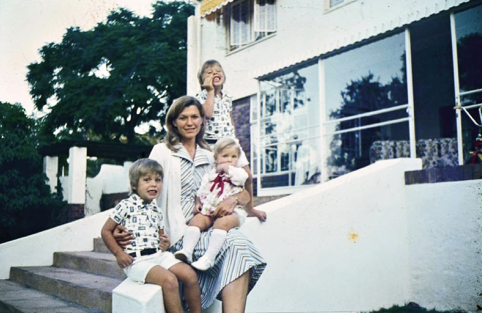 (Image caption ) A family photo of Elon Musk with Shivon Zilis and their children, showcasing the close-knit relationships of contemporary tech elites.
Family values: Where is the boundary between love and control?
Musk's emphasis on children is clear. He has created a special educational environment for them and has spoken publicly about his role as a father. In many interviews, he displays a rare tenderness when discussing his children.
However, the open rift between him and some of his children is also a fact.
One of the adult children changed his name and publicly expressed his desire to sever ties with his father. This matter, more than any external criticism, comes closer to a real question: How does someone accustomed to thinking as a designer in the public sphere confront others whom they cannot design?
That other is the child.
It is a person with their own soul, their own confusion, and their own choices, not a project waiting to be incorporated into a future framework.
Musk once opened a special school for his children because he was dissatisfied with traditional education. He's not just dissatisfied with the automotive industry, the aerospace industry, social media platforms, and the AI landscape; he's dissatisfied with education as well. His drive to transform the world extends to almost everything he touches.
This impulse is both a talent and a predicament.
Talent can drive industry when it is outside the home.
Internal difficulties can strain relationships.
Because some things cannot be designed, nor should they be completely designed. A child's soul, a partner's consciousness, the daily routine of a family—these things have their own rhythm, their own way of refusing to conform to any schedule.
A father can provide his child with resources, opportunities, and even an environment that allows him to connect with the future earlier.
But a father cannot decide for his child where his soul should lead.
This is the boundary that all strong fathers must face.
This is also what Musk is facing now.
The underlying nature of empire
Tesla is a restructuring of energy and transportation; SpaceX is a restructuring of space and geopolitics; Starlink is a restructuring of communication infrastructure; Neuralink is a restructuring of the human-machine boundary; xAI is a restructuring of the competitive landscape of artificial intelligence; and X is an attempt to restructure the public sphere and payment networks.
From the outside, it is an amazing territory.
But beneath this map lies an earlier and deeper structure.
Musk's company, in a sense, is an externalization of his inner order.
He doesn't accept boundaries, so the company keeps crossing them.
He doesn't accept waiting, so the company is always moving forward at high speed.
He doesn't believe in stability, so the company has been living in constant turmoil for a long time.
He needs control; he has a strong desire to intervene in products, narratives, people, timelines, and the public sphere.
He fears human stagnation, and he places Mars, AI, and population issues within the same framework of civilizational anxiety.
This is not a business strategy, or at least not just that.
These behaviors stem from the soil of a person's childhood, from the realism that Meyer constructed in those mornings, from the language of control that Justine witnessed in those nights, from the silence that Talulah took away when he left twice, from the questions that Grimes left in the world of symbols, and from the new technological intimacy and unnamed shape represented by Shivon Zilis.
A person's public behavior is often an amplification of their private structure.
Musk's formidable presence in the business world and the cracks in his personal relationships are not two separate stories, but rather two outlets for the same personality.
The same relentless force that built his company but also eroded his relationships.
The same extreme vision of the future propelled his business but also compressed the space of his daily life.
The same fear of losing control allows him to command calmly in a crisis, but also makes it difficult for him to let go and allow those around him to exist in their own way.
That's what makes people complex.
True character writing is neither about defending a person nor about destroying them.
It's about seeing how he gradually became himself.
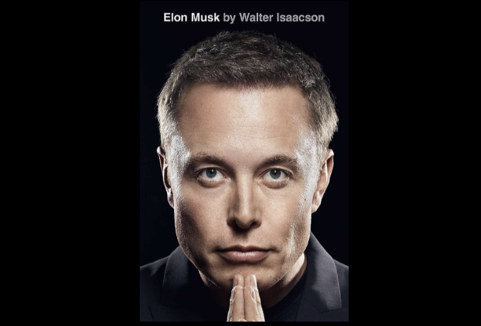 (Image caption ) A professional portrait of Elon Musk in deep thought, capturing his inner loneliness and civilizational ambition as the creator of a tech empire.
Maye is the starting point, not the answer.
Back to Mayer.
All the women who came after Musk reflected a certain aspect of him; but Maye was the first to shape that aspect.
She is the starting point, not the answer.
She helped us understand why Musk believed so early on that life doesn't follow the normal pace. Why he can withstand extreme pressure without collapsing. Why he dared to bet a large amount of assets on a potentially exploding rocket and then move on to the next project.
Mayer instilled in him a most fundamental, underlying belief:
The world won't automatically treat you kindly. You have to stand up for yourself. You have to decide where you're going. You have to bear the consequences of the path you choose. No one can do it for you.
This kind of education is extremely powerful.
But it comes at its own cost.
A person who learns to rely on themselves too early often finds it difficult to truly depend on another person as an adult. It's not that they're unwilling, but rather that the ability wasn't fully developed in their early years. A person who learns to act in crises too early may sometimes treat crises as the norm and calm as a false sense of security as something to be wary of. A person who knows too much about the instability of the world may use constant control to combat that deep-seated insecurity as an adult.
This is the source of Musk's deep-seated contradiction.
It's not a conflict between his company and his emotions, but a structural tension between his ability to survive and his ability to connect.
He has amazing creativity, but also amazing destructive power.
He can ignite an industry, and he can ignite a storm.
He can lead humanity to the future he envisions, but those around him sometimes have to bear a weight that is difficult to talk about openly.
Mayer did not give him a perfect personality.
She gave him the ability to keep moving forward in an imperfect world.
That's profound enough.
14. The woman behind should not be described as just her back.
The notion of "the woman behind Musk" carries its own risks.
The word "behind" implies a supporting or subordinate role, suggesting that their existence serves his narrative of success.
But Maye, Justine, Talulah, Grimes, Shivon Zilis—none of them were merely people behind the scenes.
They all have their own lives, their own choices, their own traumas and their own moments of brilliance. Their intersection with Musk is only a part of their lives, not the whole of them.
The purpose of this article by GFM's "People" section is not to categorize them all into the framework of "the women who made Musk."
Rather, we should say that they are some of the best entry points for understanding this character.
Through Mayer, we see his survival instincts.
Through Justine, we see his controlling language in intimate relationships.
Through Talulah, we see his deep emotional loneliness.
Through Grimes, we see his futuristic impulse to symbolize everything.
Through Shivon Zilis, we see how technological power in the AI era is redefining the shape of intimate relationships.
They were neither the reason for his success nor the reason for his failure.
They are his truest reflection.
These mirrors reflect the deepest human nature within a technological empire.
 (Image caption ) The historic moment of the SpaceX rocket explosion, with flames shooting into the sky, represents the process of engineering iteration. Echoing the article "Unyielding calmness is another kind of legacy" and Mayer's realism, it symbolizes Musk's character of treating failure as data and crisis as normal, a spirit of fearlessness in the face of adversity learned from his family in his early years.
Rockets soar into space, but humans remain on Earth.
Musk's story is not over yet.
His company continues to expand, and his influence continues to transcend the boundaries of industry, politics, media, capital markets, and the imagination of civilization. He will continue to create breathtaking achievements and perplexing storms.
But one thing will not change because of his achievements.
He is a person shaped by his mother, amplified by the times, armed by capital, empowered by technology, and repeatedly exposed to some quieter, more difficult parts of himself through intimate relationships.
Mayer gave him the confidence to take risks and the composure to survive.
His wife and partner revealed his controlling nature, his loneliness, and his almost paranoid ambition for civilization.
The child reminded him that the future is not a project that can be designed unilaterally; every new life will grow in its own direction and will not obey any father's timetable.
Rockets can fly into space.
But people still remain in the world.
People have mothers, lovers, uncontrollable children, emotions to face in the night without an audience, loneliness that no empire can fill, and daily life that no algorithm can replace.
The so-called "woman behind Musk" doesn't really reveal the secret to a man's success.
Rather, it is a technological empire, and at the deepest level of all grand narratives, it still hides the oldest layer of humanity.
There is Maye's resilience, Justine's pain, Talulah's vacillation, Grimes' futuristic vision, Shivon Zilis's symbolic new confusion about intimate relationships in the AI era, and Musk himself—the one who is always launching, and the one who is always left behind on the ground.
 (Image caption ) The moment a rocket lifts off is the image most familiar to the outside world regarding Musk: fuel, countdown, flames, failure, and retrying. But what this article truly seeks to explore is not how a rocket flies into space, but where the fuel of a person's character is first ignited.
He launched the rocket into the sky.
But to understand him, we still need to return to the ground.
Return to your mother's hands, return to the words left by your wife, return to your partner's silence, return to your child's name, return to those places that will never appear on the market value curve, but which truly determine a person's character and destiny.
Because the larger a person's empire, the longer the shadow of humanity behind him.
Disclaimer:
This article is the first in a series of reports by GFM's "People" section on Elon Musk's life and personality, focusing on the female aspects of his relationships and underlying character. All personal statements, family relationships, information about his children, and public events cited and referenced are based on his writings, public media interviews, public reports, or available legal documents. This article does not contain any private communications or unauthorized confidential information.