

Sheila Warren: The Person Who Translates Technology into Systems
— Rebuilding a channel of public trust between digital assets, AI, and data sovereignty
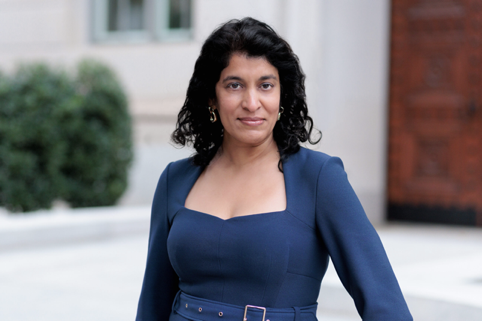 (Image caption) Sheila Warren serves as Chief Strategy and Operations Officer at Project Liberty, focusing on data sovereignty and control over digital life. She translates decentralized technologies into a governable public framework.
Daniel Sieu's story unfolds in California city meeting rooms, loan forms, and the state treasurer's office. Sheila Warren's story takes place in an even more obscure arena—when code, protocols, tokens, and algorithms reorganize the trust structures of human society, who is responsible for translating all of this into a language that institutions can understand, hold accountable, and govern?
The two men faced completely different materials, but their methods were surprisingly similar: neither of them stood at the center of power or technology itself, but rather stood between power and reality for many years, bringing together two languages that were originally incomprehensible to each other to the same table.
From Harvard Law School to Nonprofit Technology
To understand Sheila Warren, you can't start with cryptocurrency. If you do, it's easy to reduce her to an industry advocate and miss the most crucial undercurrent in her entire career.
After earning her Juris Doctor degree from Harvard Law School, she worked as a lawyer at Cravath, Swaine & Moore, a top Wall Street law firm, and graduated from Harvard with honors with a degree in economics. This was an exceptionally high starting point, but she did not continue down that path.
She later moved into the nonprofit technology field, joining the leadership team at TechSoup and establishing NGOsource—an online service that helps U.S. foundations reduce the costs of cross-border grants. This system, seed-funded by an international foundation alliance, addresses a very specific institutional problem: how can a U.S. foundation verify the qualifications of an overseas NGO and reduce compliance costs when transferring funds, ensuring that donations can truly flow across borders instead of being bogged down in document review?
This early experience almost foreshadowed the methodology of all her later work—she was never interested in how new a technology was, but rather in how a new tool could be embedded in a trustworthy and accountable public framework. This is why, when she later entered the world of blockchain and cryptocurrency, she did not become a mere industry advocate.
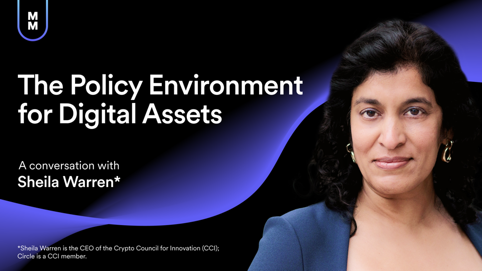 (Image caption) During her tenure as CEO of CCI, Sheila Warren translated the value and risks of cryptocurrency into institutional language that policymakers could understand, in the face of the collapse of FTX and strict regulation.
At the World Economic Forum, blockchain was brought into the policy room for the first time.
Prior to joining the Cryptocurrency Innovation Council, Sheila Warren founded the World Economic Forum's Blockchain and Digital Assets team and served as a member of its Executive Leadership Team. As the Deputy Global Head of the Forum's Centre for the Fourth Industrial Revolution, she coordinated strategies in 16 countries to promote the adoption of new technologies in a direction aligned with global public interest. In this role, she regularly briefed heads of state, ministers, Fortune 100 CEOs, and civil society leaders on topics such as cryptocurrency, artificial intelligence, extended reality, and the metaverse.
This is a job that is easily underestimated. Around 2018, blockchain was simultaneously portrayed in the public narrative as both a disruptor of the future of banking and a breeding ground for money laundering and fraud. What Warren did in the forum was not to defend either narrative, but to break down the issues—which are the real possibilities brought about by the technology itself, which are just noise caused by uncontrolled market behavior, which require regulatory clarity, and which are related to ordinary people's data rights and financial accessibility.
It's worth mentioning that she co-founded CRADL with Tricia Wang during the World Economic Forum. CRADL, short for Crypto Research and Design Lab, is a lab focused on cryptography, social impact, and design research, rather than simply an industry PR agency. Years later, these two would meet again on a completely different topic—but that's another story.
CCI: Translating during the three most turbulent years of cryptocurrency.
In early 2022, Warren left the World Economic Forum to become CEO of the Cryptocurrency Innovation Council, responsible for communicating the value of cryptocurrencies to policymakers and regulators on behalf of the organization. Members of this council include influential industry players such as Coinbase, Fidelity Digital Assets, Block, Andreessen Horowitz, Ribbit Capital, and Paradigm.
Her timing in taking this position was not easy. During her tenure, the industry experienced the collapse of FTX and increasingly stringent scrutiny from then-SEC Chairman Gary Gensler. With the bull market narrative fading, the industry had to answer more pressing questions—who protects users, who takes responsibility, and who is regulated? Warren's value at this stage was not in defending cryptocurrencies, but in forcing the industry into a system that could be questioned and legislated.
In 2023, she was named one of the most influential women in Washington, D.C. by The Washingtonian magazine. In December 2024, she announced that she would step down as CEO of the CCI in January 2025, becoming a Senior Global Policy Advisor, with then-Chief Legal and Policy Officer Ji Hun Kim succeeding her as President and Acting CEO. In her farewell statement, she reviewed the changes during her three-year term and expressed her confidence that the committee would be able to drive informed regulatory outcomes in Washington.
This handover, occurring on the eve of a more favorable regulatory environment for the cryptocurrency industry, also illustrates the nature of her work—her task was never to lead the industry to a certain end, but rather to guide it through its most dangerous phase. The journey is over, and the translator has completed a stage of her mission.
 (Image caption) Cryptocurrencies such as Bitcoin and Ethereum represent the domain Sheila Warren worked on at the World Economic Forum and CCI. She transformed technological possibilities and risks into an accountable regulatory framework.
The Shift from Digital Assets to Data Sovereignty
In January 2025, Project Liberty President Tomicah Tillemann announced that Warren had been appointed as Project Liberty's Chief Strategy and Operations Officer, and concurrently as CEO of the Project Liberty Institute. This is a newly created position, making her a core member of Project Liberty's leadership team.
This job change, ostensibly a transfer to a different organization, actually represents an escalation of the issue. The problem she has to address has shifted from "how digital assets should be regulated" to a more fundamental issue: how to regain control over people's digital lives.
By the time she joined, Project Liberty had been established for approximately five years, dedicated to developing next-generation internet infrastructure, Frequency, and advancing related research through the Project Liberty Institute in collaboration with an international network of partners including Georgetown University, Stanford University, and ETH Zurich. Founder Frank McCourt stated that Warren's experience and expertise in decentralization and technological democratization make her well-suited for key roles at Project Liberty and its research institute. Her work will encompass coordinating strategic partnerships and playing an active role in key projects such as the "people's bid to acquire TikTok," leveraging her expertise in blockchain technology, digital governance, and technology ethics.
This issue is more difficult than that of cryptocurrencies because cryptocurrencies can at least be discussed within the frameworks of financial regulation, securities law, or anti-money laundering. But data sovereignty and AI touch upon something much more fundamental—a person's identity, attention, behavioral records, and ultimately, who owns these things.
 (Image caption) Discussion at the Global AI Governance Conference. Sheila Warren serves as the Chair of the Board of the Advanced AI Society, advocating for verifiable AI to become a standard and bridging institutional gaps in accountability.
In the latest gaps in AI governance
By 2026, Warren's public identity had shifted again. She is currently the Chair of the Board of the Advanced AI Society, an industry association focused on verifiable AI, which considers verifiable AI a category of AI safety. The organization's core goal is to make verifiable AI publicly definable, commercially available, independently certifiable, and widely insurable, making verification the default standard for every AI system.
This system attempts to address the so-called "verifiability gap"—logs can be forged, policies only describe intentions rather than actual actions, and contracts can only be used to hold people accountable after the fact; none of these constitute independent evidence. When AI agents begin to perform tasks and access funds and data in place of humans, if there is no way to prove who approved a decision or who can be held responsible for mistakes, AI will not just be a productivity tool, but may become a machine that allows accountability to vanish into thin air.
Coincidentally, the co-founder and CEO of the Advanced AI Society is Tricia Wang—the same researcher who co-founded CRADL with Warren at the World Economic Forum. The two parted ways at the very beginning of blockchain governance, and now they've reunited on the new battlefield of AI governance. This trajectory, more convincingly than any title itself, illustrates one thing: those truly engaged in translating institutional norms are a very small circle, and they will always be present.
 (Image caption) WAIC High-Level Meeting on Global AI Governance 2025. Sheila Warren's trajectory exemplifies the central role of translating technology into institutional language, from blockchain to data sovereignty and the foundation of trust in AI.
She is not the answer, but a signal of the system.
Sheila Warren isn't the kind of tech figure easily remembered by the public. She hasn't founded a company with a staggering market capitalization, nor has she issued any tokens that have altered market prices, and she's not the type to stand on a press conference showcasing the next generation of models.
But she repeatedly appears in the same position—the position where technology must be understood by institutions before it can be accepted by society. From cross-border funding compliance at NGOsource, to blockchain governance at the World Economic Forum, to CCI's crisis translation after the collapse of FTX, to Project Liberty's data sovereignty initiative, and today's verifiable AI standards at the Advanced AI Society, these experiences, seemingly spanning five completely different fields, are actually extensions of the same thread—trust infrastructure.
Finance needs trust, data needs trust, and AI needs trust as well. In a technological world where speed defines value, figures like Warren remind us that innovation without institutional support can easily slide into chaos; and technology without a foundation of public trust is unlikely to truly translate into progress.
Daniel Sieu paves the way in the cracks of California's economy, translating policy into opportunities for businesses. Sheila Warren paves the way in the cracks of digital civilization, translating technology into a language that can be governed by institutions. Neither job is noisy, yet both are important—because those who truly change the world are often not just those who create new tools, but also those who make those tools understandable, absorbable, constrained, and trusted by human society.
Disclaimer
This article is compiled and written based on official public information from organizations such as the Crypto Council for Innovation, the World Economic Forum, Project Liberty, and the Advanced AI Society, as well as public press releases from PR Newswire and related public reports. It aims to observe technology policy figures and analyze systems, and does not constitute any investment advice, institutional endorsement, or value judgment on related technologies or products.