

Rupert Murdoch: The Man Who Creates Power
How to build a media empire capable of manipulating reality in seventy years.
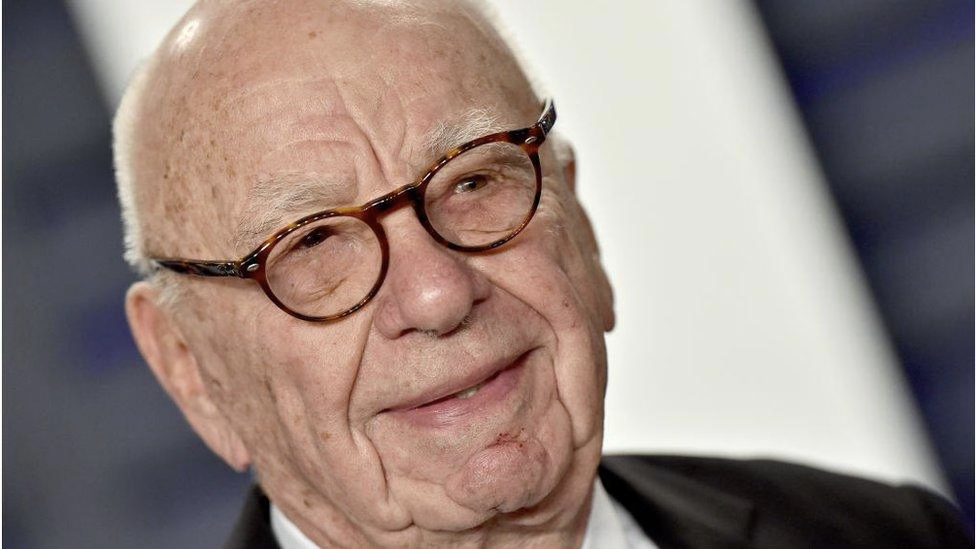 (Image caption) Rupert Murdoch, founder of News Corporation and Fox. In seventy years, he built a global empire spanning newspapers, television, and digital media from a small Australian newspaper, and is considered one of the most controversial yet most influential media figures of the 20th and 21st centuries.
If the media is essentially power, then is "neutrality" merely a narrative?
In any serious discussion about modern media, Rupert Murdoch is an unavoidable name. Not because he is the most respectable, but because he most thoroughly answered the question—what exactly is the media?
His answer is not written in theory, but in seventy years of action: the media is not a tool of power, not a window to observe power, but power itself—a power that can be built, amplified, traded, and even inherited.
This is why he became one of the most controversial media figures of the 20th and 21st centuries. And this is also why his choice stands in stark contrast to two completely different paths: one is to refuse to be subservient to power and to exchange media for independent dignity; the other is to walk the cracks in the system for a long time, attempting to maintain a certain public space.
Three choices, three fates. Together they constitute a question closer to reality: where should the media stand between power, public institutions, and the gaps in the system?
I. Imperial Studies Beginning with a Tabloid
In 1952, 21-year-old Rupert Murdoch graduated from Oxford University and returned to Melbourne, Australia, to take over his father's tabloid, The News.
At that moment, no one could have predicted that he would use this tabloid as a starting point to build a global empire spanning newspapers, television, film, and digital media over the next seventy years.
But Murdoch himself may have had a premonition. He later said, "At its core, the most successful business ventures are speculative in themselves. You have to learn to act quickly when an opportunity arises."
This statement encapsulates both his business philosophy and his media philosophy. For Murdoch, they have always been one and the same.
In the 1950s and 1960s, he built a media conglomerate in Australia, honing an expansion logic that was later repeatedly used: find undervalued media assets, reactivate audiences with sensational and popular content, and consolidate market position through economies of scale and political connections. This logic was not simply a business strategy, but a power-building method with a high degree of political sensitivity.
In the 1970s, he brought this approach to Britain. After acquiring the News of the World and The Sun, he pushed the style of British mass-market newspapers to a new extreme—more sensational, more emotional, and more directly appealing to readers' instinctive desires. Circulation soared, advertising revenue followed, and political influence quietly accumulated. British prime ministers began to realize that whoever had Murdoch's support gained an important political pawn.
This is not a metaphor. Murdoch's political influence is concrete, actionable, and two-way: his media can help a politician rise to power, or bring another to the end of their career. 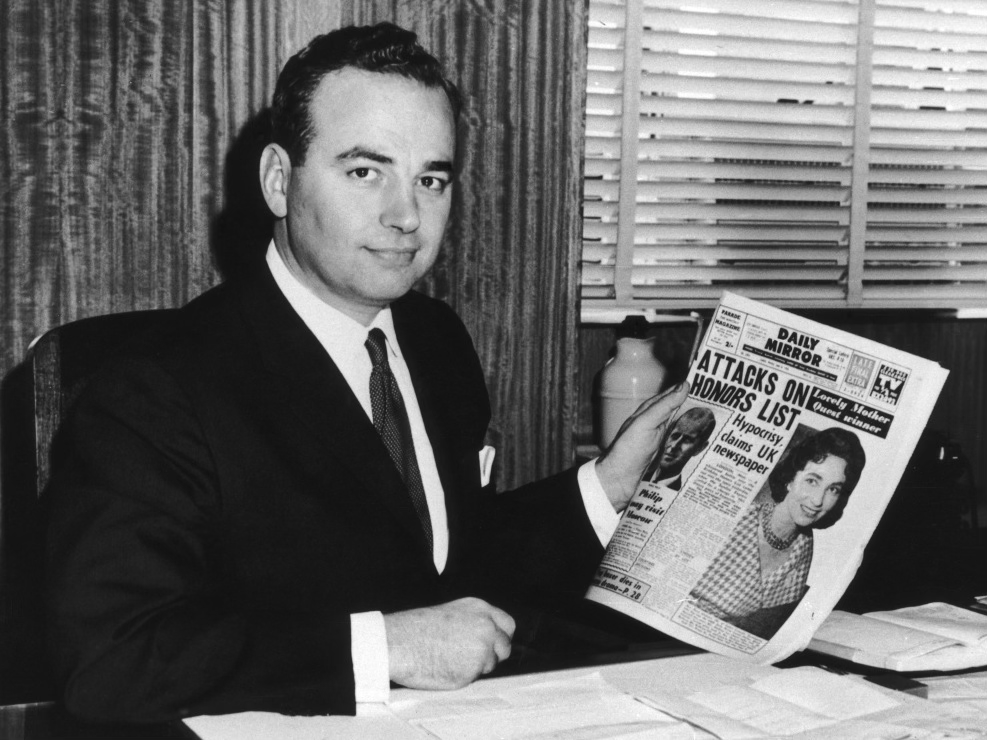 (Image caption) In the 1950s, a young Rupert Murdoch took over his father's tabloid, The News, in Australia and gradually expanded his media empire. This was the starting point of the Murdoch empire, where he honed his expansion logic of "traffic generation + political sensitivity," laying the foundation for his subsequent global expansion.
II. The United States: From New Immigrants to Empire Builders
In the 1980s, Murdoch turned his attention to larger markets.
After entering the United States, he made a gamble that seems almost unbelievable today: in 1985, he founded Fox Broadcasting Company, directly challenging the three major television networks that had dominated American television for many years—ABC, CBS, and NBC. As a foreigner, he started from scratch, competing against the most powerful broadcasting organizations in the United States.
Nobody thought he would succeed. But he did.
In 1996, he launched Fox News, a media product that would later have the most profound impact on American politics. The creation of this channel was not just a business decision, but a precise political insight. He saw a market gap: the distrust of mainstream media among a large number of conservative Americans, their anger towards "elite liberal media," and their desire for a media voice willing to stand on their side.
Fox News is that voice.
Its success was achieved so quickly that it exceeded almost everyone's expectations. While daytime hard news was relatively balanced, prime-time talk shows were a completely different story: opinion-driven, emotionally amplified, framed by conservatives, and featuring a strong "we vs. them" narrative structure. Viewers weren't just watching the news; they were confirming their own stance and experiencing the satisfaction of having their worldview affirmed.
This sense of satisfaction, from a communication studies perspective, is more compelling than any factual news.
By 2007, Murdoch had acquired Dow Jones & Company for a hefty $5.4 billion, bringing The Wall Street Journal under his wing. This move marked a precise leap in his media empire: from the sensational style of a popular tabloid to one of the world's most influential financial media outlets. For the first time in Murdoch's empire, the conservative voice and the discourse of financial capital were seamlessly intertwined. 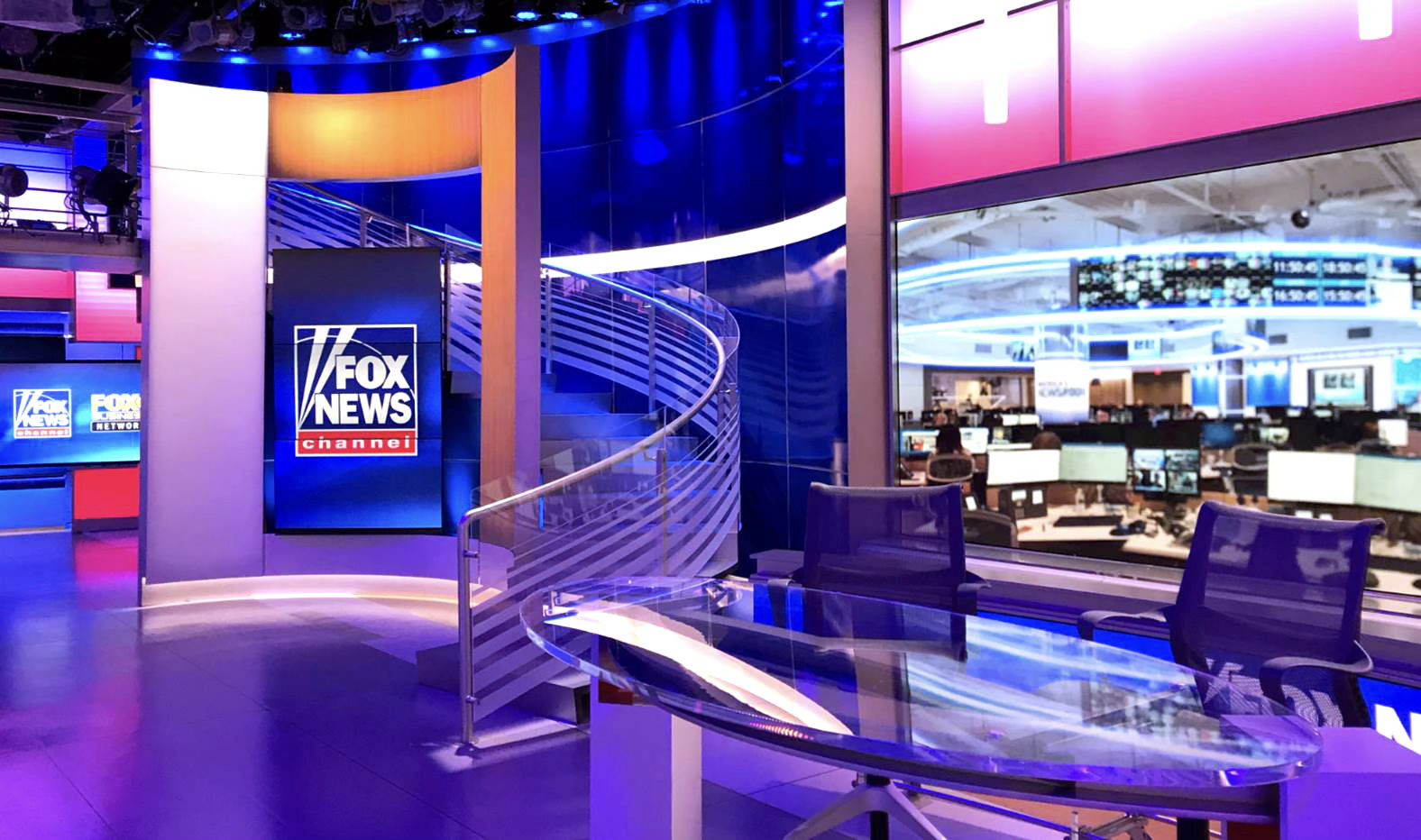 (Image caption) Fox News studios founded by Murdoch in 1996. This channel, with its explicit conservative stance, targeted an audience and became one of the most important media outlets influencing American political opinion, embodying the core operation of Murdoch's "stance-locking mechanism" and "political exchange mechanism."
III. The Murdoch Model: A Decomposable Power Generation System Here, it is necessary to stop and dissect Murdoch's media logic more clearly.
Because what he did was not just build a media company, but design a replicable, scalable, and inheritable system for generating media power. This system is the core of understanding Murdoch's true legacy.
Module 1: Traffic Generation Mechanism.
Acquiring the largest possible audience through sensational content was the first step in building an empire. From Australian tabloids to the British *The Sun*, and then to Fox News' primetime slot, Murdoch's content philosophy consistently revolved around a core question: what best captures attention? His answer was: conflict, emotion, and identification. This wasn't a random stylistic choice, but a repeatedly validated methodology for generating traffic. Traffic is fundamental; without scale, the latter two modules cannot function.
Module 2: Stance Locking Mechanism.
By using a clear political narrative framework, Murdoch transformed his audience into loyal users. This was one of his most important business innovations. Traditional media tries to serve everyone, but Murdoch understood that in an increasingly polarized society, a clear stance is more commercially valuable than feigned neutrality. By targeting conservative audiences and providing them with a stable mechanism for confirming their worldview, these people become more than just readers or viewers; they become brand believers. Loyalty is more valuable than breadth of reach. 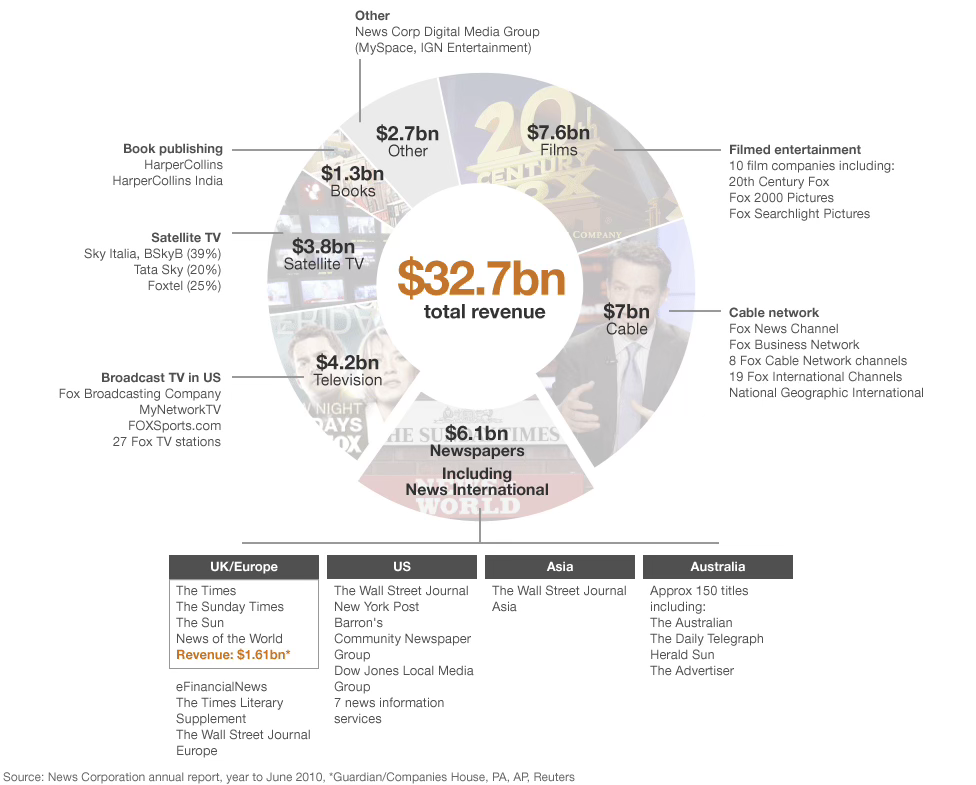 (Image caption) A diagram illustrating the asset and revenue structure of Murdoch's media empire (early data). From newspapers to television, satellite, and film, his empire systematically transforms media into a producible, tradable, and inheritable tool of power through three modules: traffic generation, stance locking, and political exchange.
Module 3: Political Exchange Mechanism.
Transforming massive public opinion influence into a tradable resource for political power is the most intricate and dangerous part of the entire system. The size of a media outlet's audience determines the degree to which politicians depend on it; this dependence translates into regulatory goodwill, policy bias, and broader protection of commercial interests. This is not corruption, but a more sophisticated form of institutional reciprocity—Murdoch's media helps some people win elections, and those people, while in power, help Murdoch's empire continue to expand.
When these three modules operate simultaneously, the media ceases to be merely a carrier of information and becomes a device for the sustainable production of power.
The most crucial characteristic of this system is that it does not rely on the charisma or morality of any single individual, but rather operates in an institutionalized manner. This is why the phone hacking scandal did not destroy the empire, the Dominican lawsuit did not destroy the empire, and even the family civil war did not destroy the empire—because only individual nodes are ever destroyed, while the system itself continues to function. 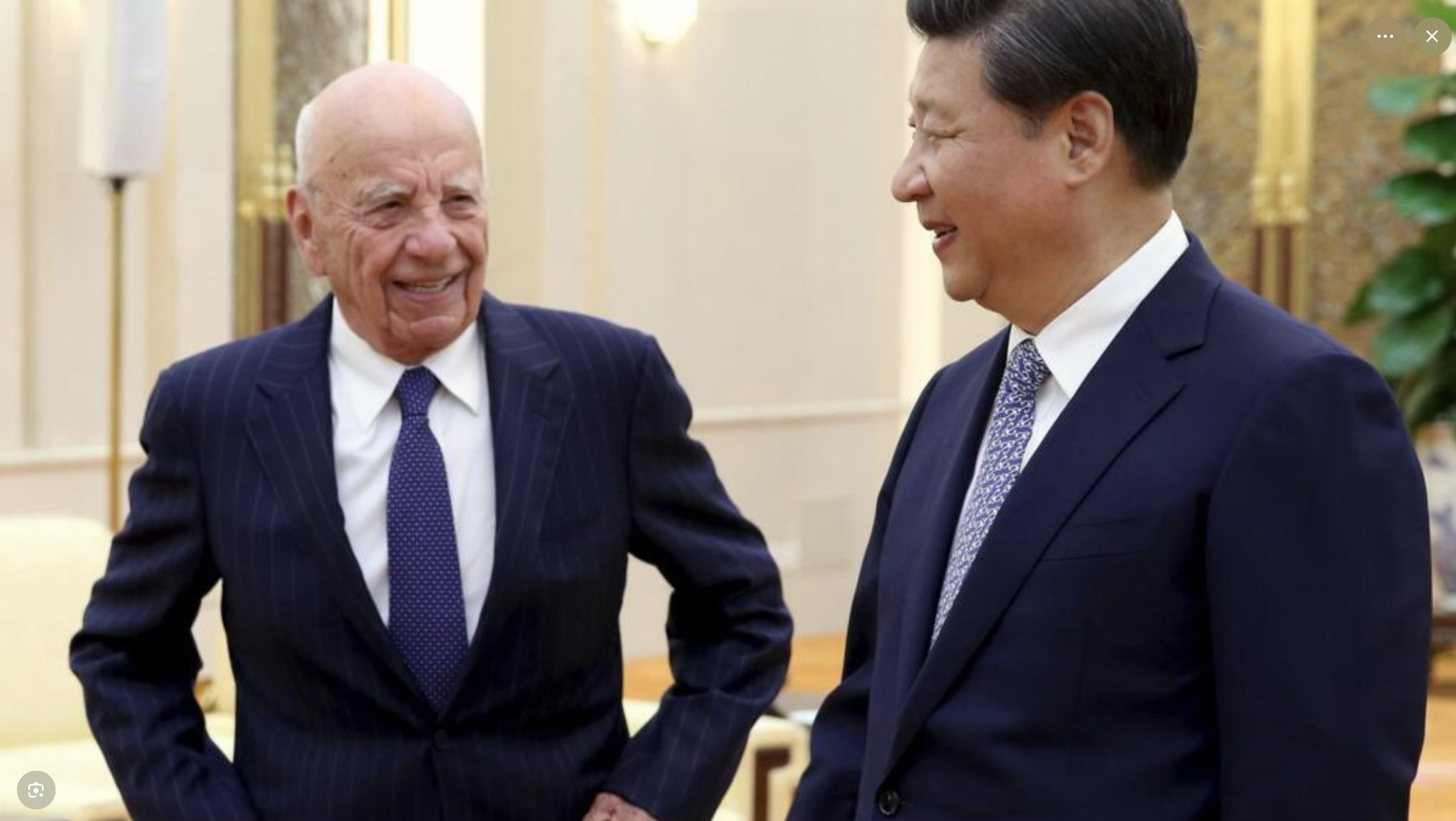 (Image caption) Xi Jinping promised Murdoch: China welcomes foreign media.
IV. Murdoch's Media Philosophy: An Undisguised View of Power Based on the above system, Murdoch's media philosophy becomes very clear and straightforward.
He never accepts the premise that "the media should be neutral." His logic is closer to this: the media is a resource, like land, capital, or political relations; saying the media should be neutral is like saying money should be colorless.
This viewpoint makes many people morally uncomfortable. But it has one undeniable characteristic: it is honest.
It is more honest than those media outlets that claim to be neutral but actually have a clear political bias. It is more honest than those media outlets that use the name of "public interest" to pursue commercial interests. Murdoch never hides what his media is doing; he simply doesn't pretend it's doing anything else.
This honesty is his strength, but also his danger.
Because once the logic of "media creating power" is openly accepted, and once it no longer needs to be hidden, it becomes much more difficult to criticize the system—it's hard to accuse a media outlet that never claims to be neutral of being biased.
V. Scandals, Costs, and Cracks in the Empire: This story is incomplete if we only talk about Murdoch's success.
In 2011, the UK's "phone hacking scandal" broke out. The News of the World was found to have been hacking the phones of celebrities, victims' families, and politicians for a long time, including the phone of the murdered teenager Miley Dowler. The News of the World was shut down, several senior executives were imprisoned, and Murdoch and his son were questioned by the British Parliament.
In 2023, Fox News reached a defamation settlement with Domini Voting Systems for a record $787.5 million. The latter sued Fox News for knowingly continuing to broadcast certain false claims about voter manipulation after the 2020 U.S. election.
It needs to be made clear that these events are not system errors, but rather inevitable byproducts of the system.
A media outlet that prioritizes maximizing traffic will ultimately tend to broadcast content that generates the most clicks, rather than necessarily the most truthful content. Similarly, a media outlet whose core business logic revolves around political maneuvering will ultimately prioritize supporting political allies, rather than upholding the facts.
These costs are the inevitable structural consequences of the Murdoch model in operation. They are not exceptions, but rather the norm. 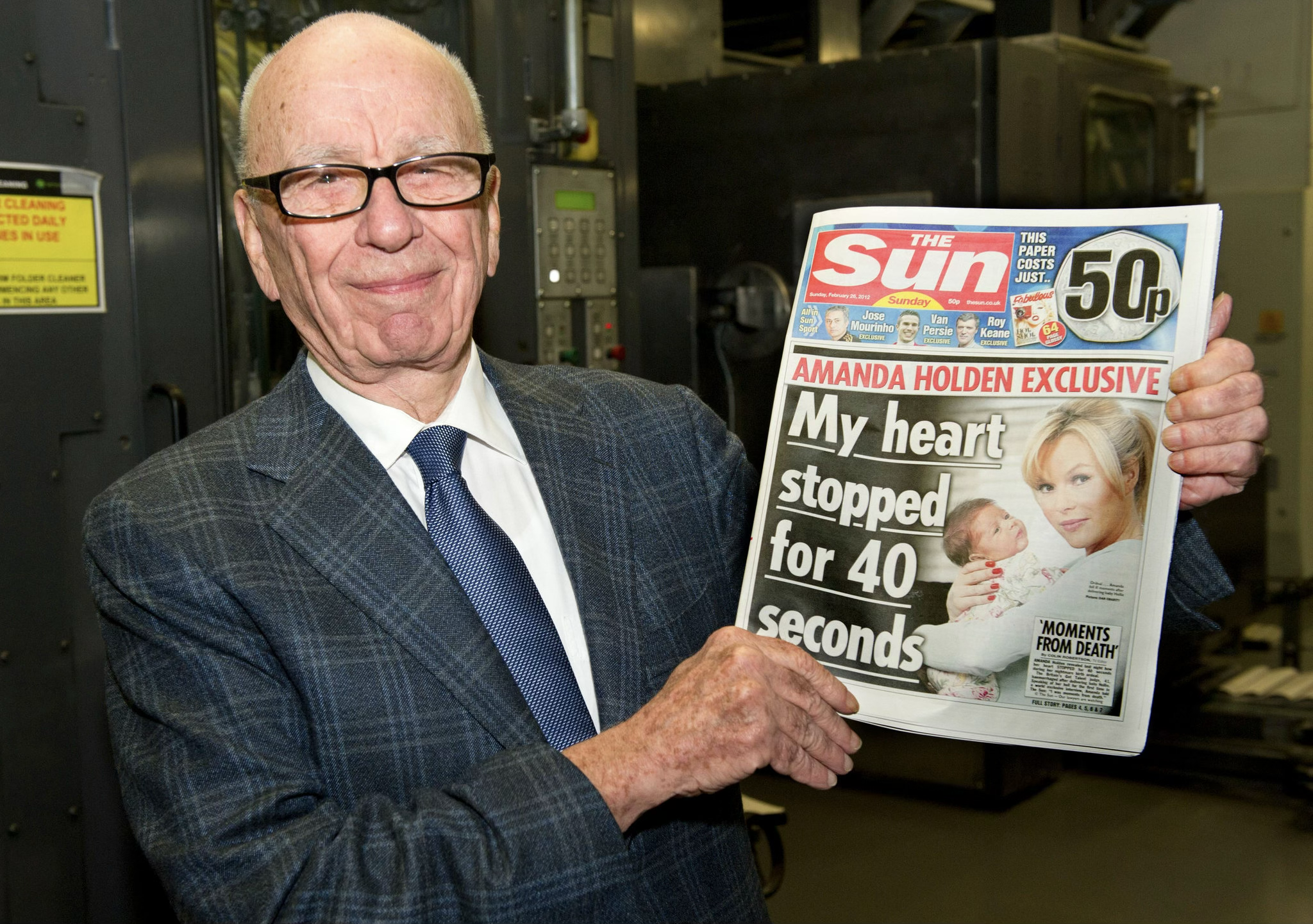 (Image caption) Rupert Murdoch holding a copy of The Sun newspaper. The Murdoch empire faced a major crisis after the 2011 UK phone hacking scandal. Such incidents highlight the structural costs of his "traffic maximization" model—in the pursuit of influence, ethics and credibility often come at a heavy price.
VI. Transformation in the Digital Age: Old Models, New Interfaces
In 2019, Murdoch sold most of 21st Century Fox's assets to Disney for $71.3 billion.
Many people thought this marked the contraction of the empire. The truth is quite the opposite—it was a precise asset streamlining, selling off the most resource-intensive entertainment production business while retaining the most profitable core: Fox News, Fox Sports, and the political influence machine derived from them.
Subsequently, Fox News, led by its eldest son Lachlan Murdoch, embarked on a clear digital transformation. Free advertising supported Tubi, a streaming platform that surpassed 100 million monthly active users, making it one of the largest free streaming platforms in the US. The FOX One subscription service, launched in 2025, packaged news, sports, and entertainment into a digitally aggregated product. Fox News' performance on YouTube consistently led all news brands for multiple quarters, reaching 1.5 billion views in the first quarter of 2026.
This digital transformation strategy still uses Murdoch's three-module logic: traffic generation, stance locking, and political exchange. Only the interface has changed, from newspapers to television, and then from television to streaming and social media.
Old model, new interface. The empire's DNA remains unchanged.
VII. The End of the Succession Battle: The Final Institutional Victory Murdoch's later years almost overlapped with a family civil war.
Eldest daughter Prudence, second daughter Elizabeth, and second son James challenged their father's plan to amend the "irrevocable" family trust to ensure that their eldest son, Lachlan, maintained absolute control. In September 2025, a settlement was reached. Each of the three children received approximately $1.1 billion in cash compensation and exited the trust; Lachlan gained exclusive voting rights, and the trust's validity was extended to at least 2050.
This reconciliation bought a deal with money: the conservative line of the Murdoch empire is institutionally locked in until the middle of this century.
It was not merely a distribution of family wealth, but a final ruling on "who should inherit which media ideas." In this sense, it was Murdoch's true final victory—not commercial, but institutional.
What he built was not just a media empire, but an institutionalized power system that could continue to operate automatically after his death. This is an achievement that no media person could attain through personal charisma or business acumen alone. 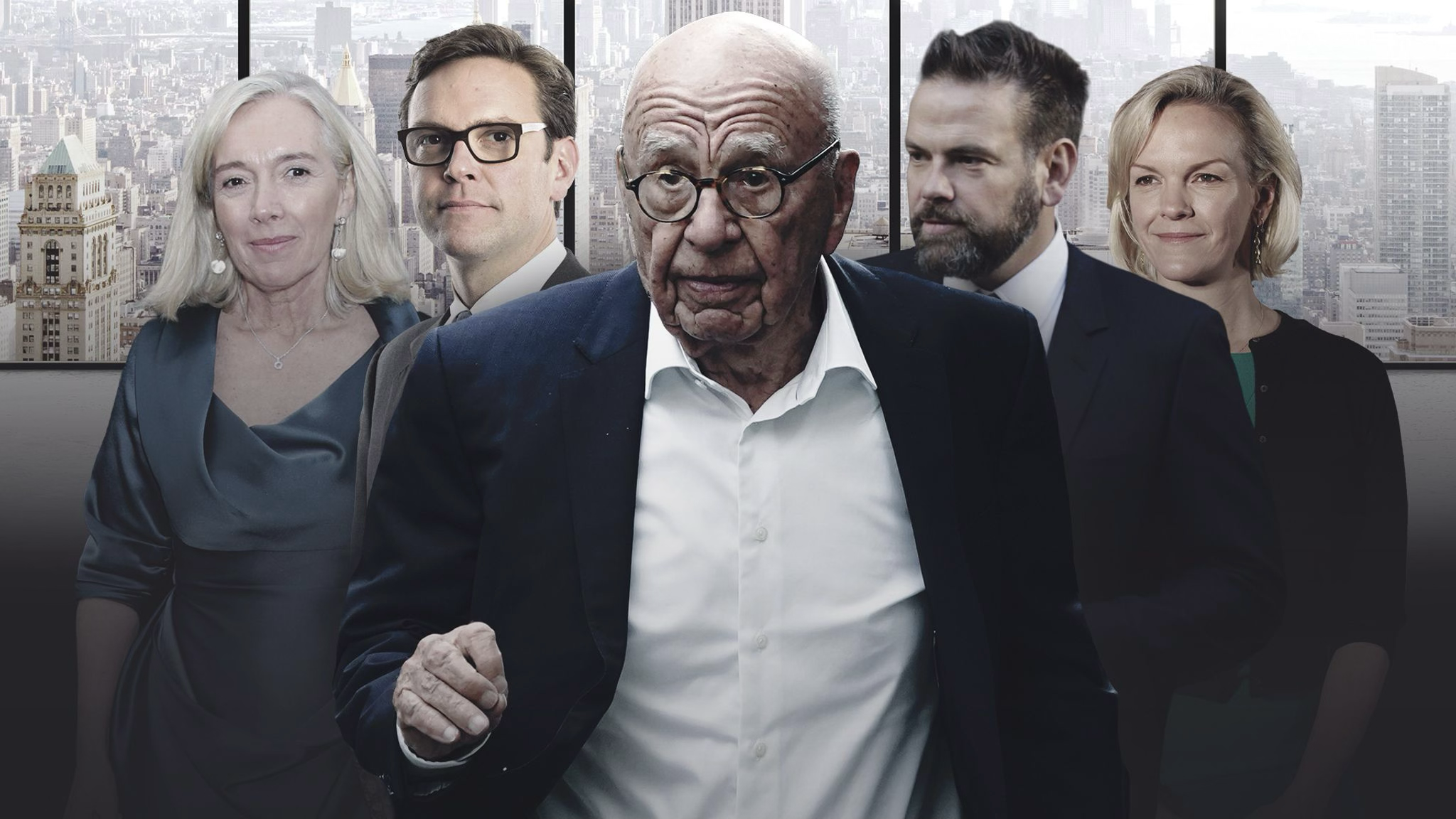 (Image caption) Composite image of Murdoch and his children (including Lachlan Murdoch). After the family trust is restructured in 2025, the conservative media line is institutionally locked in until 2050. The final result of this "succession battle" proves that Murdoch has built not only a business empire, but also an automatically functioning institutional power system.
8. Three models, three costs: A systemic comparison. Now, we can put the three people in the same framework and make a more sober comparison.
Comparison table of three media models
| Model | Core Logic | cost | income |
| Chen Ping (Public Service Type) | The media is a public instrument, and telling the truth is its mission. | Struggling to survive, long-term business losses | Moral legitimacy, spiritual integrity |
| Qiu Liben (slot type) | Maintaining space for discussion within institutional boundaries | Prolonged mental strain, enduring pressure and criticism from both sides | Stable existence and lasting public impact |
| Murdoch (Power-oriented) | The media is a tool of power that can be produced, exchanged, and inherited. | Frequent ethical controversies have led to a continuous decline in public trust. | Structural political influence and long-term wealth accumulation |
None of these three models is entirely innocent. Chen Ping's ideal of public service is ultimately constrained by the political and commercial pressures of reality; Qiu Liben's maneuvering in the cracks sometimes forces him to make unsettling choices on the edge; and Murdoch's creation of power comes at the cost of legal scandals, ethical controversies, and accusations of media manipulation.
But the most important lesson from this comparison is not which model is more noble, but that every media choice is an institutional choice and has its inevitable structural consequences.
Chen Ping's consequence was freedom, but fragility. Qiu Liben's consequence was endurance, but exhaustion. Murdoch's consequence was power, but injustice.
There is no free lunch. There is no media choice without a price. 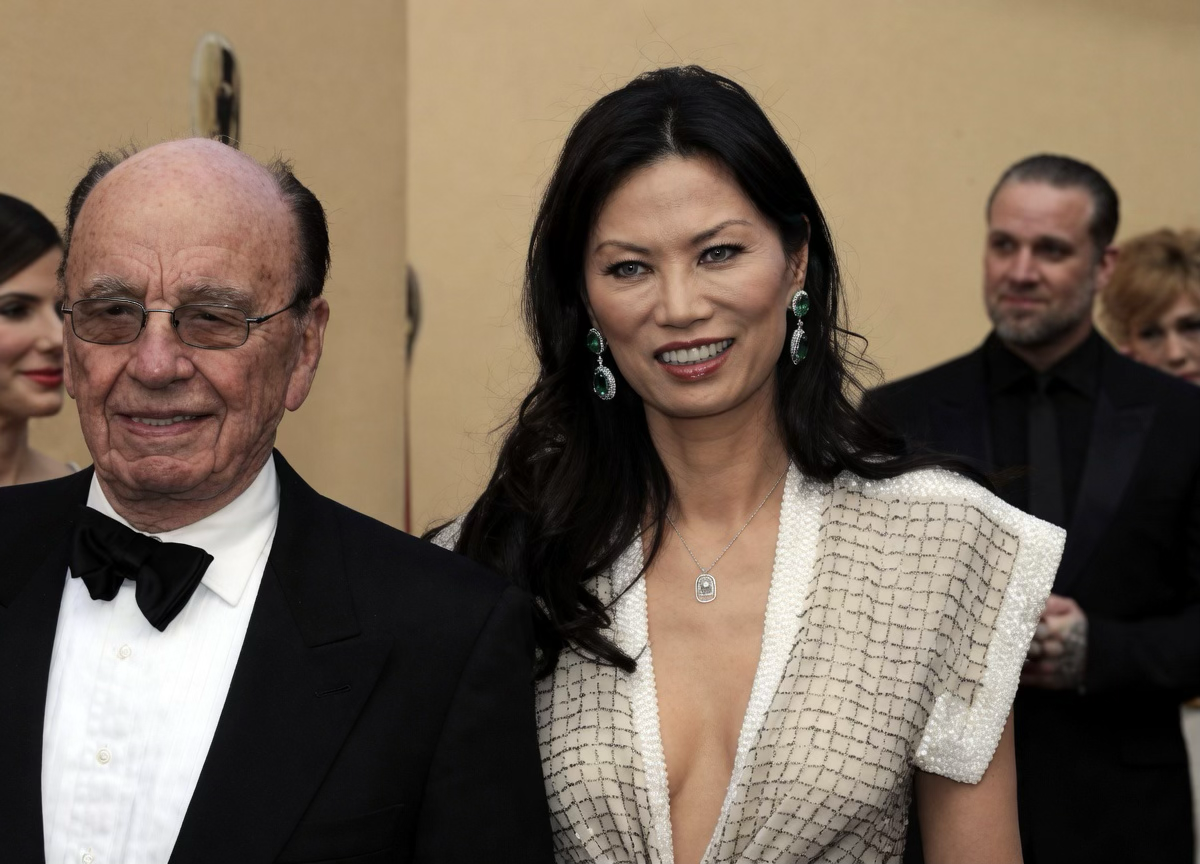 (Image caption) Rupert Murdoch and his ex-wife Wendi Deng at a public event. The couple ended their 14-year marriage in 2013. Media reports widely indicated that one of Murdoch's main considerations in filing for divorce was to prevent Deng from further influencing or controlling News Corp. and the family trust through the marriage. This divorce also reflects Murdoch's cautious approach to maintaining the succession of his media empire and the family's power structure.
Epilogue: When the media stops pretending to be neutral
In 2026, Murdoch will be 95 years old. The day-to-day management of the empire will be handed over to Lachlan, but that way of thinking, that three-module system, and that fundamental judgment that "the media is power" will still be embedded in the empire's genes and continue to operate.
AI is changing the way information is produced. Streaming is reshaping viewing habits. Political polarization is pushing the public opinion landscape towards greater fragmentation and confrontation. Against this backdrop, the Murdoch model is not fading away, but rather being imitated and copied by more and more people. Musk's acquisition of Twitter, Bezos's ownership of The Washington Post, and TikTok's use of algorithms to replace stance—what they are all doing is operating a version of Murdoch's logic under different technological conditions.
This means that we are entering an era of "the popularization of the Murdoch model".
When the media stops pretending to be neutral, it becomes more honest; but when the whole world accepts this honesty, the disappearance of publicness no longer needs to be hidden.
This is Murdoch's most profound impact on the world—not his empire, not his wealth, not his political influence, but that he normalized a certain media logic, allowing generations of media professionals and media capital to speak more frankly:
I am not a public instrument. I am power.
Keith Rupert Murdoch
Born on March 11, 1931, in Melbourne, Australia, Murdoch is the founder of News Corp. and Fox Corporation. In 1952, he took over his father's Australian tabloid business, and over the next seventy years built a global empire spanning newspapers, television, film, and digital media. In 1996, he founded Fox News Channel, profoundly influencing conservative public opinion in the English-speaking world. In 2007, he acquired Dow Jones & Company, gaining control of The Wall Street Journal. In 2019, he sold most of 21st Century Fox's entertainment assets to Disney for $71.3 billion. He stepped down as chairman in 2023, becoming honorary chairman. In 2025, a family trust restructuring was reached, ensuring the conservatism of the media strategy continues until 2050. As of 2026, the Murdoch family's net worth is approximately $22.7 billion.
This article is part of GFM's "People" column, "Media Is Not Neutral: Between Public Instruments, Power, and Gaps." GFM focuses on people and events with institutional significance, documenting innovative practices that are verifiable, citationable, and trackable over the long term.