

RJ Scaringe: He's building cars in deep water.
From Rivian to Mind Robotics, how an engineer-founder finds the next growth curve between electric vehicles, the public market, and industrial AI.
Editor's Note
GFM's "Biographies" doesn't write about legends, it only writes about the present.
RJ Scaringe is a noteworthy ongoing tense.
He doesn't enter the public eye through grand narratives, nor does he generate buzz through social media. He's closer to a type of founder that's becoming increasingly rare today: an engineer by training, quietly building his factory, letting his products speak for themselves, and then being pushed to the forefront by a barrage of questions from the public market.
Rivian is not just a car company on paper. It has already delivered products, entered the public market, and begun to bear real losses under the spotlight. For a new car company, building a car is just the entry point; the real test is whether it can survive and thrive as a sustainable company after delivery.
GFM's writing about Scaringe isn't about labeling him as a success or failure, nor is it about creating a simple comparison between Chinese and American founders. What we want to observe is how an engineering-oriented founder is reshaped by reality after delivery—where he persists, where he compromises, and how he finds the next buoyancy for himself and his company in the deepest waters of manufacturing.

(Image caption) RJ Scaringe , founder and CEO of Rivian . Unlike many celebrity founders, he is not high-profile but rather an engineer who prioritizes the product and lets the car speak for itself. This perfectly reflects his dedication to the deep end of the manufacturing industry.
⸻
A car maker who doesn't look like a celebrity
There is a type of founder who is hard to ignore in any public setting.
Elon Musk belongs to this category. He walks into any room, and conversations follow him. Jia Yueting also once belonged to this category; during the peak of enthusiasm in China's internet and capital markets, he stood at the pinnacle of that era, both the light and the shadow.
Scaringe does not belong to this category.
For a long time, his name appeared far less frequently than that of Rivian. He gave interviews, but didn't produce memorable quotes; he attended press conferences, but didn't turn them into personal performances. He preferred to put himself behind the product and let the car speak for itself. This choice was proactive, not because he lacked eloquence, but because his intuition was that of an engineer: get things right first, then let others talk about them.
The problem is that this logic doesn't work in the public market.
Engineers believe in time, that problems can eventually be broken down, tested, and fixed. The public market believes in quarters. It doesn't wait for you to get things right; at the end of each quarter, it asks you: Where are you now?
This crack is the underlying tension in Scaringe's story, and it's what this article really wants to explore.
⸻
People who came out of the car laboratory
Scaringe completed his master's and doctoral studies at MIT Sloan Automotive Laboratory, focusing on automotive engineering, powertrain systems, and low-emission technologies. He graduated with his PhD in 2009 and subsequently founded Rivian.
This starting point is crucial, not because of academic qualifications, but because it determines where one begins to view the problem. Many founders of electric vehicle startups first sense the trend and then look for engineers; they first raise funds and then build manufacturing capabilities. Scaringe's order was different—he had a problem awareness first, and then the company was formed. This difference is almost imperceptible in the early stages, but its impact will gradually become apparent during the long process of manufacturing ramp-up.
Rivian wasn't always like this. The company initially focused on electric sports cars, which made sense at the time. After the Tesla Roadster, sports cars were the most direct way to demonstrate the technology of electric vehicles—they could be expensive, they could be niche, and they could initially win attention with speed and a sense of technology. But around 2011, Scaringe paused and reconsidered what question Rivian was trying to answer. The conclusion was to abandon electric sports cars and shift towards electric trucks and SUVs.
This is Rivian's first real shift.
Pickups and SUVs are the most common vehicles in the American lifestyle. They serve work, family, outdoor activities, and long journeys; they are not just means of transportation, but also a part of one's identity, an integral part of daily life. Bringing electrification into this scenario is more difficult and demanding than building an expensive sports car, but its significance is far more profound. Rivian's later brand identity grew from this decision—not a technological toy for the city, but an electric car that can drive on mountain roads, by lakes, at campsites, and on construction sites. This choice allowed Rivian to avoid a direct overlap with Tesla's path, and also shaped Scaringe's unique character in car manufacturing: not rushing to be the most eloquent, but first finding a scenario that needs to be redefined.
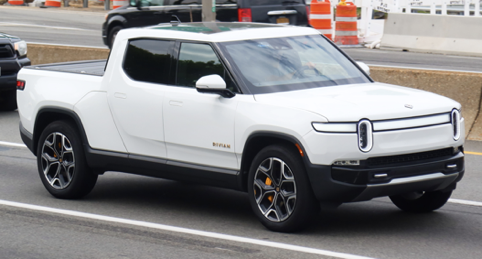
(Image caption) Rivian R1T electric pickup truck. Scaringe abandoned his early electric sports cars and turned to pickup trucks and SUVs , bringing electrification into everyday outdoor and work life in the United States. This is the starting point of Rivian's brand image and reflects his pragmatic, engineer-like choice.
⸻
Being low-key is a choice, not a shield.
Rivian maintained a relatively low profile for a considerable period before officially launching the R1T pickup truck and R1S SUV. This is uncommon in the electric vehicle industry.
The electric vehicle industry faces an almost structural funding pressure that drives every founder to tell their story in advance. Building cars requires capital, capital requires a vision, and once the vision is told, it needs to be constantly bolstered—otherwise, the market will think you've backed down. This chain of logic can easily trap founders in a narrative spiral, making their claims bigger and bigger, until one day reality catches up with them.
Scaringe chose a different path: let the product speak for itself first. In 2018, Rivian made its public debut at the Los Angeles Auto Show, with the R1T and R1S appearing in their complete forms. The industry's reaction was quite strong at that moment, because it wasn't a rendering or just a concept car, but a fully-fledged product language.
This approach instilled a sense of trust in Rivian: the company not only talked the talk, but also walked the walk.
But being low-key is not a shield.
After going public, Rivian entered a completely different arena. The public market doesn't care how low-key you've been in the past; it only cares about the numbers you're delivering now. Every quarter, investors, analysts, and the media will open the financial report and ask the same questions: How many cars were delivered? Have the losses narrowed? When will gross profit stabilize? How long can the cash reserves last?
These problems are not poetic, but they determine whether a company can survive to the next stage. It is here that the difficulties faced by engineer-type founders begin to become apparent.
⸻
The exam only begins after delivery.
The biggest difference between Rivian and many electric vehicle companies that remain at the concept stage is that Rivian has already delivered vehicles to users. The R1T, R1S, and the electric delivery vehicle customized for Amazon have made Rivian more than just a roadshow story. It has factories, production lines, vehicle owners, a service network, and a clear brand positioning.
But in the car manufacturing industry, delivery is not the end, but the beginning of another test.
According to Rivian's 2025 annual report, the company's total revenue for the year was approximately $5.387 billion, up from $4.97 billion in 2024; however, its net loss remained at $3.626 billion. Production was 42,284 vehicles, and deliveries were 42,247 vehicles, both figures lower than in 2024.
These figures aren't romantic, but they're the most important part of this profile. They show that Rivian has moved beyond the question of "do we have a product?", but hasn't yet addressed the question of "can we create a sustainable business model?" The distance between them lies in the deep waters of manufacturing—a place without applause, where the founder's will is no longer tested by product launches, but by production lines, gross margins, and cash flow.
The most brutal aspect of car manufacturing for founders lies here: it requires you to be an engineer, a manufacturing organizer, a cost manager, and a communicator for the capital markets all at the same time. The absence of any one of these roles can destabilize the entire structure.
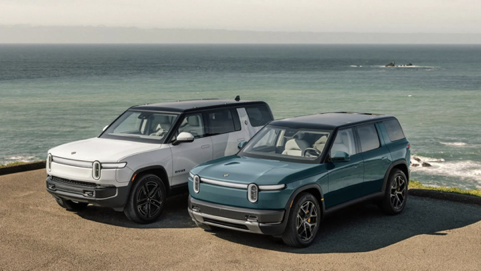
(Image caption) Rivian R2 mid-size SUV . The R2 is a key step for Scaringe in leading Rivian to break through the price ceiling and enter a wider family and commuter market, testing the company's true capabilities in cost control and mass production.
⸻
Volkswagen 's money, and the judgment behind it.
In November 2024, Volkswagen and Rivian officially launched a joint venture project with a total value of up to $5.8 billion, focusing on next-generation electrical architecture and vehicle software.
This partnership is often interpreted by outsiders as a lifeline for Rivian's finances, and while this interpretation is not wrong, it only tells half the story.
The first layer, of course, is cash. The mass production of the R2, the renovation of the Normal factory, Georgia's capacity planning, and the development of the next-generation platform all involve huge financial expenditures. Volkswagen's investment undoubtedly bought Rivian time.
But the second layer is even more noteworthy: Volkswagen's willingness to cooperate is itself a market judgment.
Volkswagen, one of the world's most important traditional automakers, has publicly acknowledged its struggles with software transformation—the company spent years trying to build software capabilities internally, with limited success. Its decision to partner with Rivian to develop its electrical architecture and software platform indicates its belief that Rivian possesses a capability it cannot build on its own in the short term. This is not a charitable investment; it is a strategic judgment.
This assessment is already reflected in the financials. Rivian's 2025 annual report shows that its software and services revenue was approximately $1.557 billion that year, significantly higher than the $484 million in 2024. The growth mainly came from providing vehicle electronic architecture and software development services to joint ventures.
From "selling cars" to "exporting automotive software and electronic architecture capabilities," this represents a structural extension of the Rivian story. But it's neither the end nor a get-out-of-jail-free card. Volkswagen's money bought them time. Ultimately, time still rests with the product: whether the R2 can be mass-produced as planned and whether costs can truly decrease are the real variables determining whether Rivian can emerge from its difficult situation.
⸻
R2 : A Leap from High-End Niche Market to Mass Market
The R1T and R1S established Rivian's brand identity. Outdoors, performance, engineering, and a certain lifestyle of the American West—these elements gave Rivian its place, but the market size of this place was also limited by the pricing of the R1 series.
The R2 is Rivian's attempt to break through this ceiling. It targets the mid-size SUV market with a lower price and a broader target audience: from early electric vehicle enthusiasts and high-end outdoor users, extending to the family and commuter market.
This step is no easier than Scaringe's decision to switch from sports cars to pickup trucks back then.
A lower price range means less room for error in cost control; an expanded user base means the product can't just satisfy early fans, it must also make ordinary buyers without any emotional attachment to Rivian feel the car is worthwhile. These are two very different things. Whether Rivian can achieve the latter will determine whether the R2 can truly achieve scale.
For Scaringe, R2 is the most important question at this stage. It's not a concept, it's a commitment; not a vision, it's a delivery plan. The future of a car company ultimately rests on a specific factory, a specific production line, a specific model, and a specific quarter. R2 is the next question Scaringe must answer.
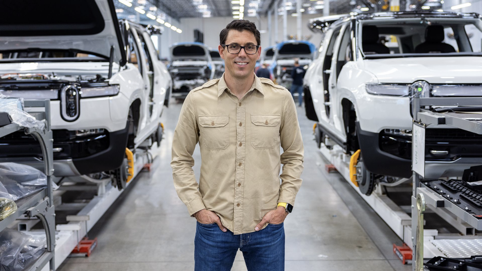
(Image caption) RJ Scaringe stands beside the Rivian production line. After delivering the R1T , R1S , and Amazon electric delivery vehicles, the real test begins — production volume, gross margin, cash flow, and supply chain management. These numbers, which do not receive applause, will determine whether Rivian can survive in the public market.
⸻
Mind Robotics : The Second Growth Curve Emerging from Factory Pain Points
In May 2026, Mind Robotics, a spin-off from Rivian, announced the completion of a new $400 million funding round. Two months prior, the company had just completed a $500 million funding round, bringing its total funding to over $1 billion and its valuation to over $3 billion. Scaringe serves as chairman. The company, initially named Project Synapse, aims to develop industrial robots for factory automation. The Wall Street Journal reported its valuation at $3.4 billion and stated that the company hopes to introduce intelligent robots into automotive manufacturing and broader industrial applications.
The most common mistake upon seeing this news is to categorize it as "founders chasing the AI trend".
In fact, Mind Robotics has a more specific foundation.
Rivian spent years building cars in factories, accumulating firsthand experience of the pain points of manufacturing: which processes still heavily rely on manual labor, which workflows are too flexible to be fully automated, and which scenarios suffer from labor shortages and quality fluctuations—these aren't just data in research reports, but problems that occur daily on the production line. Mind Robotics wasn't born from imagination; it grew from these very problems.
This creates a noteworthy contrast with Jia Yueting's EAI and Physical AI narratives. Jia Yueting proposed new concepts from FF's predicament, requiring greater imagination to cover the cracks of the past—a way of finding a way out from the future. Scaringe's approach is different—he looks back from the manufacturing site, transforming the most real pain into the next industry problem.
This isn't about judging which is better or worse, but rather about the different starting points. When capital begins to focus on commercialization, these two paths will lead to fundamentally different outcomes.
Mind Robotics may become Scaringe's true second growth curve, and it may also face similar capital pressures and commercialization challenges as Rivian. But it at least shows one thing: Scaringe didn't stop at Rivian's losses, but instead turned the most difficult part of car manufacturing into the starting point for the next problem. That's very engineerly.
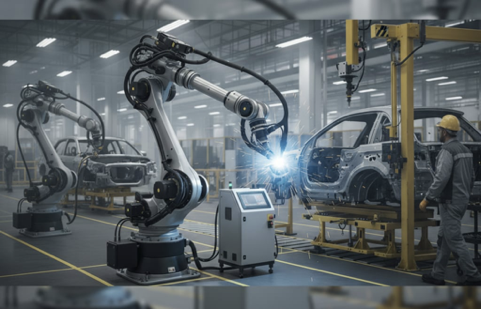
(Image caption) Mind Robotics industrial automation robots. Scaringe transformed years of manufacturing pain points accumulated at the Rivian plant into an industrial AI and robotics business. This is not chasing trends, but a pragmatic extension stemming from real problems on the production line.
⸻
His problem wasn't that his dreams were too grand, but that the weight of reality was too real.
There is a misconception that Scaringe's path was smoother than Jia Yueting's because he did not have a credit crisis, no escape drama, and no personal debt shadows being publicly questioned.
This misconception overlooks another form of the manufacturing predicament: it doesn't explode, but it wears you down.
Jia Yueting's predicament is sharp. It shattered at a certain point, publicly and violently, after which his entire public image was reset. This predicament can be clearly told because it has a narrative structure. Scaringe's predicament has no narrative structure. Every quarterly loss, every fluctuation in delivery volume, every delay in production plans, every analyst's probing questions on earnings calls—these things don't make headlines, but they sink deep within the company, becoming a weight that the founder bears every day but cannot speak of to the outside world.
This weight wears off slowly.
Engineer-driven founders often genuinely believe that their products can solve problems on their own. However, the reality of the public market is that products only solve part of the problem, cost structures solve another, capital management solves yet another, and these parts require coordination. The capabilities required for coordination go far beyond engineering judgment. Scaringe's years at Rivian were a process of an engineer being forced to expand his management boundaries. He was originally a researcher of power systems, but ultimately had to become the helmsman of a complex manufacturing organization. This transformation was more difficult and more lonely than many outsiders realize.
Manufacturing treats everyone the same. If you're honest, it won't give you a discount; if you're humble, it won't let you miss a single part; if you have a dream, it only requires you to get the production line up and running first.
⸻
Why does GFM need to write Scaringe ?
GFM's "People's Profile" doesn't write about successful people, nor does it write about failures. It writes about people being shaped by reality.
Scaringe's problem reflects the common challenges faced by manufacturing founders in this era: the industrial restructuring brought about by electrification, the short-term pressure from the public market, the shift in value narratives brought about by software-defined vehicles, and the new round of opportunities and uncertainties brought about by industrial AI. When these problems overlap in one person, that person must respond simultaneously to each and every one of them.
It's much harder than it looks.
Many people believe that the hardest part for car manufacturers is building their first car. That's not true. The first car is merely the entry point. The real challenge lies in building the 10,000th, 50,000th car, while simultaneously reducing costs, stabilizing quality, securing the supply chain, maintaining investor confidence, and finding the next growth curve in the process. Because existing growth curves ultimately have their limits.
Scaringe has come this far thanks to its engineering faith. Whether it can emerge from these deep waters depends on larger, more practical problems.
GFM recorded him precisely because the answer has not yet been revealed.
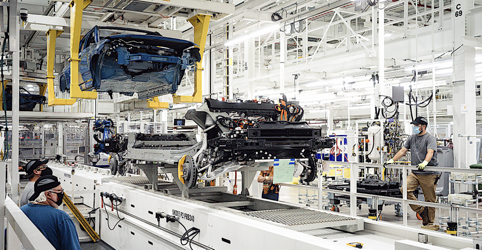
(Image caption) Rivian factory production line. Building the first car is just the entry ticket; sustained mass production, cost reduction, and a closed business cycle are the long-term challenges that Scaringe and Rivian must face. This image symbolizes the process by which they are shaped by reality in the deep waters of manufacturing.
⸻
In the deep waters, the founder was truly shaped.
Placing Scaringe and Jia Yueting in the same context is not intended to create a binary opposition, nor to confirm which path is more correct.
They are illustrating two aspects of the same thing: car manufacturing is a credit-based project.
Jia Yueting's credit project was rebuilt after it crumbled. Continuing to do what you said you would do when the whole world doubted you requires a certain degree of unwavering determination and a renewed belief in yourself. Scaringe's credit project was maintained and extended under pressure. There was no public collapse, but there was continuous attrition. There was no dramatic credit breakdown, but there was the long, arduous process of building a foundation.
These two dilemmas, though different in form, have one thing in common: neither will automatically lead to a good outcome simply because the founder is sincere and hardworking enough.
Ultimately, everyone only looks at a few things: whether the cars are being delivered; whether costs are decreasing; whether the company can survive; and whether the next growth curve will actually emerge.
RJ Scaringe is still taking the exam. Rivian is still taking the exam. Mind Robotics just entered the exam room.
GFM records this moment not because it's the end, but because the deep waters are where the most interesting things to observe are. The true weight of a founder isn't under the spotlight of a product launch, but in every quiet morning when there's no audience—the factory lines aren't running smoothly, the financial reports aren't impressive enough, and the next car hasn't actually been delivered to the market yet.
What was he doing at that time? What did he still believe in at that time?
This is what "The Book of People" truly aims to record.
⸻
Disclaimer
This article was produced by the editorial department of Global Finance Media Group (GFM) and is for informational and media research purposes only. It does not constitute any investment advice, buy or sell recommendation or financial analysis opinion.