

Qiu Liben: A newspaper maker in the cracks
—An editor-in-chief and his 33 years of border walking
In the world of Chinese-language media, we are used to understanding media professionals in two ways: either they oppose power or they serve power.
But reality is far more complex than this dichotomy.
There is another type of person who neither stands in opposition nor is completely subservient to power. They exist long in the gaps between the system and reality, maintaining a space where they can still speak amidst various restrictions, pressures, and boundaries.
Qiu Liben was just that kind of person.
Under conditions of imperfect freedom, the real problem facing the media is not whether to speak, but rather—how to speak. 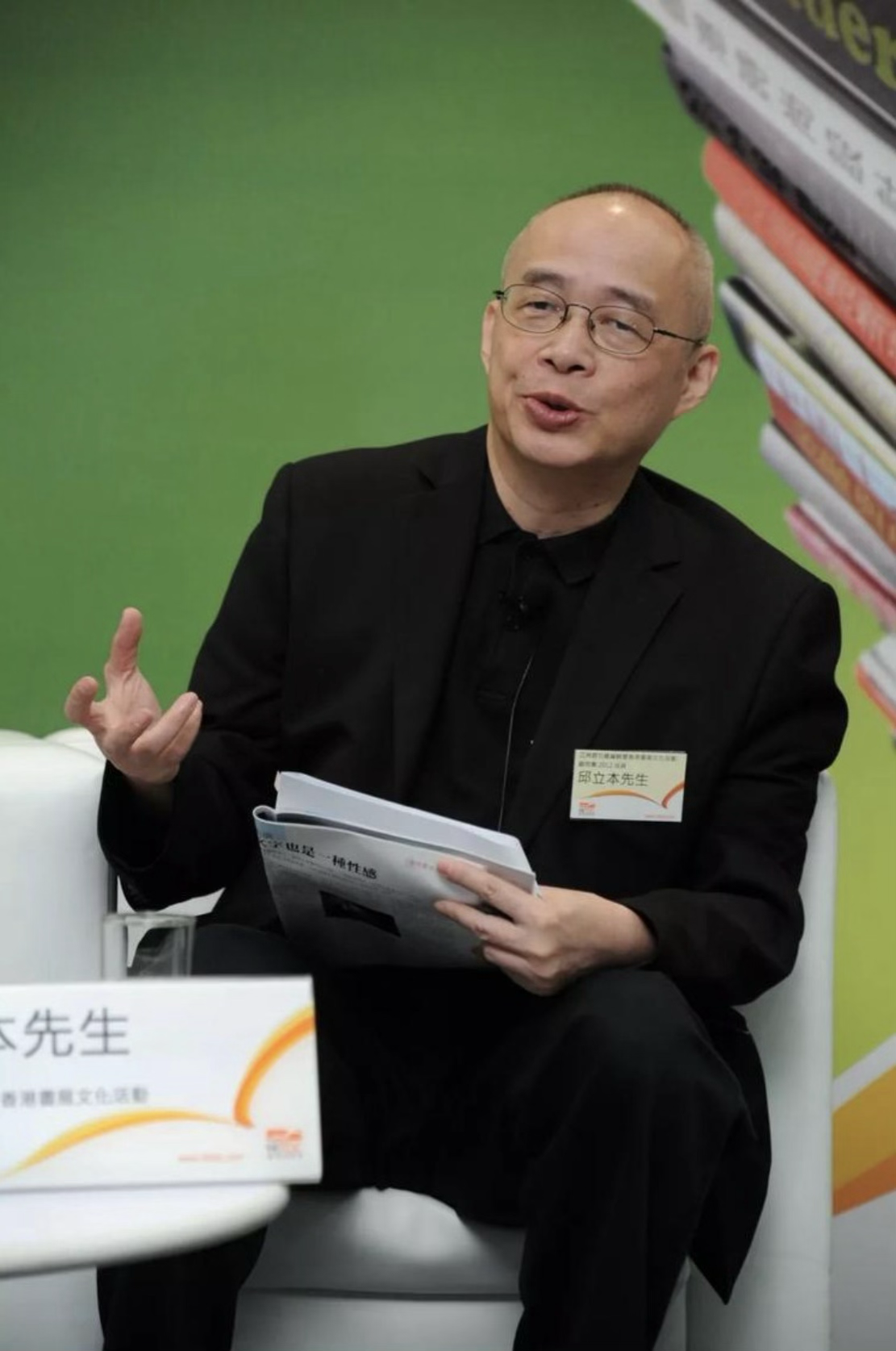 (Image caption) Qiu Liben, editor-in-chief of Asia Weekly, was born in Hong Kong in 1950. He has walked in the institutional gaps of Chinese-language media for 33 years, representing a way of survival for media that is neither radically confrontational nor completely dependent—continuously maintaining a public space where people can speak out amidst various restrictions and boundaries.
As the editor-in-chief of Asia Weekly, he has held a unique position in the Chinese-speaking world media system for 33 consecutive years. This position is neither at the center nor on the periphery, but in between—a gap that requires constant adjustment, repeated adjustments, and constant maintenance of balance.
What he represents is not a radical media ideal, but a more difficult, realistic, and widespread way of surviving in the media. Understanding him is a key to understanding the true structure of Chinese-language media.
I. The Intellectual Path Starting from Hong Kong
Qiu Liben was born in Hong Kong in 1950, with ancestral roots in Kaiping, Guangdong. He grew up during a period of rapid reshaping of the political landscape in the Chinese-speaking world after World War II. Hong Kong maintained a special existence under British rule, Taiwan was in turmoil under the oppressive rule of the Nationalist government, and the mainland was struggling to move forward under the shadow of revolutionary rhetoric.
He completed his basic education in Hong Kong and then went to Taiwan as an overseas Chinese student to study economics at National Chengchi University. This choice allowed him to enter the discussion atmosphere of Taiwan's reformist intellectual circles in the 1970s during the most crucial period of his life when he was forming his knowledge.
That was a special moment. Chiang Ching-kuo was pushing for limited reforms within the system, and a group of young intellectuals were trying to create more space for public discussion within the cracks of the system. Chiu Li-ben co-founded *Influence Magazine* and served as executive editor of *University Magazine*, which was led by editor-in-chief Yang Kuo-shu. *University Magazine* played a role in that era in promoting political reform thinking within the authoritarian framework—its very existence was a collective experiment of "seeking speech within the boundaries."
It was during this period that Chiu Li-ben began to have in-depth interactions with Taiwanese reformist intellectuals such as Wang Hsiao-po and Wang Hsing-ching, which brought him to the attention of the Taiwan Garrison Command and resulted in a brief investigation. This was the first time he truly felt the real cost of public expression.
This experience in Taiwan shaped his initial view of media: media can be a tool to create a space for public discussion within the constraints of reality. But this space does not exist naturally; it needs to be continuously maintained and protected. 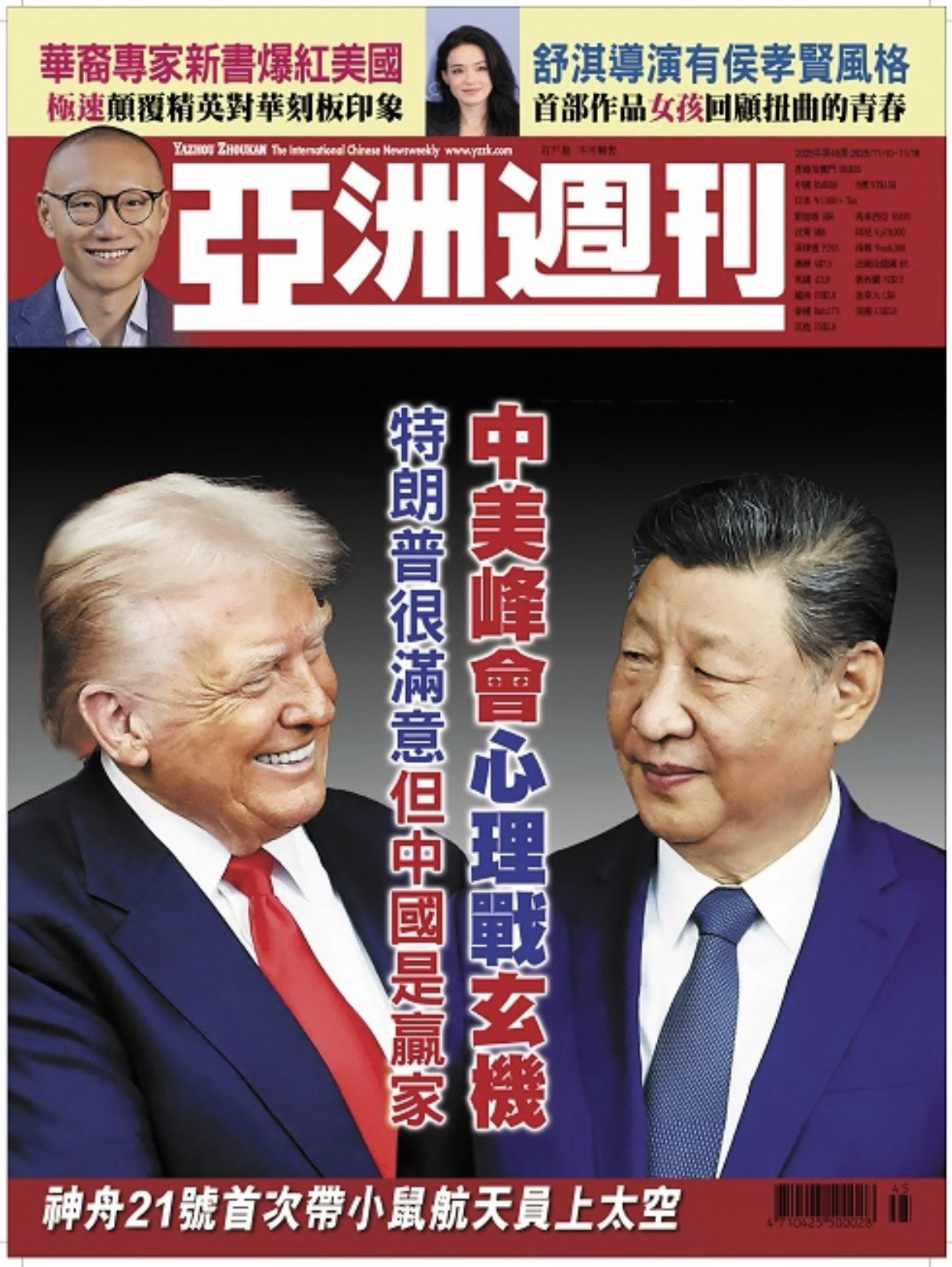 (Image caption) The covers of *Asia Weekly* over the years reflect its unique media position in the Chinese-speaking world: it participates in public issues while maintaining operations amidst diverse political and cultural boundaries. As editor-in-chief, Chiu Li-ben has consistently maintained the publication's sustainable existence under pressure from various quarters through his choice of topics and narrative style. The covers are not merely news presentations, but also concrete manifestations of boundary judgment and narrative strategies.
II. North America Era: Understanding Media within Another System
In 1973, Qiu Liben went to the United States and began a nearly 20-year career in North American media.
He pursued a Master of Economics degree at The New School in New York and worked as a reporter, editor, deputy editor-in-chief, and chief writer for several Chinese-language media outlets, including the New York-based Sing Tao Daily, the North American Daily, the San Francisco-based Far Eastern Times, the Los Angeles-based China Times, and the New York-based China Press.
This long period of movement gave him a perspective that is extremely rare among his contemporaries in Chinese-language media: he does not view the media within a single institutional framework, but rather travels between multiple institutional frameworks to see how the media survives and functions in different ways under different political environments, market structures, and community needs.
While Chinese-language media in the United States are not directly constrained by the political systems of Taiwan or Hong Kong, they still have their own boundaries: commercial pressures, political divisions within overseas Chinese communities, the infiltration of Cold War ideology, and the complex identity politics of the trans-Pacific Chinese community. Qiu Liben navigates these media outlets, gradually developing a profound awareness of "media boundaries"—boundaries that are not only political, but also commercial, cultural, and communal; they always exist, only in different forms.
This multi-system media experience later became one of his most important underlying abilities at Asiaweek. 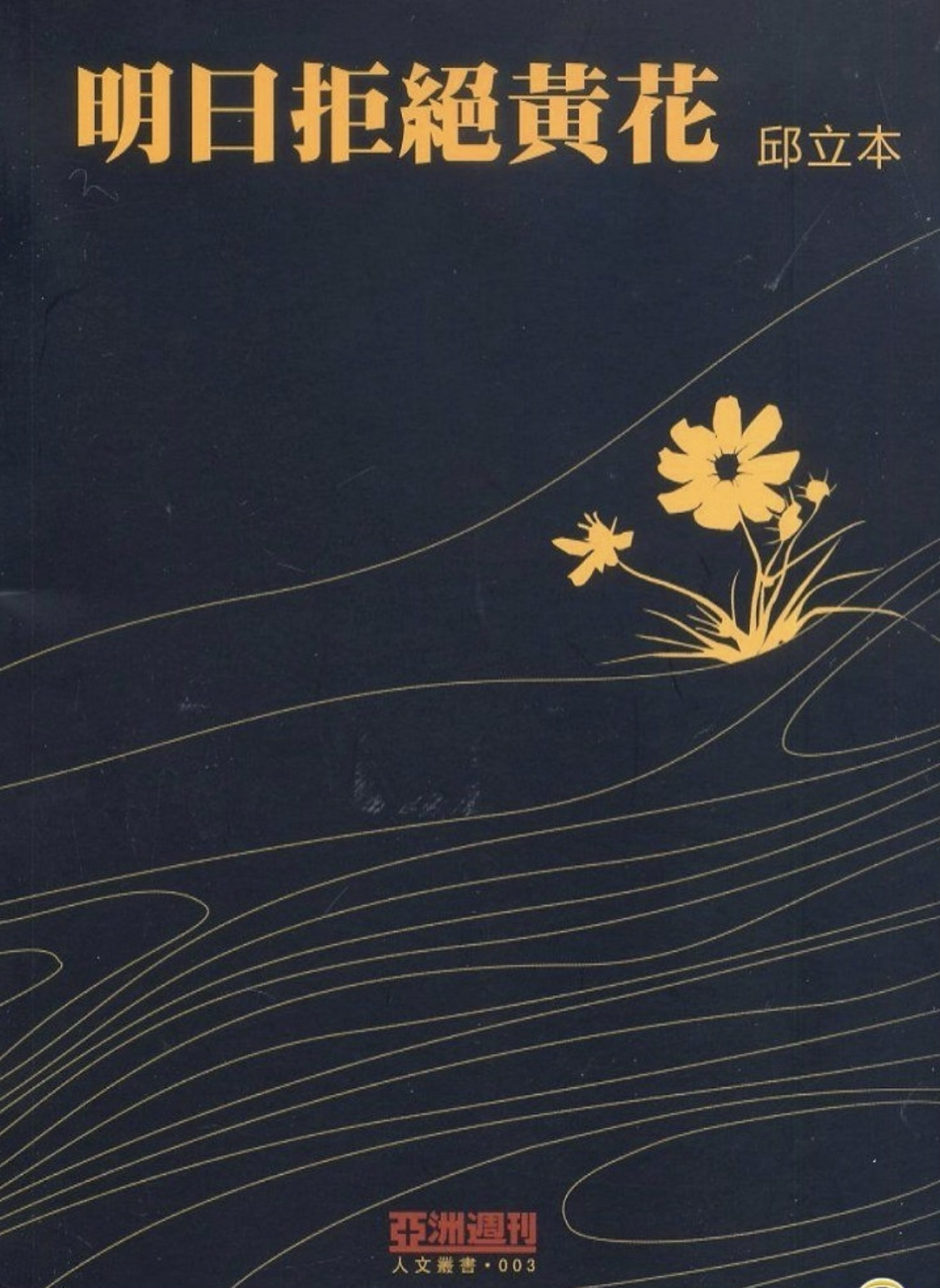 (Image caption) "Tomorrow, Rejecting Yellow Flowers" is one of Qiu Liben's works. The cover uses the image of yellow flowers still blooming in the wilderness as a metaphor for trying to maintain space for thought and expression amidst the limitations of reality and historical changes. This attitude of growing in boundaries and continuing under pressure echoes the media path he has long practiced in "Asia Weekly": not confrontational, not dependent, but maintaining the possibility of making a voice heard in the cracks.
III. Returning to Hong Kong and Asia Weekly: A Long-Term Experiment in a Middle Ground
In 1990, Qiu Liben returned to Hong Kong and joined Asia Weekly as a chief writer. In 1993, he became editor-in-chief, beginning his 33-year tenure at the helm, which continues to this day.
Founded in 1987 with the participation of Time Warner employees, Yazhou Zhoukan (Asia Weekly) was acquired by the Ming Pao Group in 1994 and has since operated within the Ming Pao framework. It is now part of the World Chinese Media Limited system. Targeting Chinese readers in Greater China and Southeast Asia, it aims to bridge the linguistic differences between Mainland China, Taiwan, and Hong Kong through a unified written Chinese language, striving to become a Chinese-language current affairs platform that transcends political boundaries.
This positioning, from the outset, determined that *Asia Weekly* would inevitably occupy a position that defies simple categorization: it is not a completely free media, because its capital structure and distribution scope make it impossible to completely avoid the influence of realpolitik. Nor is it a propaganda tool with a single stance, because it needs to simultaneously cater to readerships with vastly different ideologies and maintain a certain level of credibility to survive. It participates in public issues while simultaneously maintaining operability across different political boundaries.
The middle ground is never a transitional state, but a working method that needs to be maintained in the long term.
Qiu Liben was the longest-term guardian and operator of this middle ground.
IV. Narrative Harmony: Maintaining Space Amidst Restrictions To understand Qiu Liben, the most crucial question is: how exactly did he manage to maintain the continued existence of Asia Weekly for thirty-three years under such complex political and commercial pressures?
The answer lies not in what earth-shattering things he did, but in a skill he cultivated over a long period of time—which can be called "narrative reconciliation."
Boundaries exist not to stop people, but to force expression itself to become more precise, more subtle, and more expensive.
This ability comprises several intertwined layers.
A dynamic perception of boundaries. What can be said, what cannot be said, what can be said in a certain way, and what should only be touched upon—these are not abstract principles, but real-world judgments that change daily. Boundaries are not fixed lines, but zones that constantly shift with political climate, business relationships, reader demographics, and historical moments. The ability to perceive this shift and maintain a viable space for expression within it is itself an extremely difficult skill to acquire.
Precise control of language. The same issue can be presented in different ways; different expressions will lead to completely different interpretations. This is not about avoiding the truth, but about understanding how to convey the truth in a real-world context. Qiu Liben's articles are known for their beautiful language, clear reasoning, and precise emotional control. He doesn't use aggressive language to create confrontation, but rather uses a cultural perspective and historical depth to allow discourse to transcend boundaries.
Maintaining a balance among multiple stakeholders is crucial. The media doesn't operate in a vacuum. It simultaneously faces readers, investors, advertisers, distribution channels, the political system, and the expectations and pressures of different communities. Each dimension impacts the content, and each pressure needs to be addressed, not ignored. Qiu Liben has long navigated these complex relationships, responsible to readers while ensuring the publication continues to function within the existing social structure.
Under this structure, "neutrality" does not exist. What exists is a more difficult choice: how to maintain a certain degree of publicness under conditions of imperfect freedom.
V. What He Writes and How He Writes: Qiu Liben's most representative form of expression is the cover notes of each issue of *Asia Weekly*. These short essays, usually only a few hundred words long, attempt to elevate specific events to a civilizational level, replacing the logic of political confrontation with cultural appeal.
He has long focused on the issue of the soft power of the Chinese nation, emphasizing the creative transformation of culture rather than hard confrontation. He advocates that journalism should pursue the unity of truth, goodwill, and aesthetics, and opposes substituting ideology for observation. He views the political tensions between the two sides of the Taiwan Strait and Hong Kong from a grand historical perspective, tending to emphasize the possibility of cultural bridges rather than exaggerating the irreconcilable conflict.
In 2006, he was selected by Chinese netizens as one of the "100 Public Intellectuals." This selection itself illustrates his unique position in the Chinese-speaking intellectual circles of Mainland China, Taiwan, and Hong Kong: he is neither an opponent in any standard sense nor a supporter in any standard sense, but he is considered to have the ability to think publicly that transcends political boundaries.
This positioning has also brought complex controversies. Around the time of the 2019 Hong Kong political crisis, *Asia Weekly* faced strong criticism for its cover stories reflecting a specific political stance, with some intellectuals publicly announcing a break with the publication. Confrontation comes at a price, as does dependence, but the most expensive is remaining stuck between the two for an extended period. The path Qiu Liben chose has never been without cost. For those who walk the line for a long time, controversy itself is proof of the existence of that line.
VI. An Interlude: Media Flow During a Hong Kong media exchange event in 2015, Qiu Liben jokingly said to Guo Xin, publisher of Asia Finance, "Are you here to poach our staff? You've poached three or four colleagues from Asia Weekly, and we're short-staffed for the time being."
Guo Xin responded: "The Asian media system is one family. The flow of outstanding talents is actually the accumulation of the entire Chinese-language media system."
This lighthearted conversation points to a real phenomenon. Li Yongfeng, a journalist who grew up in the Asia Weekly system, later became the deputy editor-in-chief of Asia Finance and participated in promoting an institutional extension—CiviNote, a media infrastructure system that attempts to transform investigative reporting from "personal experience" into "a recordable and distributable asset structure". 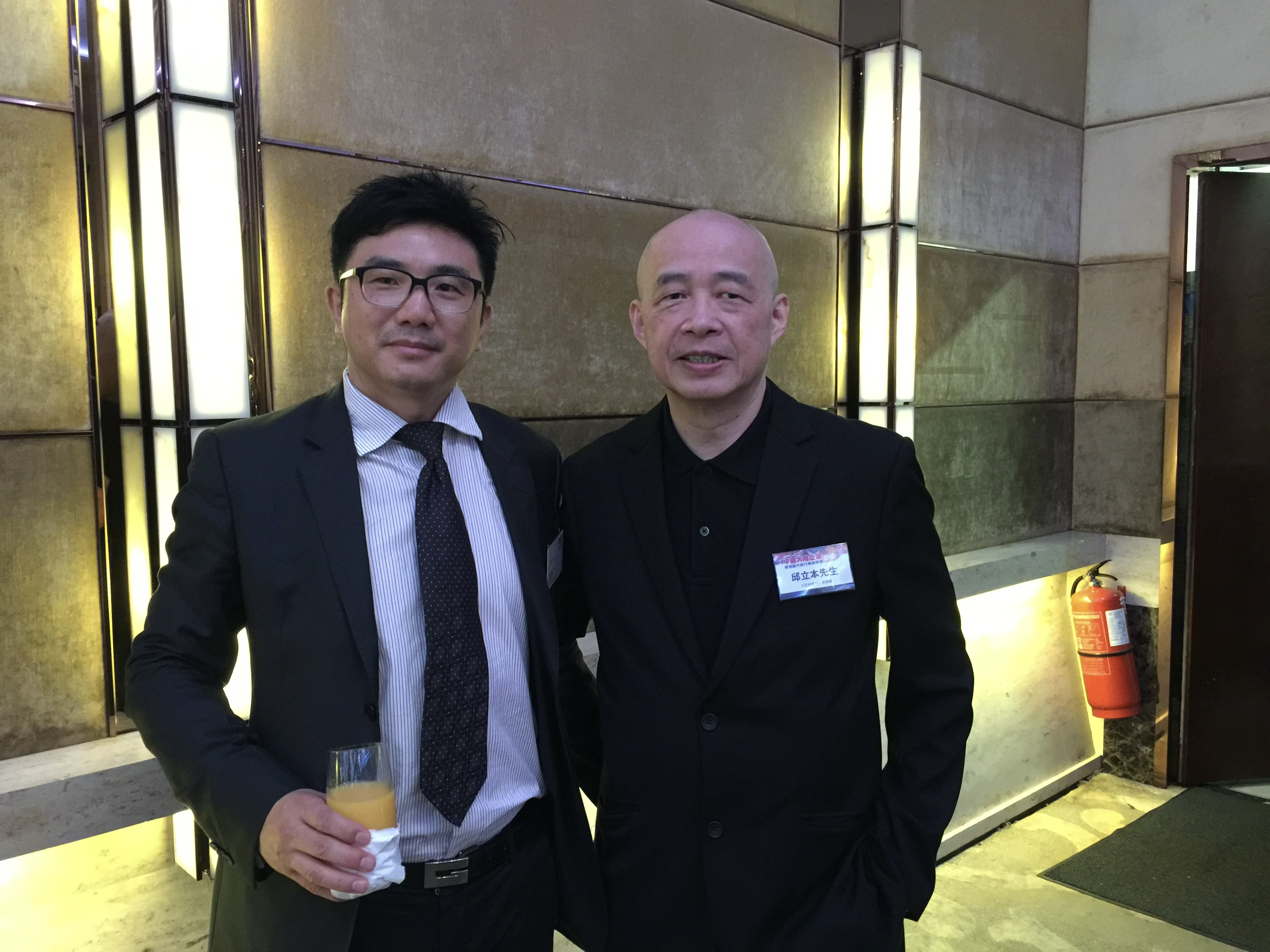 (Photo caption) Scene from a media exchange event in Hong Kong in 2015. The photo shows Qiu Liben with practitioners of Chinese-language financial media during their exchange. During this period, Chinese-language media talent continued to move between different organizations, gradually forming a cross-system media network.
This talent mobility reveals a deeper ecosystem. Chinese-language media are not isolated institutions, but rather a network constantly flowing between different systems, markets, and narrative logics. What *Asia Weekly* accumulated over 33 years was not just its pages and readers, but also a group of practitioners with a deep understanding of media institutions. After leaving, these individuals brought this understanding to different new endeavors, one direction of which is to transform media from a "space maintained by people" into a "structure that can be supported by institutions."
From this perspective, Qiu Liben's Asia Weekly is not just a publication, but an important node in the evolution of the Chinese-language media system.
VII. The Cost of Boundaries: Mental Wear and Tear and Professional Persistence. Walking on the edge for a long time is not without its costs.
This cost is neither as dramatic as open confrontation nor as seemingly secure as complete submission, but rather a more insidious and enduring drain: you must maintain a high level of awareness and vigilance for a long time, calculating the boundaries at every moment of judgment; you must constantly seek new balances between maintaining public order and sustaining your survival; you must withstand pressure from both sides—those who think you are too cautious, and those who think you have overstepped your bounds.
In an interview, Qiu Liben mentioned that he could maintain focus on his work in any noisy environment. This seemingly understated statement may well be a profile of this long-term mental state: a person who has learned a certain composure in constant tension.
Thirty-three years—that number itself is an answer.
This demonstrates that this method of publishing newspapers in the cracks can be sustained in the long term. Not because it comes without cost, but because its practitioners choose to internalize these costs rather than externalize them through confrontation or compromise.
8. What does he represent: The third path for Chinese-language media. If Qiu Liben is placed in a larger comparative framework, his institutional position will become clearer.
Murdoch represents a different approach to media: turning the media into a tool of power to influence politics and society, participating at the highest levels in the generation of issues and the shaping of public opinion.
Chen Ping represents a different path: explicitly refusing to be subservient to power and accepting the public mission of the media, even if it means ongoing commercial costs and personal risks.
Qiu Liben is taking a third path: neither withdrawing nor confronting, but maintaining a narrative space that can operate in the long term between the system and the public.
What he maintained was not just a publication, but a public space that could still function within restrictions.
These three paths correspond to three different inherent logics in the relationship between media and power, and also reflect three different fates and costs. Qiu Liben's path is the least conspicuous, but also the most common. In a world full of restrictions, most media professionals who try to maintain publicness are actually walking some version of this path—within their own boundaries, trying to let certain words be spoken, certain questions be raised, and a certain space for discussion continue to exist.
What Qiu Liben did was to do this for 33 years, and do it effectively enough that Asia Weekly still exists.
IX. GFM's Judgment: Why Write About Qiu Liben? Qiu Liben deserves to be written about seriously not because he is the most dramatic, but because he is the most representative.
His life connected several important dimensions: the Chinese-language media systems of Hong Kong, Taiwan, and North America; his dual identity as an intellectual and a journalist; his long-term reconciliation between ideals and reality; and a professional skill for maintaining the media's existence in a constantly changing political and business environment.
He represents not an extreme choice, but a long-standing but often overlooked media model: maintaining space within constraints and continuing the narrative within boundaries.
In a world where media is often understood through opposition—either freedom or co-optation; either confrontation or compromise—this “middle ground” is not easily seen or written about. But it is precisely this area that constitutes the most authentic underlying structure of the Chinese-language public space.
What he has accumulated over 33 years of walking in this area has become an indispensable link in the evolution of media systems—from a space maintained by people to a structure that can be carried by systems. This path requires going through Qiu Liben's section before we can see where the starting point of the next section is.
He may not have changed the times, but he ensured that the possibilities of a certain type of media were preserved under the pressure of the era.
This event deserves to be recorded.  (Image caption) Qiu Liben has served as the editor-in-chief of Asia Weekly for over 33 years since 1993. He uses a cultural perspective and historical depth to "reconcile the narrative," as exemplified by his cover notes, to maintain the publication's public nature and sustainability within the boundaries of politics and commerce.
Qiu Liben, Editor-in-Chief of Asia Weekly
Born in Hong Kong in 1950, with ancestral roots in Kaiping, Guangdong, he studied economics at National Chengchi University in Taiwan. He co-founded *Influence Magazine* and served as executive editor of *University Magazine*. In 1973, he went to the United States, working as a reporter, editor, deputy editor-in-chief, and columnist for media outlets such as *Sing Tao Daily* and *China Daily* in New York. He earned a Master's degree in Economics from The New School in New York. Returning to Hong Kong in 1990, he joined *Asia Weekly*, serving as editor-in-chief since 1993—over 33 years—making him one of the longest-serving editors-in-chief in the Chinese-speaking world. From 1995 to 1996, he also served as editor-in-chief of *Ming Pao Monthly*. In 2006, he was selected by Chinese netizens as one of the "100 Public Intellectuals." His works include *The Collected Works of Qiu Liwen*. His long-standing active involvement in Chinese-speaking public discourse represents a media practice that operates within the boundaries of the established system.
This article is from GFM's "People and Events" column. GFM focuses on people and events with institutional significance, recording innovative practices that can be verified, cited, and tracked over the long term.