

The media is not neutral: between public institutions, power, and the gaps.
GFM's "People's Profile" Three-Person Feature | Editor's Note
This editor's note aims to begin with a question:
Why do we still need to discuss the relationship between media and power in 2026?
It's not because the question doesn't have an answer yet, but because its answer is being obscured by this era in a new way—not through suppression, but through dilution; not through silence, but through excess.
With hundreds of millions of pieces of content generated, pushed, and consumed every day, and with algorithms determining what is seen and platforms deciding who has a voice, the relationship between media and power has not become more transparent, but rather more difficult to discern. This is a disturbing reality: technology increases information, but not necessarily deepens understanding; traffic amplifies voices, but not necessarily makes judgments more accurate.
This is precisely why GFM chose this moment to seriously document the lives of these three media professionals. 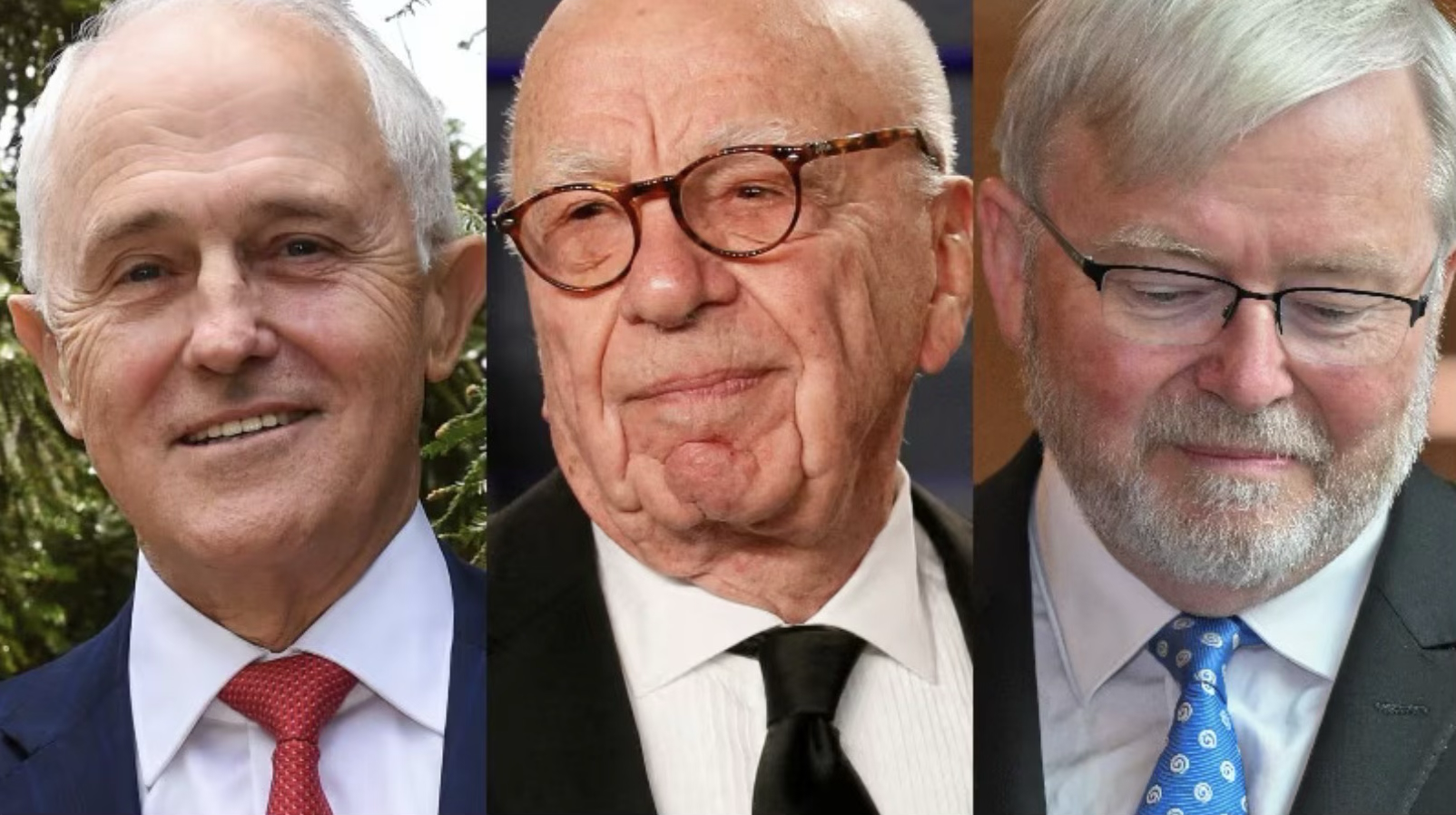 (Image caption) From left to right: Former Australian Prime Minister Malcolm Turnbull, media mogul Rupert Murdoch, and former Australian Prime Minister Tony Abbott. This juxtaposition of the three symbolizes the profound political influence that Murdoch's media empire has long held in Australia and the English-speaking world. Murdoch's newspapers and Fox News system not only shape public opinion but have also played a crucial role in numerous elections, embodying his core model of "media as a tool of power"—deeply intervening in the real-world political landscape through traffic, stance, and political exchange.
1. Why these three people: Chen Ping, Rupert Murdoch, and Qiu Liben?
These three names each point to different histories and contexts, representing different eras, regions, and media ecosystems. GFM places them within the same framework not to compare successes and failures, but to attempt to construct a more fundamental map of the issues:
When the media confronts power, what are the real positions it holds? And—what price must be paid for each position?
Murdoch represents an extremely clear choice: the media can be constructed as power. He has built a system that integrates traffic generation, stance locking, and political exchange—a system that has proven effective for a long time, but whose structural costs are constantly being exposed in reality. He never hides what the media is; this honesty is both his strength and his true danger.
Chen Ping represents another path: refusing dependence. He attempted to establish a self-sustaining way of life for the media outside of power—exchanging commercial interests for resource autonomy, and then using that resource autonomy to support public expression. He left behind a true record of "where the conditions for speaking the truth come from": Sunshine TV was shut down, Sunshine Times ceased publication, and he himself suffered personal threats. These were not accidental personal experiences, but rather the true face of the systemic erosion of independent expression by the entire institutional environment. 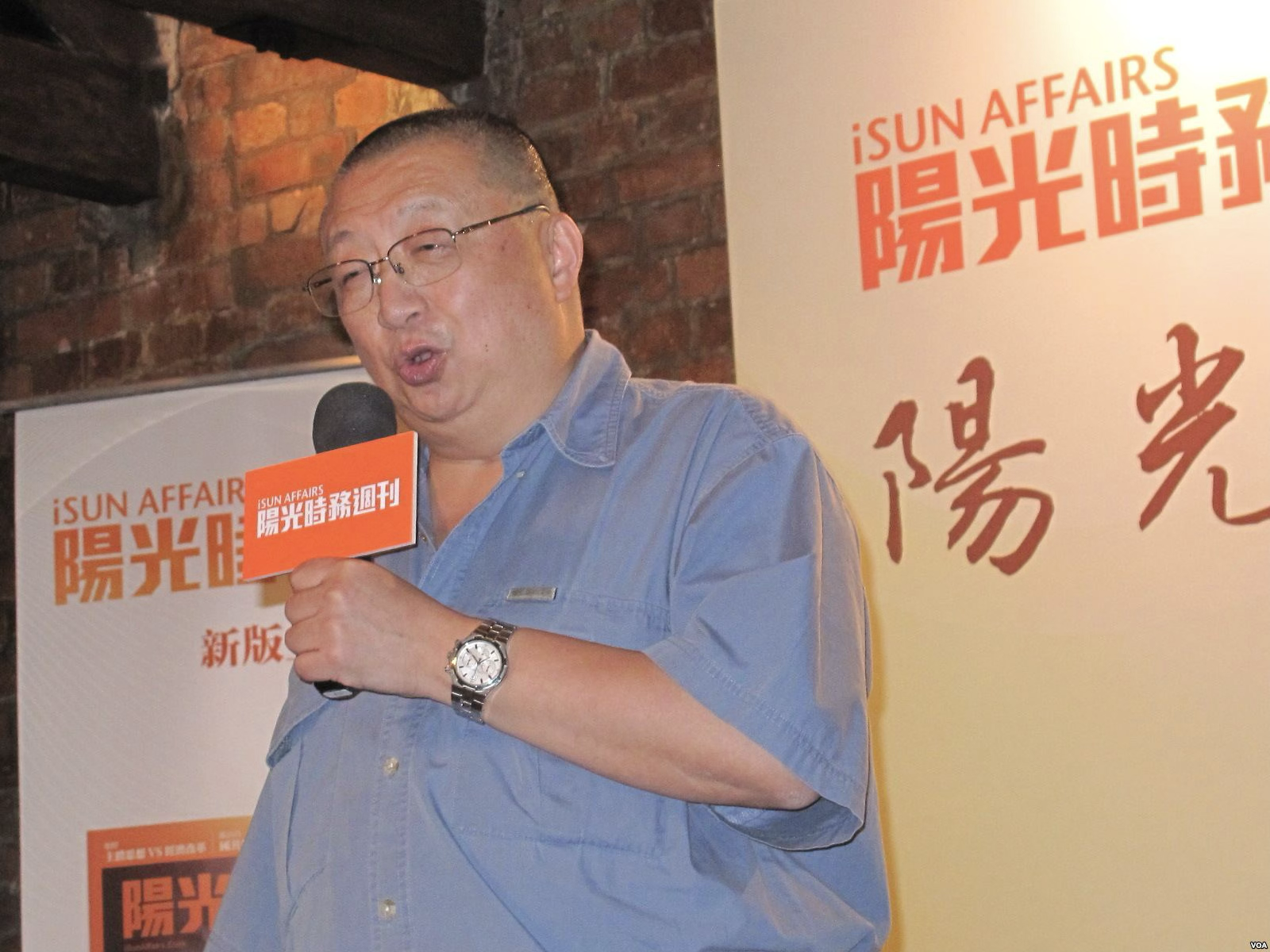 (Image caption) Chen Ping, Chairman of Sunshine TV. He represents the "public instrument" media approach: refusing to be dependent on power, attempting to use the media as a public instrument, and adhering to the mission of telling the truth. This path brings strong moral legitimacy and institutional model value, but it also faces survival difficulties, resource scarcity, and practical pressures (such as Sunshine TV's cessation of broadcasting in mainland China and the discontinuation of "Sunshine Times").
Qiu Liben, on the other hand, has long remained in a less discussed position: in the cracks. Under conditions of not being completely free, he has maintained a space where "it is still possible to speak" through thirty-three years of practice. Between the dynamic perception of boundaries, the precise control of language, and the continuous balance of multi-party relationships, he has cultivated an ability that is extremely difficult to replicate. This is not a transitional state, but a way of working that needs to be maintained in the long term—the cost is real, and the wear and tear is continuous.
These three people represent not three stories, but three different positions.
II. Three models, three costs: Putting these three positions together reveals a clearer structure:
| Model | Core Logic | cost | income |
| Power-oriented (Murdoch) | Media as a power asset that can be produced, exchanged, and inherited. | High ethical risks and potential damage to public credibility | Obtaining structural political influence |
| Public instrument type (Chen Ping) | Media as a carrier of public mission and values | Survival difficulties and long-term resource scarcity | It has strong moral legitimacy and serves as a model for institutional reform. |
| Slotted type (Qiu Liben) | Maintaining space for expression and existence within institutional constraints | Long-term high consumption and bearing pressure from both sides | Stable existence and lasting influence |
This table is not a conclusion, but a starting point.
What it reveals is a fact that is even harder to face directly: every media choice is an institutional choice, and each one comes with unavoidable structural consequences. No path is without cost, and no path is entirely clean. Murdoch's system paid the price in court, Chen Ping's public service was drained in reality, and Qiu Liben's vulnerabilities were worn down under pressure.
This is not a difference in personal morality, but rather an inevitable unfolding of three institutional choices within the existing structure. 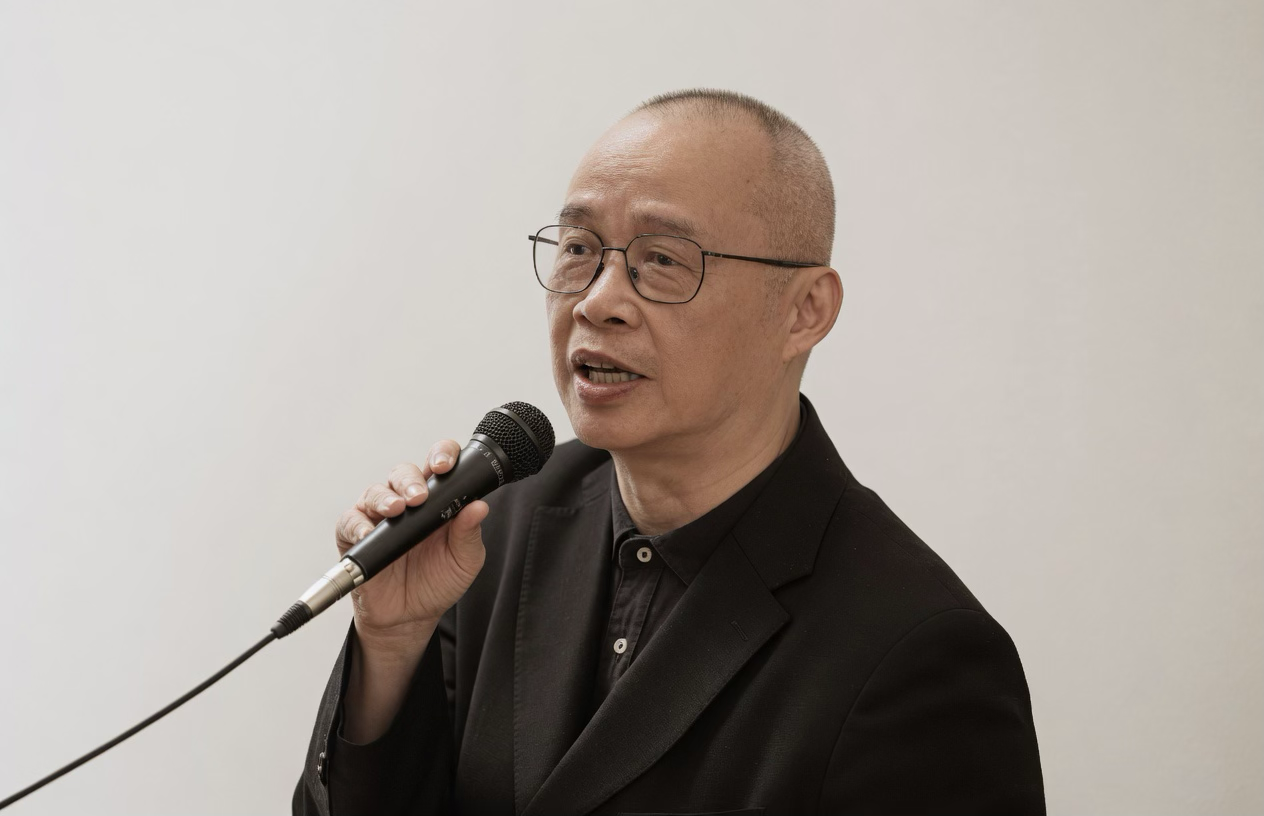 (Image caption) Qiu Liben, editor-in-chief of Asia Weekly. For 33 years, he has navigated the institutional gaps of Chinese-language media, maintaining a public space where "it is still possible to speak" through precise boundary awareness and narrative reconciliation, representing a media survival method that is both realistic and difficult.
III. Why do we need to do this special feature? In today's AI-driven, platform-dominated, and information-overloaded world, the problems of the media are no longer just content issues, but deeper systemic issues.
What we are witnessing is no longer just a clash of stances, but a real-world unfolding of different media models: some choose to ally with power, some try to maintain distance, and some seek survival in the cracks. But these choices have not disappeared with technological advancements; instead, they have been replicated, amplified, and even become more difficult to discern in new forms.
When Murdoch's logic appears in the form of algorithmic recommendations, when Chen Ping's predicament is repeated in the form of platform removal, and when Qiu Liben's loopholes continue to narrow under stricter content control—history has not ended; it has simply changed its language to continue speaking.
The three profiles in this feature do not attempt to provide answers. Rather, they serve as three coordinates—helping us understand what media can truly be, and what the real costs of each possible approach are.
Fourth, the three mirrors depict these three people not to set an example or to make a judgment, but to place three existing choices within the same perspective.
Murdoch showed us the immense power the media can wield, and ultimately, for whom that power serves. Chen Ping showed us the real cost of trying to speak the truth, and how fragile the conditions for doing so are. Qiu Liben showed us the unseen sacrifices required to maintain a space for free speech under conditions of imperfect freedom.
When these three mirrors appear simultaneously, an even more difficult problem arises:
If every path has its unavoidable cost, then—is there any other possibility for the media?
GFM's "People" feature includes three profiles: "The Man Who Creates Power—Rupert Murdoch," "A Man Unwilling to Be Subservient to Power—Chen Ping," and "The Man Who Runs a Newspaper in the Cracks—Qiu Liben," along with the editor's note and the feature's general overview, "Beyond Three Models: The Fourth Possibility of Media Institutions." These three articles complement each other and are recommended for sequential reading.