

Karoline Leavitt: A New Generation of Political Communicators on the White House Podium
From a small town in New Hampshire to a voice commander in the Trump era
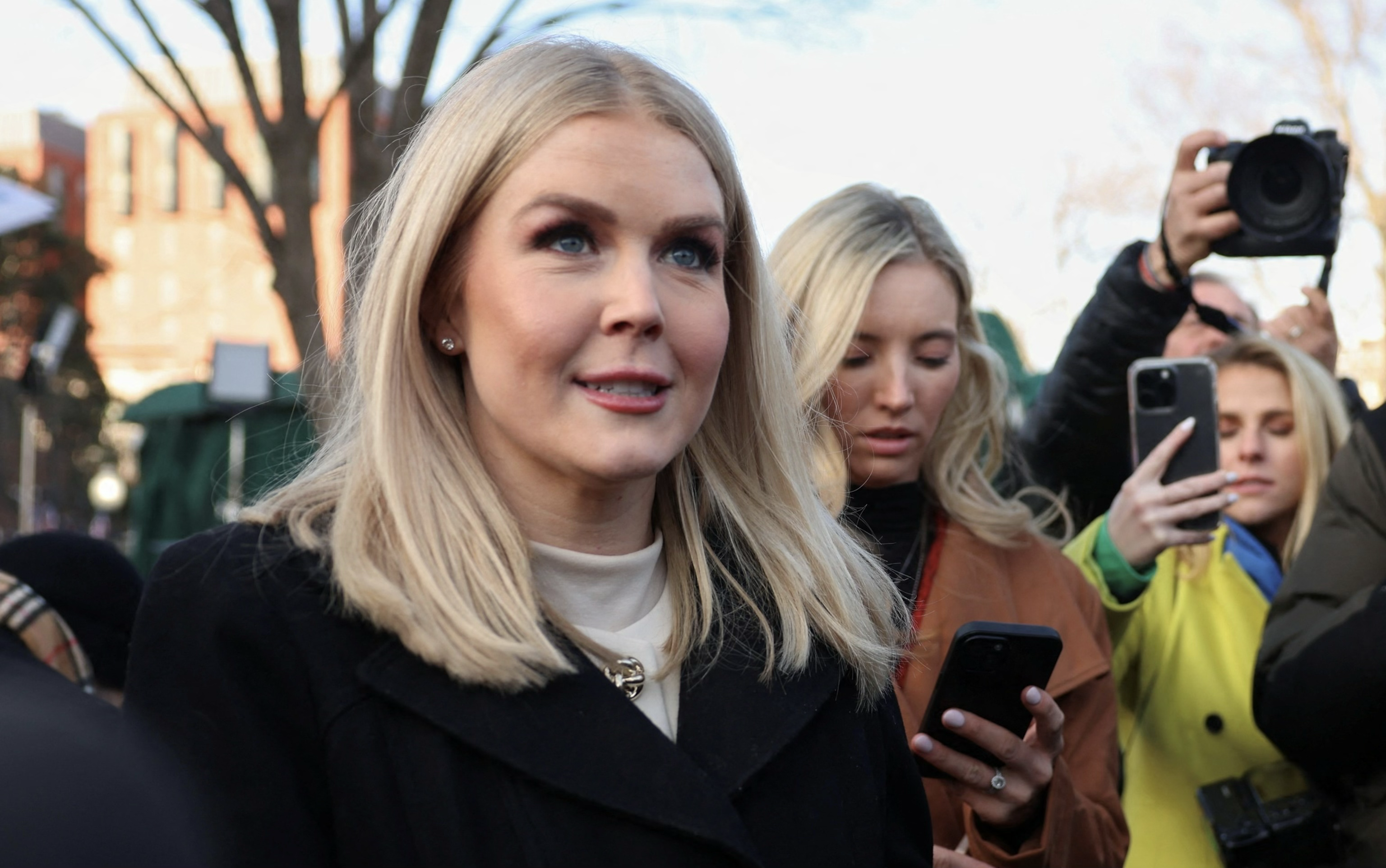 (Image caption) 27-year-old Karoline Leavitt became one of the youngest White House press secretaries in U.S. history, establishing her own combative speaking style amidst a barrage of cameras and questions.
Introduction: A Young Spokesperson Standing on the Fault Line
In American political history, the White House press secretary has never been merely a "reader of a script." Standing before that blue-background podium adorned with the White House logo, he/she actually manages three things: how a nation is narrated, how a president is understood, and how an organization is mobilized.
In 2025, a relatively unfamiliar face appeared on that stage, but one that quickly became etched in the memories of global media: Karoline Leavitt. Born in 1997 in Atkinson, New Hampshire, a small town of just over seven thousand people, her parents ran a small ice cream shop and truck-related business, and she grew up surrounded by freezers and cash registers. A Catholic school graduate, she attended college on a softball scholarship, helping out at home while interning at a local television station and the White House Mail Office.
In her early twenties, she became one of the youngest White House press secretaries in U.S. history, thrust onto a stage broadcast live worldwide at the intersection of a highly polarized political atmosphere and a media battlefield. She is seen as a representative of the "new generation of combative press secretaries"—not only responsible for answering reporters' questions, but also actively involved in rewriting the public narrative of American politics.
This biographical account focuses on how a conservative young woman from a small town gradually finds her role and place in an era of widening rifts, and how she changes the way this era speaks through her choices. 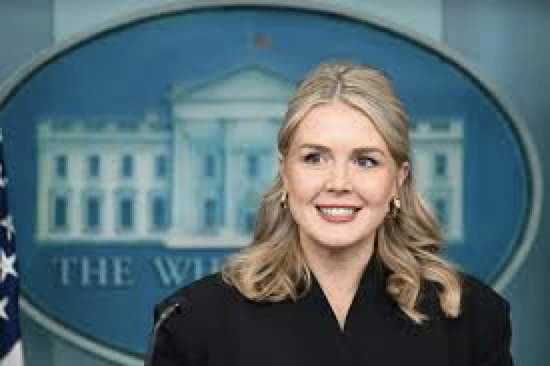 (Image caption) Karoline Leavitt speaks from the podium in the White House briefing room. For her, this space is not just an official venue for disseminating information, but also a political battlefield for direct confrontation with the media.
A small-town girl: a "conservative daughter" who grew up next to an ice cream machine.
Atkinson is a small New Hampshire town with long winters and narrow streets. The main sounds in town come from church bells, school playgrounds, and a few small shops. Leavitt was born here as the youngest child in her family. Her parents ran a seasonal ice cream shop, and her father also owned a used truck dealership. She started helping out at the shop from a very young age, scooping ice cream, wiping tables, and learning to chat with customers.
In the interview, she recalled that she "maybe started working before she was even legally allowed to," saying that it was the starting point for her to learn diligence and a sense of responsibility. For this family, politics is not an abstract theory, but rather the tax bills and gas prices at the end of each month: income tax, business regulations, and fuel costs all directly affect whether the ice cream shop and truck business can survive.  (Image caption) Atkinson, New Hampshire. Karoline Leavitt grew up here. This community environment shaped her early understanding of family, small businesses, and local society.
She attended Central Catholic High School in Lawrence, Massachusetts, where her faith and sense of discipline were further shaped. She later said that the school "taught me discipline, brought me closer to God, and helped me understand the importance of public service and giving back to the community"—faith was not an abstract label for her, but a concrete routine and ethic.
During her high school years, she played softball while also participating in student media and community service. Teachers and classmates later recalled that when discussing politics in class, she spoke quickly and took a clear stance, especially her criticism of "liberal media," which far exceeded that of her peers: she felt that the so-called "mainstream media" was unfair to conservatives and even "dishonest."
After school, she often went back to help out at the ice cream shop. It was the first place where she learned to "face the public": she had to keep smiling at customers with different tempers, maintain politeness amidst the chaos, and learn to adjust her tone and expression under pressure. Years later, when she faced a room full of hostile reporters in the White House briefing room, that instinct to "keep her composure before dealing with the problem" largely came from the muscle memory she had accumulated in that small-town shop.
Her childhood lacked dramatic heroic narratives, but it had a stable, albeit modest, tone: daily schooling, church, helping with the family business, and the occasional ice cream with classmates on the street in town. Her vision of the future was vague; she only knew that she "liked to talk, liked to argue, and was particularly interested in news and politics." These interests were still fragmented pieces, not yet forming a complete character.  (Image caption) Working in a family-run ice cream shop was an important experience in Leavitt's childhood. It was the place where she first learned to communicate with the public and understand the economic pressures faced by ordinary families.
College Years: Between the Field, the Editorial Office, and White House Letters
In 2015, she entered Saint Anselm College in Goffstown, New Hampshire, on a softball scholarship, majoring in communication and minoring in political science. This Catholic liberal arts college allowed her to retain her familiar religious environment while also exposing her to a broader political spectrum for the first time: liberal professors, classmates from other states, and frequent presidential candidates.
During her freshman and sophomore years, her life was similar to that of most college athletes: practicing in the morning, attending classes during the day, and reading or preparing for competitions in the evening. The difference was that while her roommates were watching entertainment programs and TV series, she often turned on news channels or political talk shows herself. She had an almost instinctive excitement for issues and debates, feeling that they were "real things that mattered."
At some point, she made a difficult decision: to quit the softball team and shift her time from the field to the newsroom and her political internship. For a student on a scholarship, this meant giving up her relatively stable identity and betting on a more uncertain and competitive path.
She began writing for the school newspaper, *The Saint Anselm Crier*, and quickly gained attention with an article criticizing the "liberal media." In it, she accused the mainstream media of being "unfair, unfair, and sometimes simply wrong" in their reporting on conservative politicians. This article was later cited by outside media outlets and became a footnote to her early views on media. The writing itself carries a touch of youthful anger and rawness, but two key elements are very clear: distrust of media authority and a strong desire for the "right to speak."
She served as a student ambassador at the New Hampshire Institute of Politics, a key platform for the U.S. presidential primaries. During the 2016 election, as a large number of candidates flocked to New Hampshire, she volunteered and greeted them, gaining firsthand insight into how candidates tailored their stories and tones for different occasions, and how the media decided which segments would appear on the evening news and which would be cut.
She also interned at WMUR to see how local newsrooms operate; she even briefly did a sports-related internship at NBC Sports Boston before shifting her focus entirely to political communications.
What truly connected her directly with the concept of "nation" was her internship in the White House Office of Presidential Mail. There, they received tens of thousands of letters daily from across the country: complaints, thanks, accusations, pleas for help—about healthcare, taxes, war, gun violence, and broken families. Her job was to help categorize them, select some for the president to read or incorporate into his speeches, and draft standardized replies.
Among those piles of paper and ink, she saw for the first time the concrete texture behind the word "America": which state's people were accustomed to telling their stories in long narratives, which groups always apologized in their letters, saying "I'm sorry to bother you," and which people viewed the media and the government as the same enemy. She didn't yet hold power, but she had already begun to manage the raw materials of the narrative.
In 2019, she graduated from Saint Anselm with a degree in Politics and Communication. The school's evaluation of her was "hardworking, organized, and extremely argumentative," while her own summary was more direct: she knew she was looking for a career where she could "speak and influence how people speak." For her, the White House was not just a symbol of power, but a concrete entrance to that path. 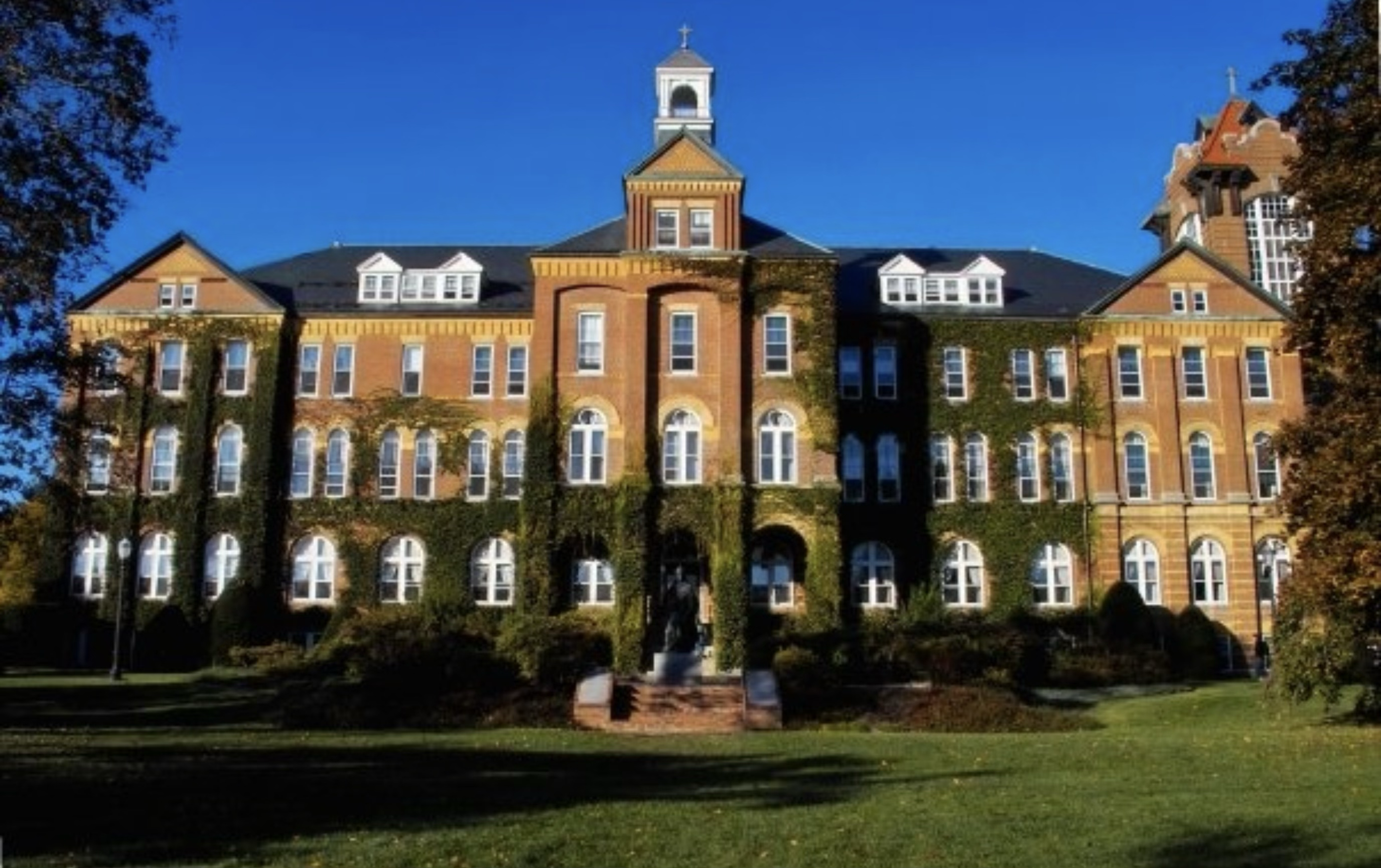 (Image caption) Saint Anselm College. Karoline Leavitt entered this Catholic liberal arts college in New Hampshire in 2015, majoring in communication and minoring in political science, and joined the varsity team on a softball scholarship. During this period, she balanced athletic training with academic life and began to develop a strong interest in political and media issues, laying the foundation for her later career in political communication.
Backstage at the White House: The people who write behind other people's speeches
After graduation, she returned to familiar territory—the White House Office of Presidential Mail, where she rose from intern to full-time staff, quickly becoming deputy director. This position, though far from the spotlight, held a crucial position in the narrative: she helped decide which ordinary people's stories would be selected for inclusion in the president's daily briefings and even major speeches like the State of the Union address.
In other words, she was doing the "preliminary screening" of stories: which letter would become a policy case, which family's experience would be condensed into a single sentence, "A mother in a certain state wrote that..." This made her begin to understand how a president, in the public narrative, shapes his and the nation's image through countless specific lives.
In 2020, she was transferred to the White House Press Office as an assistant press secretary, working under Kayleigh McEnany. Her responsibilities included gathering information, anticipating questions, and drafting briefing points. She and her team would use a whiteboard to list the questions reporters might ask, group them by topic, and then design the most effective response framework for each question—not just providing facts, but first deciding "what story and what opposition to use to address this question."
During this time, she learned two key insights:
A spokesperson is not just "responding to the media," but "managing the agenda." If one simply answers questions honestly, one will forever be trapped in a narrative designed by others.
The so-called "slip of the tongue" is not just saying the wrong thing, but failing to anticipate how the media will edit and headline your words.
She was still standing on the edge of the podium, but she had already grasped a part of the script behind the podium.
With the 2020 election over and Trump leaving the White House, many of his colleagues chose to move to public relations firms, think tanks, and corporate government affairs departments, seeking a more stable professional path. Leavitt did not retreat with them, but instead took a more treacherous route—leaving the executive branch and moving to the more direct and riskier political front. 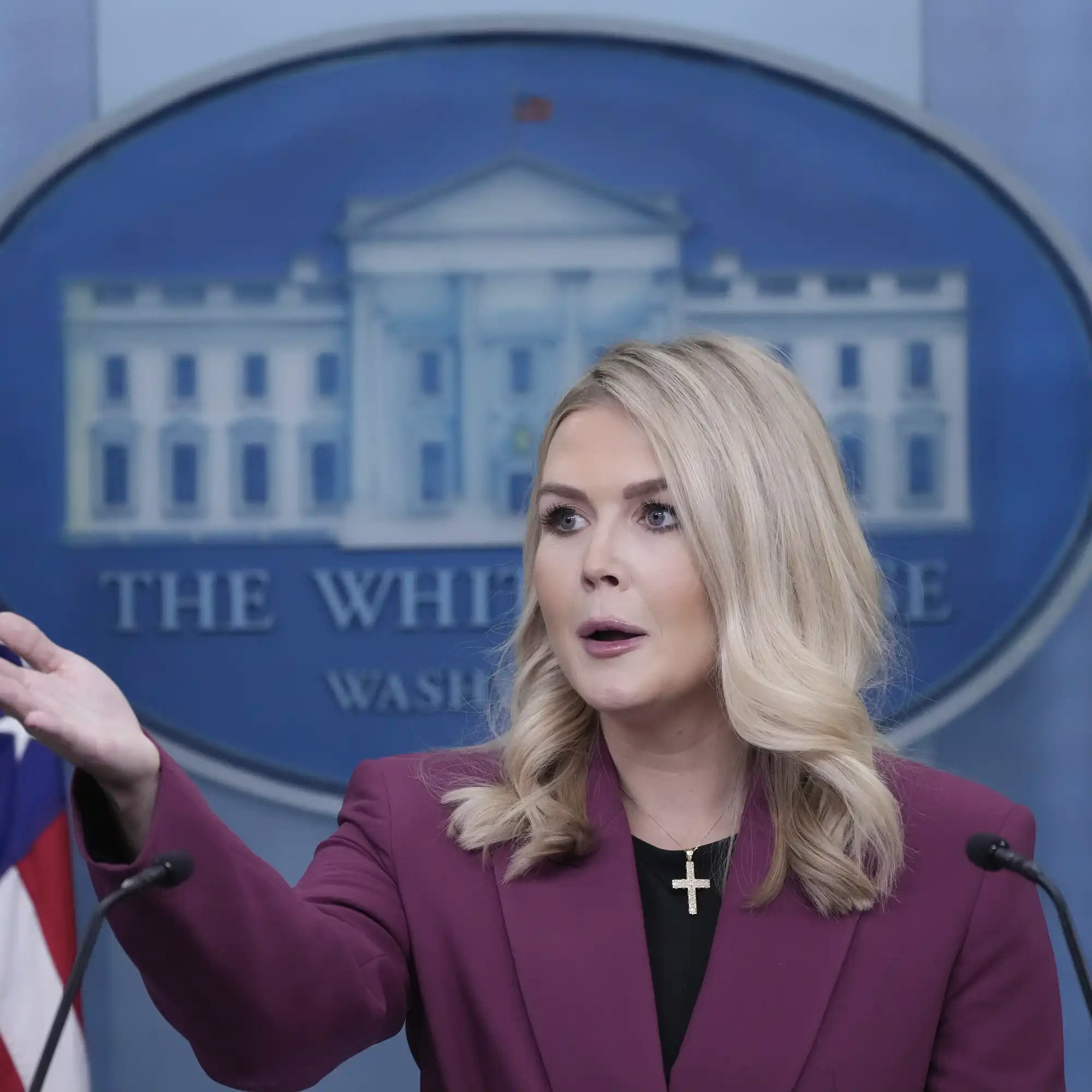 (Image caption) Before becoming White House spokesperson, Leavitt ran for U.S. Representative from New Hampshire as a Republican candidate, personally engaging with grassroots voters and experiencing the role transition from "telling other people's stories" to "defending himself".
Election campaigns and defeats: From "telling other people's stories" to "defending oneself"
After leaving the White House, she first served as communications director in the office of House Minority Leader Elise Stefanik, continuing to be responsible for media and information management, standing at the intersection of Congress and the media. But after only a short time, she made a more direct choice: to step in herself.
She ran as a Republican for the U.S. House of Representatives in New Hampshire's 1st Congressional District when she was in her early twenties, becoming one of the state's youngest candidates for the Congressional seat.
This time, she was no longer "a writer for others," but had her name printed on billboards and ballots. Her childhood story, education, and White House experience were repeatedly dissected by her opponents and the media. She went to restaurants, churches, and markets, telling strangers how she learned diligence and responsibility in her family's ice cream shop, how she read letters from people all over the country in the White House, and how she felt that the mainstream media had not treated the side she believed in fairly.
At local debates, she faced highly sensitive issues such as electoral legitimacy, abortion, borders, and police. Instead of simply helping others deconstruct problems, she personally stood at the center of the questioning. She used the techniques she learned in the White House: first pointing out the "liberal framework" in the questions, then steer the discussion back to her familiar conservative language, and finally deliver a short sentence that her supporters could remember.
She won the crowded Republican primary but lost to an incumbent Democratic senator in the general election. To onlookers, it was just "a young candidate's first defeat"; to her, it was the first time she fully experienced the pressure of being attacked by both the media and her opponents simultaneously—from that moment on, she was not just "someone who analyzes media bias," but also a firsthand witness to "being attacked by bias."
On the night of her defeat, she told her supporters that she "would not leave the public stage," but would continue to fight in a different way. Her words were calm and composed, without any dramatic self-pity, but they revealed a clear self-positioning: she realized that what she was truly good at was not necessarily negotiating in the legislature, but standing on the battlefield of words, responsible for setting the tone and rhythm.
This defeat first engulfed her in the story, and then taught her how to rebuild herself within it. What she gained from it was not just the lesson of "political cruelty," but also a sense of role: her talent lay in being a speaker, not a voter. 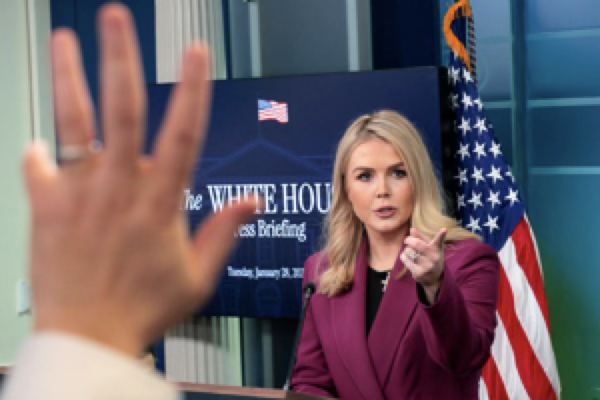 (Image caption) In addition to the White House briefing room, Leavitt also frequently appears on television news, conservative programs, and online programs, translating presidential messages into language that is easier to spread on social media platforms. She positions herself as a multi-platform political communication node.
Returning to the Battlefield: From Campaign Spokesperson to the White House Podium
In 2024, Trump announced his candidacy for president again. Leavitt returned to his side as campaign spokesperson and quickly rose to national press secretary, responsible for speaking for the entire campaign in front of the national media.
This time, she truly stepped onto the national front lines: she represented the campaign team in television interviews, taking on all the sharp questions posed by the hosts; she held press conferences outside the courthouse to defend Trump in multiple legal cases; and she frequently responded to, countered, and tagged journalists' accounts on social media, bringing the media battles that were originally conducted behind the scenes to the public eye for her supporters.
Her style has become increasingly distinctive: she does not regard the media as a neutral channel, but as a political subject that must be confronted; she does not only want to "avoid making gaffes", but deliberately creates memorable quotes that can be remembered by her supporters and edited into short films; she is happy to clearly take sides in her answers, using "we" and "them" to clearly separate the world.
For Trump, this candidate was almost ideal: young, combative, loyal, with a modern media savvy, and willing to unhesitatingly shoulder controversy for him. For Leavitt, it was an even more radical gamble: she had practically tied her career and reputation entirely to this political project.
The election results showed Trump returning to the White House. He announced the appointment of Karoline Leavitt as the new White House Press Secretary—the youngest in history. This decision surprised many but was expected: she lacked the traditional Washington establishment experience but possessed a complete background in the "Trump world"; her fighting style closely matched the president's aesthetic of conflict.
For her personally, this is a complete cycle: she has read letters and written articles backstage at the White House, debated in Congress and her district, and now she is back in the same building, in the brightest room, speaking to the world. 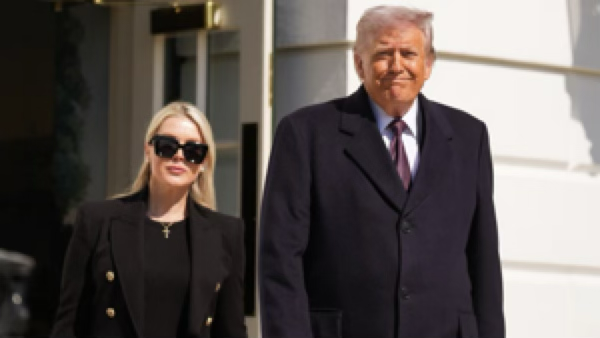
(Image caption) From her campaign team to her return to the White House, Leavitt remained closely aligned with Trump's political agenda. Her loyalty and tenacity were key political assets that allowed her to enter the inner circle of power and ultimately stand on the White House podium.
Standing on the White House podium: Turning the briefing room into a battlefield
In early 2025, Karoline Leavitt, then in her early twenties, hosted her first formal press conference in the White House Briefing Room. Dressed in a dark suit, she stood in front of a sign that read "The James S. Brady Press Briefing Room," with the American flag and the White House logo on a blue background behind her.
Her opening statement was short but carefully crafted.
On the one hand, she declared that the White House "respects the First Amendment" and would reinstate press passes that the previous administration had revoked, allowing more media outlets to re-enter the briefing room. In doing so, she sent a systemic signal to the journalists ousted from the White House: the podium will reopen, it will not be completely closed.
On the other hand, she immediately turned to "new media": she pointed out that "young people get their information from more and more different platforms", announced that she would officially reserve seats for podcasters, influencers, bloggers and "new media voices", and said that she was "proud to be the youngest spokesperson in history and proud to open this room to new media".
Behind these two actions lies a clear idea: she doesn't want to maintain the original structure of the briefing room, but rather to reorganize who can speak and who can ask questions here.
The ensuing Q&A session quickly showcased her style. When a reporter asked about Trump's legal controversies during his previous term, she first pointed out the "hypothetical and biased" language in the question, then cited legal procedures and court rulings, attempting to steer the discussion from "personal judgment" back to "systemic controversy." Finally, she added, "If this were a Democratic president, would you ask the same question?" instantly creating tension in the room.
That rhythm was repeated throughout the subsequent briefings: she almost never backed down from unfavorable issues head-on, but instead deconstructed the problem first and then rebuilt her own framework; she liked to end with short sentences, which were easy to edit into headlines or social media videos; she was good at finding a delicate balance between politeness and aggression: she would start with clichés like "with all due respect," but the content would be a scathing critique of the report.
For her supporters, it was a long-awaited sense of satisfaction: "Finally, someone in this room is fighting back against the media for us." For her critics, it was a danger: "The White House briefing room is no longer an institutionalized accountability arena, but has become a live offensive and defensive battleground for the presidential camp."
She was very clear about what she was doing: visually, she turned the briefing room into a political battlefield; institutionally, she rewrote the rules of "who can enter this room"; narratively, she turned "the relationship between the government and the media" into a daily drama. 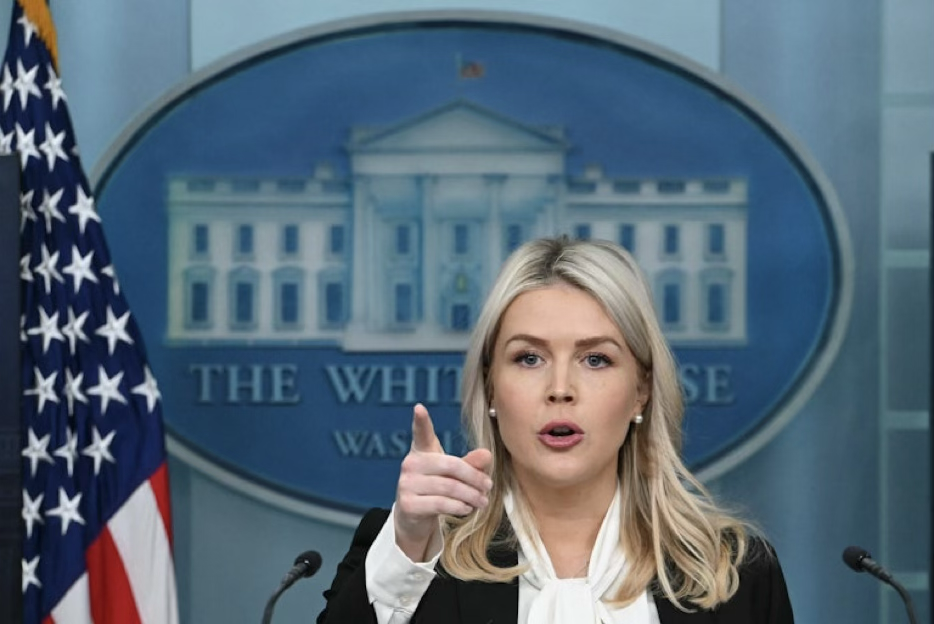 (Image caption) The chairs and cameras in the White House briefing room symbolize the long-standing tug-of-war between American politics and media. The new generation of spokespeople, represented by Leavitt, are the ones rewriting the rules of the game within this setting.
***
Technology and Personality: How a Spokesperson "Gets Things Done"
To understand how she found her role in this position, we need to break down the abstract concept of "being able to speak" into two levels: technique and personality.
In terms of language techniques, she has a clear three-part structure: first, she questions the premise of the problem and points out its one-sidedness and bias; then she presents a set of facts or stories that are favorable to her, often with specific numbers or names; and finally, she concludes with a short sentence full of emotion and a clear stance.
This structure is perfectly suited for the social media age: the middle part can be used by different media outlets as needed, but the closing sentence will almost certainly be cut into the video and included in the headline. She deliberately designed her answer as an "editable module," so that even if the other party edited it with unfriendly intentions, she could still retain the message she wanted in the selected clip.
In terms of emotional control, her defining characteristic is sharpness without losing control. When faced with a question she deems unfair, she will flash a very brief smile—somewhere between a sneer and "I knew you'd ask that"—before she begins to answer. This smile serves as both an emotional buffer and a subtle signal to her supporters, "Look, here they come again."
She often uses polite rhetoric to retaliate: employing phrases like "the American people really care about..." to shift the focus from the media back to "the people," implying that the issue itself has strayed from the core of genuine concern. This technique allows her to maintain official decorum in form while retaining the offensive power in content.
In terms of character portrayal, she excels at self-narration. To friendly media, she repeatedly recounts her experiences working at an ice cream shop, training at a Catholic school, reading letters at the White House, and losing the election, gradually building a character with emotional depth: a small-town girl, a devout believer, a diligent staff member, a defeated candidate, and a combative spokesperson.
This role positioning makes her not just a cold, impersonal "position" in the eyes of her supporters, but someone who has experienced setbacks and rebuilding. For a camp in a polarized era, such a figure evokes a stronger emotional response than a purely professional technocrat.  (Image caption) The White House Office of Presidential Correspondence. During her internship there, Leavitt encountered letters and public appeals from all over the country, beginning to understand how public narratives are selected and shaped from the stories of ordinary people. This experience gave her her first close-up look at the actual workings of national governance and political communication.
How did she find her place in this era?
If you trace her life trajectory along a line, you can see a gradually clearer process.
Her early life in a small town and with a small business family gave her a very concrete understanding of taxes, regulations, media narratives, and the "feelings of ordinary people." Her religious education instilled in her a relatively stable, conservative stance on value issues. Her experiences at university and the White House Mail Office taught her how to transform these feelings into words and stories.
After joining the White House press team, she learned how to anticipate media attention, manage the agenda, and understand the chain of "who asks questions, who edits, and who decides the headlines." Her own experience of running for office and losing made her realize the vulnerability and helplessness of being scrutinized under the spotlight.
All of this experience led to a crucial choice: she was willing to define her role as a "side-by-side voice manager" rather than retreat to a safer, more neutral professional position.
She found her place on the fault line between the rupture of media authority and political polarization, speaking in a highly technical yet clearly positioned manner. She did not attempt to mend the rupture itself, but rather became a representative of one side of it, even using her work to continuously clarify the cracks.
From a personal perspective, this is a high-risk gamble: she has tied her future to a highly controversial political project, and if one day this project is severely condemned in historical evaluation, her name will be difficult to separate from it.
From a historical perspective, she became a model of a new role: no longer a spokesperson who pretends to be neutral, but a political communicator who frankly takes sides and uses professional skills to amplify her stance. 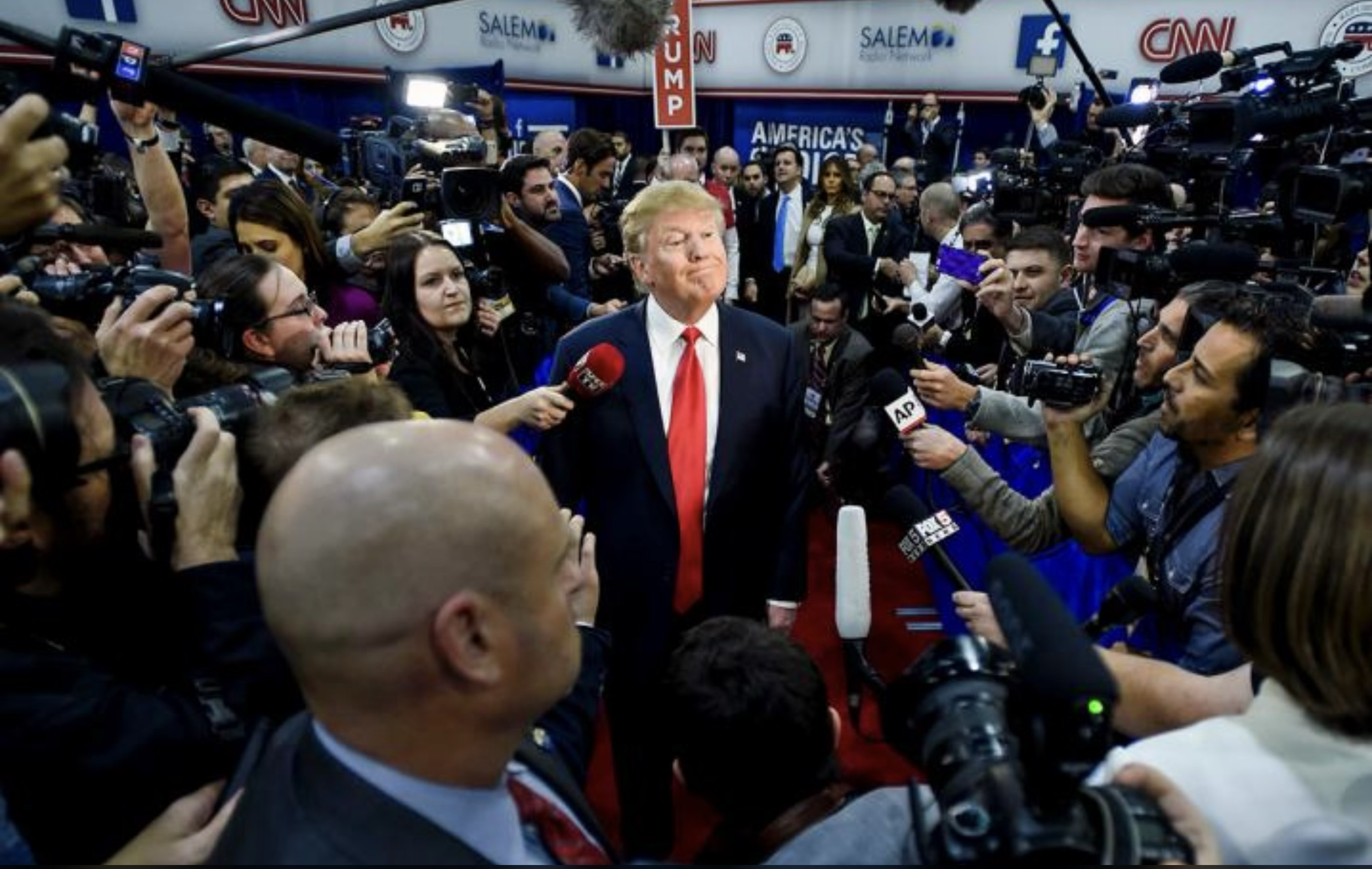 (Image caption) The front lines of political communication. Karoline Leavitt represents a new image of political communicator: adept at using media rhythm, social platforms, and instant narratives to manage the information agenda in a highly polarized public opinion environment.
What has she brought to this era?
It is too early to draw conclusions about a politician who is still in the early stages of her career, but we can already see some specific impacts and symbolic significance she has brought.
She redefined the boundaries of the White House briefing room. Traditionally, this space was a highly ritualistic arena for dialogue between the government and mainstream media, with relatively fixed qualifications and roles for participants. She transformed it into a more open yet more diverse space: mainstream media remained present, but podcasters, influencers, and "new media" were institutionalized, and the government acknowledged that the "information production center" was no longer confined to newspapers and television stations. This can be seen as a step towards the democratization of information, or criticized as a dilution of professional barriers. Regardless of the assessment, it does reflect and accelerate the fact that the weight of public discourse has shifted from a few major media outlets to decentralized platforms, a shift the White House must confront and embrace.
She has created a template for a "professional spokesperson who clearly takes sides." In the past, most spokespeople, even if they had a stance, would maintain an institutionally neutral appearance, hiding "I" behind "position." She, however, hardly hides her political beliefs and emotions, and is willing to openly call out "liberal media" and "fake news" in front of the camera. This stance will encourage more young people with strong values to enter the public sphere without concealing their positions, making public discussions more frank and sharp.
She offered a new public image for young conservative women. For a long time, the stereotypical image of "female leaders" in mainstream American culture has largely come from the liberal camp, while conservative women have often been stereotyped as subordinate figures. Leavitt's presence on the White House podium made a different kind of female image visible: she emphasizes faith, family, and order, yet simultaneously possesses highly professional media skills and is willing to engage in frontline combat with reporters. For some young conservative women, this is a "model to emulate."
She further undermined the symbolic authority of mainstream media while forcing them to reflect on themselves. She almost made criticizing the media part of her job, repeatedly accusing them of reporting bias and selective blindness. This will undoubtedly exacerbate distrust and antagonism in the short term, but it also forces the media to no longer simply consider themselves "neutral referees" and to confront the mistakes and blind spots accumulated throughout their history, redefining their professional standards and values.
Most importantly, she made the question of "who has the right to speak for the country" concrete and pointed. When a young woman in her twenties from a small town held a microphone and confronted a veteran reporter in front of the live broadcast camera, many viewers realized for the first time that a spokesperson was no longer just a steady, gray-haired male bureaucrat, but could be someone with a strong stance, yet who also clearly mastered the language of new media.
This change not only reflects the times, but also shapes them in turn. 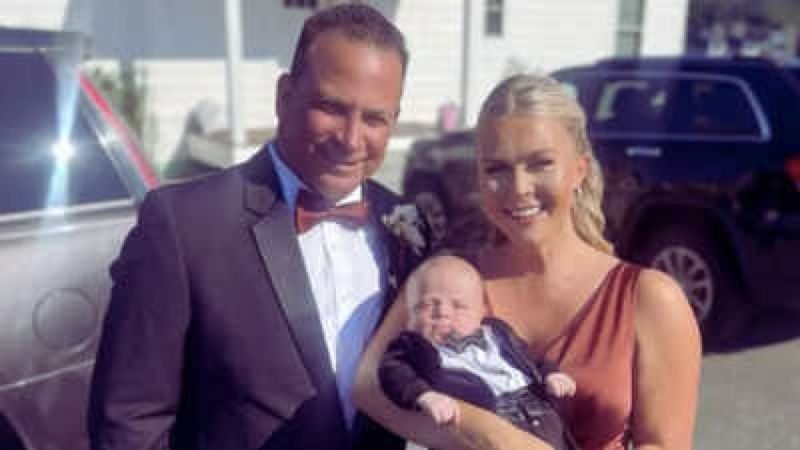
(Image caption) As White House press secretary, she rapidly switches between the high-pressure political pace and her personal life. The younger generation of political elites are no longer just "positions," but also play multiple roles as symbols of generation, gender, and family on the public stage.
Before the next fault line arrives
In an era dominated by short videos, news flashes, and headlines, people like Karoline Leavitt are easily reduced to a few labels: young, tough, and polarized. This profile attempts to do the opposite: dismantle the labels to see the specific trajectory, choices, and contradictions within.
From a small-town girl scooping ice cream in an ice cream shop to standing on the podium in the White House briefing room, she went through a series of seemingly ordinary but highly cumulative tasks: reading letters, writing speeches, editing, anticipating questions, running errands for local television stations, and losing elections in her district. It was in these unglamorous aspects that she gradually defined her position—standing in the noisiest and most conflict-ridden place of this era, responsible for speaking for an entire camp.
What she brought to this era was not a technological invention or a legislative achievement, but a new role as a spokesperson and a new way of speaking: in an era of fragmented authority and clear-cut positions, you can choose not to pretend to be neutral, but to stand frankly on the sidelines and manage a country's narrative with calm and skillful techniques.
The value and cost of this choice remain to be seen. But what is certain is that when future generations look back at the political and media history of this decade, that young face in the White House briefing room will be an unforgettable image. It reminds us that in an era of widening fault lines, an entire generation was trying to find their place on the edge of the cracks and change the world with their voices.
A panoramic timeline of Karoline Leavitt ( 1997–2025 )
GFM Person Research Database Version
| time | age | event | illustrate |
| 1997 | 0 | Born in Atkinson, New Hampshire, USA | Growing up in a small-town family in New England |
| 2000–2014 | 3–17 | Small Town Growth | The family runs an ice cream shop and a truck business, and I've been involved in family work since childhood. |
| 2011–2015 | 14–18 | Attending Central Catholic High School | Catholic educational background, participation in softball and student media |
| 2015 | 18 | Enter Saint Anselm College | Majored in Communication, minored in Political Science, and received a softball scholarship. |
| 2016 | 19 | Serving as a student ambassador for the New Hampshire Institute of Politics | Contact with US presidential primary political activities |
| 2016–2017 | 19–20 | Contribute to the school magazine, The Saint Anselm Crier | Publish political commentary criticizing mainstream media |
| 2017–2018 | 20–21 | Media Internship | Interned at media outlets such as WMUR-TV and NBC Sports Boston . |
| 2018 | twenty one | White House Office of Presidential Letters Internship | Access to public letters and policy narratives from across the United States |
| 2019 | twenty two | University graduation | Saint Anselm College Communication Studies Degree |
| 2019–2020 | 22–23 | White House Press Office | Serving as Assistant Press Secretary |
| 2021 | twenty four | Join the Congressional Team | Elise Stefanik , Republican House Leader, Communications Director |
| 2022 | 25 | running for U.S. Representative from New Hampshire | He won the Republican primary but lost the general election. |
| 2023–2024 | 26–27 | Join President Trump's campaign team | Serving as spokesperson and National Press Secretary |
| 2025 | 27 | Appointed as White House Press Secretary | Became one of the youngest White House press secretaries in U.S. history |
Key Identity of the Character
| type | content |
| Profession | White House Press Secretary |
| political camp | Republican Party of the United States |
| core role | political communicators |
| Characteristics of the times | Platform Media and the Era of Political Polarization |