

Judy Chu: The first Chinese-American woman elected to the U.S. Congress
She brought the community’s concerns to Congress, addressing the real challenges faced by Southern California residents in areas such as tax policy, healthcare, language services, and disaster recovery.
On September 11, 2026, a new federal law expanded tax credits for certain wildfire-related funding, but on the same day, FEMA rejected California's application for additional disaster case management funding. Representative Judy Chu's office later clarified that FEMA was reviewing the state's response and had already disbursed two more installments. These developments raise a question that has permeated her seventeen-year congressional career: from taxes, healthcare, and language services to the Eaton Fire recovery, how are community concerns translated into federal action, and can aid reach families in a timely manner?
Editor's Note
GFM.News thanks the office of Congresswoman Judy Chu for assisting with pre-publication fact-checking of this article. Maile Zeng Plan, Director of Voters and Community Services, assisted with initial contact and introduced Communications Director Anna-Leigh Ong, who coordinated subsequent reviews. GFM.News thanks both of them for their work in liaison and coordination, and Lauren Jacobs, Jenna Christiansen, and Maddy Hanley for their meticulous review of the draft.
The signed comments from three colleagues who reviewed the document provided additional information, pointing out substantial problems with the original draft's description of tax treatment for wildfire settlements, clarifying the attribution of the legislative proposal, and explaining which information could be largely confirmed and which details could not yet be independently verified.
This article incorporates these clarifications and, where appropriate, acknowledges that the information is from the Member of Parliament's office. The original report's data is current as of September 29, 2026; the office's annotations and follow-up revisions are dated October 6, 2026. Descriptions of bills under consideration and executive timelines reflect the situation at the time of this report.
To ensure transparency in the review process, GFM.News has included five full substantive comments and one follow-up revision in the appendix, explaining how each comment was handled. This record allows readers to distinguish between the original report, corrections and comments from the office, and the editorial decisions made by GFM.News. GFM.News takes responsibility for the wording, sources, and conclusions of this article.
Jeff Morgan
(Editor-in-Chief of GFM.News)
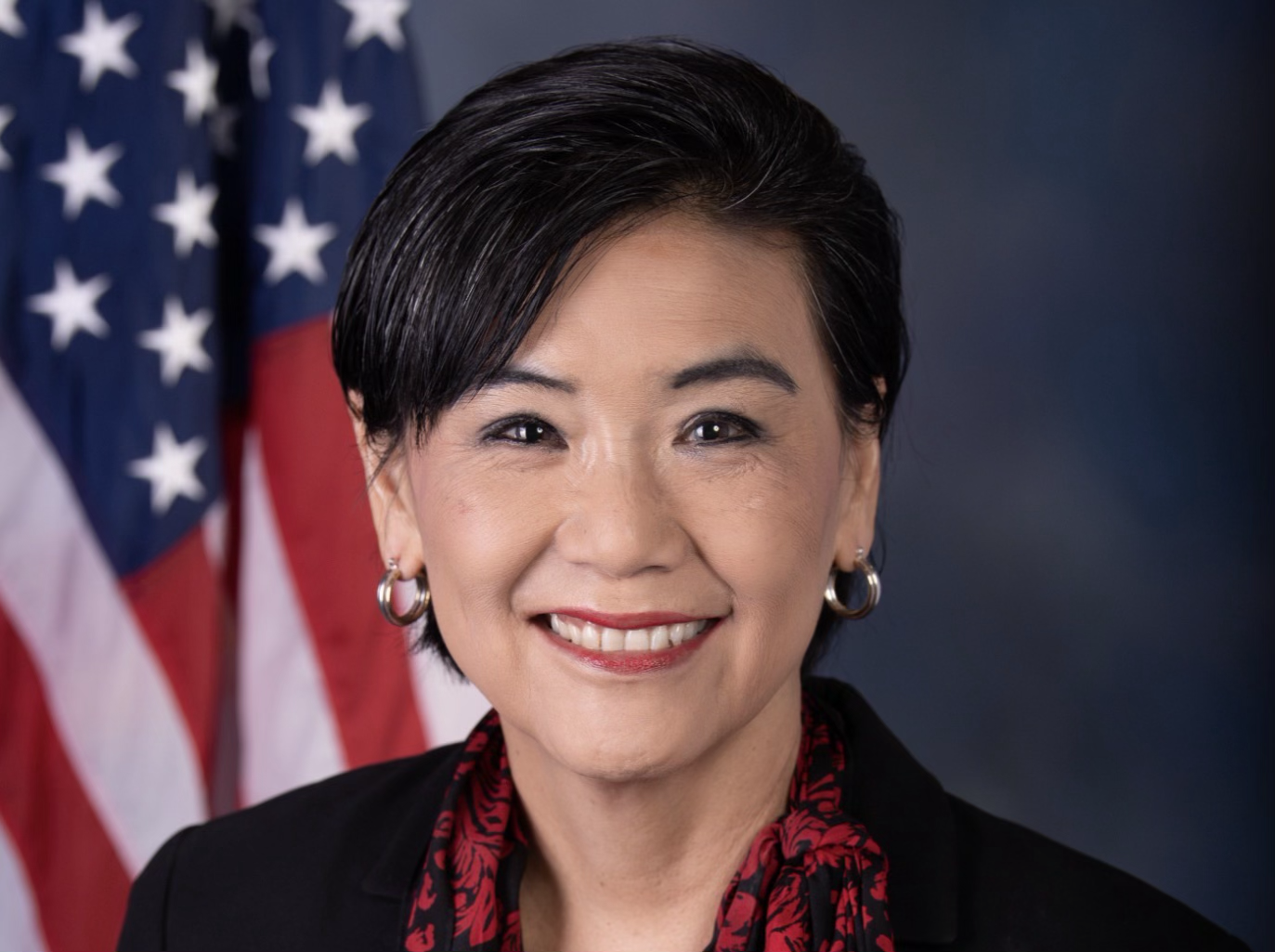 (Image caption) Official portrait of Congresswoman Judy Chu, taken on May 2, 2019. She was elected to the U.S. House of Representatives in 2009, becoming the first Chinese-American woman to be elected to the U.S. Congress.
New tax relief and stressful disaster recovery plans
On September 20th, I met Representative Judy Chu again at a community event in Southern California. In July 2009, she won a special election, becoming the first Chinese-American woman elected to the U.S. Congress. Seventeen years later, this Democratic Representative representing California's 28th Congressional District remains deeply rooted in the Southern California community where she once lived, taught, and worked in local government.
On September 11, 2026, the president signed a bipartisan bill excluding certain eligible wildfire relief funds from federal taxable income. According to a subsequent joint letter released by Representatives Judy Chu, Brad Sherman, Adam Schiff, and Alex Padilla, the Federal Emergency Management Agency (FEMA) Ninth District office rejected California's request for approximately $6.57 million in additional funding on the same day.
The funds requested are intended to help maintain disaster case management services for victims of the Eaton and Palisades fires. In September, the service warned that the program could cease operations on September 30 if the funds did not arrive on time.
In interpreting this warning, it is essential to consider subsequent updates provided by Representative Judy Chu's office. In its review comments dated October 6, the office stated that FEMA was reviewing California's response and had disbursed two more installments since the rejection decision. The comment did not specify the amounts or disbursement dates. It confirmed that additional funds had been disbursed but did not specify how much of the program's funding needs were met.
Tax laws determine how much relief funds a family can ultimately retain. Administrative operating costs determine whether someone is still available to assist the family with insurance claims, loans, temporary housing, and rebuilding applications. These decisions collectively constitute concrete standards for measuring the effectiveness of elected officials: how far have the issues voters have entrusted to elected officials progressed in Washington; and what steps remain before an authorized benefit becomes actual assistance that a family can use.
A public career that began with a language dispute in Monterey Park
Representative Judy Chu was born in Los Angeles in 1953. She graduated from UCLA in 1974 and received her Doctor of Psychology degree from the California Institute of Professional Psychology in 1979. During her approximately twenty-year teaching career, she taught at Los Angeles City College and East Los Angeles College.
Her entry into the public sphere was closely linked to the demographic and linguistic conflicts that emerged in Monterey Park in the 1980s. As the city's Asian immigrant population increased, a political movement supporting an "English-only" policy gradually formed, and the city council passed a resolution supporting making English an official language. A historical book on Asian American and Pacific Islander members of Congress published by the U.S. House of Representatives points out that Representative Judy Chu's opposition to this anti-immigrant movement was the impetus for her involvement in local politics. In later public statements, she repeatedly described that period as the starting point of her public career.
On the surface, this controversy involves government documents and public signage. In reality, it affects residents' ability to understand municipal government announcements, explain their needs to public agencies, and participate in discussions before policy decisions are made.
Councilwoman Judy Chu was elected to the Garway Unified School District Board of Education in 1985 and a Monterey Park City Councilwoman in 1988. She subsequently served three terms as mayor in 1990, 1994, and 1999. Her teaching career overlapped with her local government service. Schools, families, and municipal services became her earliest exposure to how public power actually operates.
She was elected to the California State Assembly in 2001 and to the California Tax Balance Commission in 2006, joining this state-level tax administration composed of elected commissioners. In 2009, after Congresswoman Hilda Solis became U.S. Secretary of Labor, Congresswoman Judy Chu won a special election on July 14 to succeed her in Congress. Following a redistricting, her district was changed from 32nd to 27th, and from 2023 onwards to its current 28th district, encompassing Pasadena and the western San Gabriel Valley.
 (Image caption) On January 2, 2013, merchants in a shopping plaza in Monterey Park use signs in both Chinese and English. This is the city where Councilwoman Judy Chu began her involvement in local politics, and language services have been a long-standing public issue of concern for her.
Tax policy is moving to the core of federal decision-making.
According to the House committee rosters reviewed in this article, Representative Judy Chu also serves on the House Ways and Means Committee and the House Budget Committee. Within the Ways and Means Committee, she participates in three subcommittees: Health, Oversight, and Jobs and Benefits.
The Ways and Means Committee is the main committee in the House of Representatives responsible for drafting tax laws, and also has jurisdiction over the Social Security and Medicare programs. The Budget Committee, on the other hand, sets the overall framework for federal revenues and expenditures. Representative Judy Chu's career path, from state-level tax committees to the main federal tax law drafting committees, spans nearly two decades of fiscal policy work.
The impact of tax law on disaster victims is often reflected in the details of tax returns: whether compensation is considered income, whether property losses can be deducted, whether the filing deadline can be extended, and whether the same loss can meet the conditions for more than one tax relief.
On July 24, 2025, the Natural Disaster Tax Deferral Act, spearheaded by Representative Judy Chu and Tennessee Republican Representative David Kustoff, became law. This law allows the Treasury Department and the IRS to postpone certain federal tax deadlines upon a written request from a governor for a qualifying state-level disaster declaration. It also extends the statutory minimum deferral period applicable to certain federal disaster declarations.
The Doug Lamar Federal Disaster Tax Deduction Certainty Act became Public Law No. 119-108 on September 11, 2026. This law expands tax deductions for eligible individual disaster losses caused by major disasters and excludes certain wildfire relief payments from federal gross income. The wildfire provisions apply to eligible payments received after December 31, 2025, related to wildfires that occurred after December 31, 2014, and before January 1, 2027, and were declared a disaster by the federal government.
This income exclusion covers certain living expenses, wages not paid by the employer, and compensation for personal injury, death, and emotional distress. Generally, it applies to losses not yet covered by insurance or other sources; the same expense cannot be used simultaneously for income deductions, tax credits, or tax base adjustments.
Regarding the victims of the Eaton Fire, Representative Judy Chu's office provided a specific clarification in its fact-checking review: According to the law's definition of wildfires, their wildfire settlement compensation is exempt from federal income tax. The office noted that the original draft, in a rather general manner, reminded readers whether wildfire compensation qualifies for tax exemption and failed to accurately convey the law's applicability to Eaton Fire settlement compensation.
This clarification pertains to federal income tax. It does not determine how much the victims will receive, when a settlement will be reached, or whether the compensation will be sufficient to cover all recovery costs.
The Congressional Budget Office, citing estimates from the Joint Committee on Taxation, estimates that the law will reduce federal revenue by approximately $408 million between 2026 and 2036. Of this, approximately $331 million will come from provisions that exclude eligible wildfire relief payments from gross income.
This is the financial cost borne by the federal government to alleviate the tax burden on disaster victims. It also illustrates the limits of tax relief. Excluding compensation from taxable income allows disaster victims to retain more relief funds, but there is no guarantee that the compensation amount will be sufficient to cover the ever-increasing costs of land, building materials, financing, insurance, and temporary housing.
Representative Judy Chu's 2025 proposal, the Disaster Victims Tax Relief and Recovery Act (HR 6842), offers broader coverage, including disaster tax credits, low-income housing tax credits, and other measures aimed at supporting family recovery. HR 6842 and HR 5366 share some similar policy objectives regarding disaster loss deductions and tax treatment of wildfire relief funds. HR 5366 is already in effect; as of September 29th, the data deadline for this report, the remaining provisions of HR 6842 are still in the legislative process.
This difference reflects the reality of congressional legislation. A comprehensive bill may remain in committee, but some of its policy objectives have already been achieved through another bill with bipartisan support. Assessing a member's role requires distinguishing between the bill's lead sponsor, co-sponsors, supporters, and the drafters of the final legislation provisions. The most reliable basis for understanding a member's contribution is these records and the actual work they demonstrate.
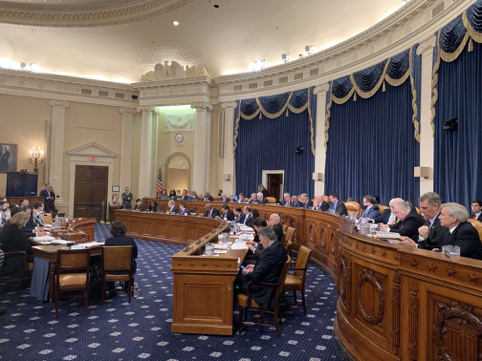 (Image caption) On January 29, 2019, the U.S. House Ways and Means Committee held a hearing on healthcare coverage for individuals with pre-existing medical conditions. This file photo shows a scene from Congress deliberating on healthcare policy.
In healthcare, support also requires payment mechanisms.
Congresswoman Judy Chu frequently cites her background in psychology. In recent years, her healthcare policy agenda has focused on two groups whose work is often overlooked by the formal healthcare system: peer support specialists who have personally experienced the recovery process from mental health issues or substance use problems; and family caregivers who have long assisted Medicare beneficiaries.
In December 2025, Representative Judy Chu and Republican Representative Adrian Smith of Nebraska introduced the Promotion of Effective and Empowering Recovery Services Act (PEERS Act), or HR 6841. This bill proposes to include eligible peer support services provided through certain rural health clinics, federally accredited health centers, community mental health centers, and other qualified institutions within the scope of Medicare coverage.
Peer support specialists typically have personal experience with mental health issues or substance use disorders. After training, they assist other patients in understanding treatment, maintaining recovery progress, and re-establishing their daily routines.
That same month, Ohio Republican Representatives Mike Carey and Judy Chu introduced the Assisting Caregivers with Medicare Act, or HR 6735. This bill aims to require Medicare to increase public awareness of an existing voluntary arrangement: beneficiaries can authorize family caregivers to obtain necessary information through the 1-800-MEDICARE hotline. The bill also aims to improve the ability of hotline staff to respond to caregivers' needs.
As of September 29, the deadline for reporting data, neither of these bills had become law. However, they both point to the same systemic gap: patients may have ongoing support from others, but this support may not be recognized by the insurance system or receive corresponding reimbursements; family members may be willing to assume the responsibility of caring for the elderly, but still encounter obstacles in obtaining information and completing Medicare administrative procedures.
On Lunar New Year's Eve, January 21, 2023, a gunman opened fire in a dance studio in Monterey Park, killing 11 people and injuring nine others. As the community begins to recover, Councilwoman Judy Chu urged residents to return to school, support local businesses, and continue to participate in Lunar New Year activities.
For communities that have experienced collective trauma, recovery is not just about restoring public safety or paying for medical expenses. Whether residents feel they can walk into familiar dance halls, schools, or shops is also an impact of the event on the community, only this impact is rarely fully reflected in government budgets.
Ethnic identity cannot replace evidence-based vetting.
Representative Judy Chu led the Congressional Asian Pacific American Caucus for 14 years, starting in 2011. In the 119th Congress, she became honorary chairperson, succeeded by New York Representative Grace Meng as chairperson.
The COVID-19 Hate Crimes Act was signed into law on May 20, 2021, incorporating elements of the Jabara-Haya Anti-Hate Crimes Act. The House version of the latter was spearheaded by Representatives Don Byr and Judy Chu, along with Republican Representatives Fred Upton and Fern Buchanan. Its primary objectives include improving hate crime reporting and data systems used by local law enforcement agencies and expanding support for victims and local governments.
The legislation passed with bipartisan support in both the House and Senate. However, its actual effectiveness depends on whether local agencies submit documentation, whether victims trust law enforcement, and whether language barriers can be overcome.
Holding a congressional seat has not exempted Representative Judy Chu from loyalty questions stemming from her ethnic background. In February 2023, after she defended Chien-Ming Wu, Texas Republican Representative Lance Gooden questioned Chu's "loyalty or competence" on Fox News and argued that she should not be involved in classified briefings. Wu had previously been appointed by President Biden to represent the United States on the Asia-Pacific Economic Cooperation (APEC) Business Advisory Council.
Representative Judy Chu called the remarks racially discriminatory. Then-Chairman of the House Select Committee on China, Mike Gallagher, and the committee's ranking Democrat, Raja Krishnamurti, later appeared together on CBS to say that a member of Congress's loyalty should not be questioned in this way.
The principles involved here are very clear: government appointments, political relationships, and national security issues should all be subject to rigorous scrutiny based on documents, conduct, and related interests. Ethnicity alone cannot prove that a U.S. citizen is disloyal or less trustworthy to the public.
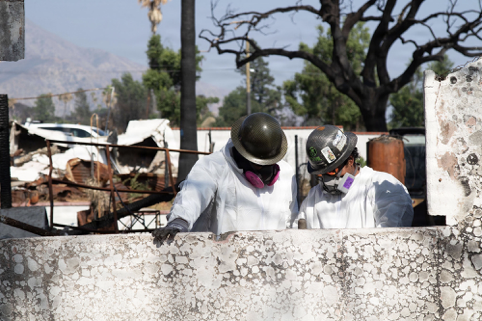 (Image caption) On August 14, 2025, contractors from the U.S. Army Corps of Engineers cleared debris from a property damaged by the Eaton Fire in Altadena. Workers wearing protective gear handled the fire-damaged building remains in preparation for subsequent reconstruction.
Forty years later, language services are now embroiled in a debate over federal legislation and artificial intelligence standards.
On March 1, 2025, President Donald Trump signed an executive order designating English as an official language of the United States and rescinding Executive Order 13166, which, since 2000, required federal agencies to provide language assistance to people with limited English proficiency.
The new executive order does not require agencies to modify or remove existing policies, documents, products, or services offered in languages other than English. Agencies can still determine how to provide public services, provided they comply with existing laws and their respective responsibilities. Therefore, this order changes the federal government's policy benchmark but does not automatically terminate language assistance obligations stipulated by other laws or specific public programs.
In January 2026, Representative Judy Chu, along with Representatives Grace Meng, Dan Goldman, and Juan Vargas, introduced the Universal Language Services Act, or HR 7223. This bill proposes to enshrine requirements for written and oral translation services, institutional language service programs, and grievance procedures into federal law. The bill also proposes to establish technical standards for government communication, artificial intelligence, and automated language assistance tools, extending the discussion of language services from paper documents to algorithms, machine translation, and digital public services.
In April 2026, Representative Judy Chu, along with Representatives Grace Meng and Vargas, introduced the Language Services Commission Act. This bill proposes establishing an independent agency composed of community representatives and federal officials to research, develop, and promote language service standards applicable to federal agencies.
As of the reporting deadline of September 29, neither bill had become law. However, the systemic issues they raise continue the controversies faced by Representative Judy Chu forty years ago in Monterey Park. A public service may be legally authorized, budgeted, and published on the government website, but if residents do not understand the eligibility requirements, deadlines, or reasons for application rejection, the service may still be practically unavailable to them.
In addition to determining the cause of the fire, restoration funds still need to be secured gradually.
The Eaton Fire, which struck on January 7, 2025, burned approximately 14,000 acres, killing 19 people and destroying or damaging more than 9,000 homes and businesses. Altadena and Pasadena, located at the heart of the disaster, are both within the constituency of Congresswoman Judy Chu. Her parliamentary office subsequently created an Eaton Fire Resource Webpage, compiling information on FEMA assistance, insurance, housing, taxes, and mental health.
On August 4, 2026, the Los Angeles County Fire Department and the California Department of Forestry and Fire Protection released the results of a joint investigation. The investigation determined that the fire was caused by an electrical arc in a decommissioned transmission tower operated by Southern California Edison. Hot material fell from the tower onto dry vegetation, igniting the fire.
The investigation has determined how the fire occurred. As for civil damages, the apportionment of insurance losses, and any other legal liabilities, these must be addressed separately through evidence, settlement agreements, or legal proceedings.
Twenty months after the fire, many families are still not home. Homeowners' insurance, mortgage obligations, temporary housing expenses, government assistance, and utility company compensation each have different deadlines, documentation requirements, and calculation rules. A family may have only lost one home, but the system breaks this loss down into multiple, not necessarily interconnected, application processes.
The Disaster Case Management Program, funded by FEMA and managed by the California Department of Social Services, aims to assist disaster victims with these procedures. Case managers assist with FEMA and Small Business Administration assistance applications, insurance claims, temporary housing, financing, contractor matters, and long-term reconstruction plans.
On September 10, Representative Judy Chu and Representative Sherman, along with Senators Schiff and Padilla, sent a letter to FEMA. According to the letter, California initially requested approximately $26 million. FEMA approved approximately $13 million and a 24-month service period, but only about $3 million was actually disbursed at that time; the remaining installments are still under review.
The letter cited data provided by the service agency, showing that there were 1,397 pending cases at the time, and approximately 700 other victims on the waiting list. The service agency estimated that if the program were terminated, about 109 positions might be lost.
On September 11, FEMA's Ninth District office rejected California's request for approximately $6.57 million in additional funding. According to a subsequent letter from members of Congress relaying FEMA's reasons, California failed to adequately explain why the expenditures exceeding the existing approved amount were justified. The California Governor's Office of Emergency Services filed an appeal regarding this decision.
On September 24, four members of Congress sent another letter questioning how FEMA could determine that additional funding was unnecessary when most of the approved funds had not yet been disbursed.
The subsequent letter cited the service provider's latest data. According to this data, the program has served over 3,000 people and is currently processing 1,288 pending cases, of which 1,023 are classified as the most complex. Another 84 people are on the program's direct waiting list.
The figure of approximately 7,000 people awaiting assistance comes from a broader service database and should not be considered the same statistical measure as the program's direct waiting list. All these figures were provided by service agencies and then cited by members of parliament. GFM.News was unable to obtain the complete administrative information required for an independent review of the number of cases and classification methods.
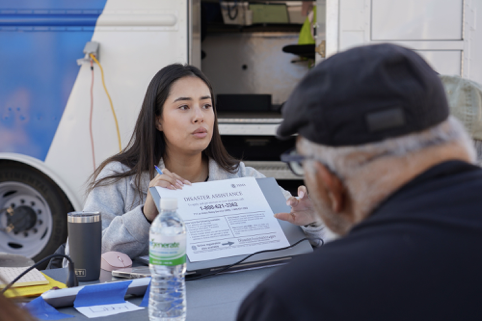 (Image caption) In January 2025, FEMA staff explained aid information to residents affected by wildfires at the Pasadena Disaster Recovery Center. Face-to-face consultations helped residents understand the application process and required documents.
Another housing assistance deadline exacerbated the pressure described in the September correspondence. According to the congressional letter, FEMA's rent assistance to Los Angeles wildfire victims was originally scheduled to expire on October 9. As of September 17, 801 households were still receiving assistance, with another 329 applications pending processing. These figures and the original deadline describe the situation as reported at that time; the office's notes did not provide subsequent updates on the rent assistance.
When case management services and rent assistance are both at risk, families may lose more than just one benefit. They may also lose the person who helped them figure out which application to submit, which agency to contact, or which deadline to keep in mind.
Four members of Congress requested a response from FEMA by September 28. The original report noted that as of September 29, GFM.News had not found a formal response in publicly available records. Representative Judy Chu's office later clarified that FEMA had indeed responded, but the office had not made it public. The review comments did not include this response.
The office also confirmed that FEMA is reviewing California's application and, following its rejection decision on September 11, has disbursed two more installments. This update changes the description of the funding disbursement process: the previously disbursed amount of approximately $3 million cannot be considered the final total disbursement. However, because the amount and date of the additional disbursements are not provided, these annotations are insufficient to determine the updated total cumulative disbursement or what funding needs the program still has.
According to correspondence with members of parliament, the case management program was originally authorized to operate for a longer period. Warnings of a potential shutdown in September concerned the timing of funding availability and the rejection of applications for additional funding. Subsequent funding indicates further administrative action; however, assessing the impact of these funds on service continuity requires further payment information and details regarding the program's operational needs.
What institutional achievements were made during his seventeen years in Congress?
For a member of parliament who has served seventeen years, this article uses verifiable institutional records as the primary evaluation criteria: which proposals have become law and which provisions remain in committee; which administrative obstacles have been addressed; how funds move from approval to disbursement; and how the parliamentary office explains the results achieved and the work still in progress.
Such assessments cannot solely depend on whether a particular member of parliament bears the name of a bill. Congressional work also includes co-drafting, committee deliberations, bipartisan consultations, executive oversight, and assisting voters with individual cases. This work may not always translate into easily publicized political achievements, but it directly impacts whether disaster victims receive tax filing extensions, caregivers access information, residents understand government documents, and approved funds are disbursed on time.
GFM.News has submitted written questions to the office of Member of Parliament Judy Chu along with the draft, focusing on the continuity of disaster case management services, the division of responsibilities among government agencies, access to assistance for vulnerable groups, parliamentary oversight, and information disclosure.
GFM.News also invited Representative Judy Chu to explain which assistance Southern California residents should apply for, which deadlines should not be missed, and which parts of her public service record she believes have been neglected, misunderstood, or are still incomplete.
The office's review provided specific factual clarifications and corrected a statement regarding the attribution of a legislative proposal. It also suggested supplementary legislation related to gun violence and acknowledged that the exact years of Representative Judy Chu's various teaching experiences could not be confirmed. These comments are reflected in this document and are recorded in the appendix. However, these comments themselves do not answer all questions regarding project funding, service continuity, or the remaining legislative agenda.
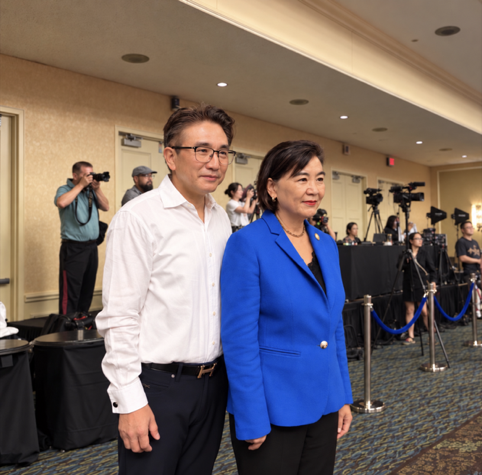 (Image caption) On September 20, Kevin Guo, founder of GFM.News, met again with U.S. Representative Judy Chu at a community event and had a brief exchange.
The test of the system lies in whether families can rebuild their lives.
Seeing Councilwoman Judy Chu again at that community event is the starting point for this article. Her public career began with controversies surrounding schools, city council, and language services in Monterey Park, later extending to her work in Congress involving tax law, healthcare, Social Security, and disaster relief funding. This path has yielded identifiable results, while also leaving behind proposals, funding requests, and administrative processes that still require follow-up.
Once community issues reach Congress, they must go through legislation, funding arrangements, and administrative implementation before they can be transformed into practical protections for families. The passage of a law is an achievement; however, its value in daily life is determined by whether funding is in place, whether agencies enforce the law, and whether residents understand how to obtain assistance.
The clarifications provided by the office enable this article to more accurately present the agency's responses, subsequent funding, and the application of relevant tax laws. These revisions also illustrate that assessing public services requires continuously updated information and a clear distinction between confirmed progress and issues still needing clarification.
Representative Judy Chu's historic achievement in becoming the first Chinese-American woman elected to the U.S. Congress in 2009 is under constant scrutiny within the context of her representative duties: how she responded to the needs of residents of different ethnicities, income levels, and political affiliations; how she exercised legislative and oversight powers; and how she articulated her accomplishments and unresolved issues.
Tax breaks, healthcare, language services, and disaster recovery affect families from diverse backgrounds. An elected representative's responsibilities extend throughout the entire constituency, including those who did not vote for her and residents ineligible to vote. The work documented in this article provides concrete evidence of how she fulfills these responsibilities.
Elections establish a power dynamic, while public services subject that power to daily scrutiny. Whether a bill passes, funds are allocated, or assistance is provided to a family is closer to residents' lives than abstract political evaluations. The responsibility of news reporting is to continuously track these outcomes, ensuring that achievements, limitations, and unfulfilled promises are visible to the public.
For families still dealing with insurance documents, mortgage obligations, rental terms, and rebuilding costs, the effectiveness of the system ultimately depends on one specific question: can the rights and assistance that are recognized by law actually be delivered when people need them?
Editor's Notes and Disclaimer
GFM.News seeks verification from relevant parties or organizations regarding key facts in its reports and provides them with an opportunity to respond. Responses and revision suggestions received are evaluated by the editorial department based on verifiable information; the final wording, analysis, and publication decision rests with GFM.News . Failure to receive a response does not imply endorsement of the report by the parties involved. If substantial errors are discovered after publication, GFM.News will correct them and explain the significant revisions.
The original reporting data in this article is current as of September 29 , 2026 , and incorporates factual clarifications and one follow-up revision provided by Representative Judy Chu's office on October 6 , 2026. This edited version was completed on October 15 , 2026 ; all information regarding bill progress, funding status, and executive timelines is based on the dates noted in each paragraph .
Appendix: Fact-checking notes from the Congressional Office and editorial processing instructions from GFM.News
The following is a complete Chinese translation of the annotations in the reviewed Word document; the English version retains the original annotations verbatim. Reviewer names follow the format used in the document. The original and revised sentences listed in item 6 also retain the original wording of the source document in the English version. Instructions for annotation location and editing were written by GFM.News for this appendix.
1. FEMA reviews California's application and subsequent funding.
Reviewer: Jacobs, Lauren
Date: October 6, 2026
Original source: The article begins by discussing how FEMA's Ninth District office rejected California's application for approximately $6.57 million in additional funding on September 11.
Office annotation:
"We should note that they are reviewing the state government's response and have made two more payments since the rejection decision was made."
Editing instructions:
The article now states that, according to Representative Judy Chu's office, FEMA is reviewing California's application and has already disbursed two additional payments after initially rejecting it. This update is included in the introduction and in the detailed discussion of disaster case management funding.
The approximately $3 million disbursed in September is clearly marked as historical data at that time. Because the annotations do not provide the amounts or dates for the two additional disbursements, the article does not calculate the updated total disbursement amount, nor does it conclude that the program's funding needs have been fully met.
2. The exact years of Representative Judy Chu's various teaching experiences.
Reviewers: Christiansen, Jenna
Date: October 6, 2026
Original location: Statement regarding Representative Judy Chu's teaching at City College of Los Angeles from 1981 to 1988 and at East Los Angeles College from 1988 to 2001.
Office annotation:
"I don't know the exact year, but this statement seems to be generally correct."
Editing instructions:
The article retains the names of the two institutions and a description of approximately twenty years of teaching experience, but removes the exact years of each teaching experience to avoid presenting these years as information that has been confirmed by the office.
The approach to this annotation is to confirm that the reviewer generally agrees with the relevant narrative, while explicitly retaining the limitations on the scope of their confirmation of specific details.
3. Federal income tax treatment of the Eaton Fire settlement compensation
Reviewer: Jacobs, Lauren
Date: October 6, 2026
Original text location: The paragraph discussing the tax treatment of funds obtained through the Southern California Edison Indemnity Program or through litigation settlement.
Office annotation:
"Generally speaking, this statement may hold true; however, in the case of the Eaton fire, wildfire settlements received by victims are exempt from federal income tax under the law's definition of wildfires. Therefore, I believe the wording here is not entirely accurate."
Editing instructions:
This paragraph has been rewritten to reflect the specific clarification from the office: Based on the law's definition of wildfire, the wildfire settlement compensation for the Eaton Fire will be exempt from federal income tax.
This interpretation has been explicitly attributed to Representative Judy Chu's office. The article no longer uses the general reminder in the original manuscript that might have caused readers to overlook the office's explanation regarding the applicability of the Eaton Fire settlement. The revisions are limited to federal income tax and do not extend the annotations to judgments on other taxes, settlement amounts, or payment schedules.
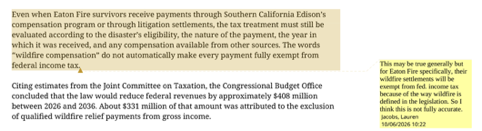 (Image caption ) On October 6, 2026, Jacobs Lauren from the office of U.S. Representative Judy Chu left a note in a draft of a GFM.News profile, proposing a correction to the federal income tax treatment of the Eaton Fire settlement.
4. Recommendations regarding supplementary legislation related to gun violence
Reviewer: Jacobs, Lauren
Date: October 6, 2026
Original location: The paragraph discussing the mass shooting in Monterey Park and the community's recovery.
Office annotation:
"Unsure whether we should suggest mentioning her two gun violence-related bills here?"
Editing instructions:
This annotation was recorded as a suggestion for supplementary reporting. The annotation did not provide the bill's name, number, clauses, or legislative progress.
The article retains the discussion of shootings and community recovery, but omits legislative details not provided in the reviewed materials. This recommendation is kept in the appendix, allowing readers to see both what the office proposed and why it was not incorporated into the specific factual supplement in the main text.
5. FEMA has responded, but the response has not been made public.
Reviewer: Jacobs, Lauren
Date: October 6, 2026
Original source: Regarding GFM.News, as of the September 29th deadline, no official response from FEMA could be found in public records.
Office annotation:
"They did respond, but we didn't make it public."
Editing instructions:
The article now states that, according to a statement from Representative Judy Chu's office, FEMA has responded, but the office has not made the response public.
This revision distinguishes between the scope of information available through the GFM.News public records and whether an agency's response actually exists. Because the review notes did not include the response itself, the article does not describe its specific content or infer any commitments made by FEMA.
6. Clarify the tracking and revision of legislative proposals.
Reviewer: Hanley, Maddy
Date: October 6, 2026
Original location: Description of the proposed Language Services Commission Act.
Original sentence:
"In April 2026, Representative Judy Chu joined Grace Meng and Vargas in introducing the Language Services Commission Act."
Revised sentence provided by the office:
"In April 2026, Representative Judy Chu, along with Representatives Grace Meng and Vargas, introduced the Language Services Commission Act."
Editing instructions:
The article has adopted the revised attribution statement for the legislative proposal from the office. To ensure consistency in titles, the English text has changed "Chu" in the original sentence to "Congresswoman Chu"; the rest of the wording in the revised sentence remains unchanged. This correction clarifies Representative Judy Chu's role in introducing the bill and preserves the attribution of Representatives Grace Meng and Vargas.