

Jessica Blue: After Sitting at the Same Table with a Financial Giant
How does she measure the value of banks, tech companies, and regulators sitting together as she heads Money20/20's US operations?
Banks, tech companies, and regulators are all sitting in the same venue, but collaboration still faces many challenges. Jessica Blue, who heads Money20/20's US operations, has over 25 years of experience in the convention and media industry. In a written interview with GFM.News, she outlined specific criteria for measuring financial innovation: is the technology being used consistently, are responsibilities clearly defined, and are collaborations effective? These questions also point to her own work: after the conference, can the relationships and ideas participants take away withstand the test of daily operations?
 (Image caption) Jessica Blue, Executive Vice President of Money20/20's US operations. In a written interview with GFM.News, she stated that measuring the effectiveness of the conference requires tracking whether discussions after participants leave the venue lead to collaborations, and whether people who met for the first time continue to work together. Photo courtesy of Money20/20.
She measured the conference's achievements outside of the conference itself.
The Money20/20 US conference will be held in Las Vegas from October 18 to 21, 2026, with an agenda covering payments, banking, digital assets, artificial intelligence, and regulation. Jessica Blue, Executive Vice President of US Operations, hopes that participants will leave with a clearer understanding of their next steps and that discussions at the conference will foster collaboration, encouraging those who meet for the first time to continue working together.
"If people leave Las Vegas with better answers, stronger relationships, and a clearer understanding of what to do next, then we've done our job," she said in a written interview with GFM.News.
This standard presents an interesting contrast to her previous descriptions of the conference atmosphere. In a 2024 interview with industry media Trade Show News Network, she described Money20/20 as more of a consumer-oriented festival, different from traditional trade shows. The venue can be lively, and the stage can be eye-catching, but the products, deals, and collaborations she values take longer to materialize.
For a professional event organizer, this standard carries a degree of uncertainty. Whether an encounter is valuable is difficult to judge on-site; it often depends on how participants act after returning to their offices. Organizers can improve communication conditions, but they cannot replace businesses in budget approvals, system integrations, or partnership negotiations.
Jessica's career has long revolved around these kinds of encounters. Now, the conferences she oversees involve banks, technology companies, payment institutions, investors, and members of the public sector with diverse business needs and responsibilities. What she hopes to provide is a platform for these individuals to engage in in-depth discussions.
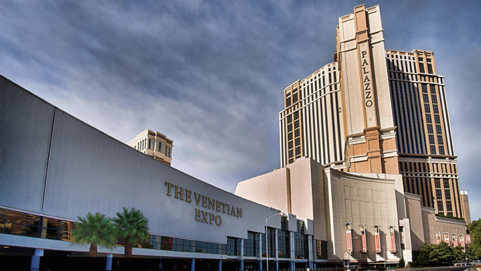 (Image caption) Exterior view of The Venetian Expo in Las Vegas, next to Palazzo. This is the venue for the U.S. convention, which will be held from October 18 to 21, 2026.
The finished products in the store were once her most direct report card.
According to her resume published by the Society of Independent Trade Show Organizers (SISO), Jessica holds an Honours Bachelor of Arts degree from the University of Sussex in the UK. Reflecting on her career in 2024, she said she started in sales and has since worked in the business-to-business trade shows, conferences, and media industry.
She worked in the UK for approximately fifteen years. A 2014 interview with the International Home Furnishings Association revealed that she managed trade shows at United Business Media (UBM) for eight years before joining Advanstar in 2005 to oversee Brand Licensing Europe in London. Subsequently, she was appointed Vice President of Licensing Expo in Las Vegas and moved to the US with the company in early 2013.
Regarding the appointment, Chris DeMoulin, head of Advanstar's licensing business, explained at the time that the brand was increasingly focused on overseas expansion, and the trade show needed a manager who could bring a global perspective.
In April 2013, Advanstar Licensing, in conjunction with the then Licensing Industry Association (LIMA), announced that actress and entrepreneur Gwyneth Paltrow would deliver a keynote address at that year's Licensing Expo and, in her capacity as Vice President, would quote Jessica's welcoming remarks. That year's expo was held at the Mandalay Bay Convention Center in Las Vegas, and the organizers anticipated that over 5,000 brands would be seeking licensing partners and product collaborations.
A licensing deal might begin with just one meeting: a cartoon character, a fashion brand, or a celebrity representative meets a manufacturer and retailer who can turn the related concept into toys, clothing, or home goods. The result of the collaboration ultimately appears before the consumer.
In interviews with the International Home Furnishings Association in 2014 and 2016, Jessica described this sense of accomplishment: seeing the finished product in a store and knowing that the collaboration between the product and the brand began with a conversation at the Licensing Expo. This detail echoes the post-conference outcomes she emphasized today.
She also pays attention to how new technologies are changing her clients' businesses. In a 2016 interview, she described the Digital Media Licensing Summit her team had added the previous year, noting that the event attracted over 500 attendees and mentioning the 3D printing exhibition area planned that year. Online content creators and new manufacturing methods can both generate different licensing needs.
In late 2014, Advanstar was acquired by UBM. A 2016 announcement from the organizers listed Jessica as Senior Vice President of Licensing; in a 2017 interview, she was responsible for a portfolio including Licensing Expo, Brand Licensing Europe, licensing exhibitions in Japan and China, and the industry publication License Global.
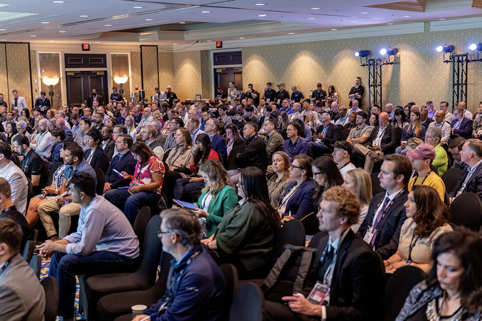 (Image caption) Money20/20 USA Convention 2025 in person.
In August 2019, she moved to Emerald as Executive Vice President. According to her SISO resume, she was responsible for four categories of events and media: food, industrial, technology, and extreme sports, thus expanding her client base. Less than a year into her tenure, the COVID-19 pandemic impacted physical trade shows; Emerald's public documents in 2020 documented numerous event cancellations and postponements, as well as efforts to maintain client relationships and develop digital products.
She also participates in the women's community within the industry. SISO's 2023 data lists her as a board member of the Women's Task Force. When discussing her reasons for joining Money20/20 in 2024, she specifically mentioned the support for women and people of color provided by programs such as RiseUp and Amplify, and stated that diversity participation is very important to her.
On January 2, 2024, Money20/20 announced her appointment as Executive Vice President of U.S. Operations. She will be responsible for strategy and growth for the U.S. convention and lead the team in execution. Global President Tracey Davies described her leadership style as empathetic and customer-centric in the appointment announcement.
At the time, Money20/20 belonged to the Ascential Group. In October of the same year, Informa completed its acquisition of Ascential; UBM, where Jessica had worked earlier, had been merged into Informa in 2018. She was now back in the same conglomerate, but the industries and clients she was dealing with had changed.
Brand licensors seek product partners, industrial buyers compare equipment and suppliers, and financial institutions must simultaneously consider system integration, risk control, and regulatory requirements. Her current job requires her to apply years of experience in understanding client and organizational communication to a financial environment where technology and regulations are constantly changing.
Let the different organizations clarify their respective needs.
In this written interview, Jessica summarized the key changes in 2026 as the increasingly close connections between various sectors of the financial industry. Stablecoins are involved in payments and settlements, tokenization is involved in assets and capital markets, AI is entering financial workflows, and digital identity is linked to the security of automated transactions.
In her view, these issues are difficult to discuss separately. Technology deployment involves existing systems, partner organizations, and accountability arrangements, and it is difficult for a single organization to handle all the work.
Her past experience in the licensing industry has also allowed her to handle connections between different sectors. In an early interview, Jessica explained that her team partnered with the Chicago International Home Goods Show, encouraging brands to first understand consumer trends in tableware, home décor, and kitchenware, and then connect with companies that could manufacture and sell related products through the licensing show. This arrangement aimed to seamlessly integrate brand concepts with product development.
Her understanding of the Money20/20 role also emphasizes enabling different institutions to understand each other's needs. Banks can explain operational constraints to fintech companies, technology vendors can hear regulatory questions, and investors can directly connect with those in charge. She also hopes that public interest perspectives can be included in the discussion.
Regarding the platform's authority, she made it very clear: Money20/20 is responsible for providing a venue for substantive communication, and the formulation of the regulatory framework is still determined by the relevant institutions.
"Some of the most valuable conversations may not end with everyone agreeing; but people will have a clearer understanding of what the other person needs for the whole system to function," she said.
To achieve this, inviting relevant parties to the same meeting is just the beginning. Differing opinions need time to be addressed, failures need to be shared publicly, and regulatory issues need to be discussed in detail beyond general statements.
These requirements ultimately come down to the team's specific arrangements: which questions to raise on the agenda, which experiences to follow up on, and whether participants have the opportunity to understand the limitations faced by other organizations. For organizers, the depth of the discussion is a test of the quality of the content.
 (Image caption) At previous Money20/20 exhibitions, corporate booths, networking spaces, and the Emergent Stage were located in the same area. Jessica Blue focuses on whether the connections participants made at the event can continue to develop after returning to their respective organizations. Photo courtesy of Money20/20.
The evidence she was looking for existed in the institution's daily operations.
When discussing how to discern the actual progress of financial innovation, Jessica's observation methods are far more specific than those offered by product announcements.
She looks at transaction volume and continued usage, whether the technology is integrated into existing systems, and whether business results can be measured. Another signal is whether the people involved in the project—the legal, compliance, finance, operations, and technology teams—are fully committed.
In her distinction, a trial can prove that a technology works; institutional adoption only becomes more concrete when banks, payment companies, asset managers, or businesses change the way they handle funds, assets, and customer service on a daily basis.
This standard can also be used to examine the cases she cited. She mentioned the stablecoin arrangements related to Western Union, Anchorage Digital, and Solana. Western Union announced the USDPT project on October 28, 2025, with an initial launch expected in the first half of 2026; on May 4, 2026, the company announced the official launch of the stablecoin, issued by Anchorage Digital Bank and running on the Solana blockchain.
In its infrastructure partnership announcement released on the same day, Fireblocks listed the Philippines and Bolivia as initial deployment markets and stated plans to expand coverage in 2026. This announcement outlined the rollout arrangements but did not provide sufficient operational data to confirm full deployment in both locations.
According to the transcript of the earnings call on April 24, 2026, published by The Motley Fool, Devin McGranahan, CEO of Western Union, explained before the launch that the initial arrangements for USDPT were not directly aimed at consumers, but mainly aimed at improving settlements between the company and its agents in various regions, and supporting weekend and holiday operations.
This case already has a publicly documented product launch history. The company's initial target applications include back-office functions such as treasury and agent settlements. The extent to which it improves cross-border capital flows still needs to be continuously assessed based on data such as transaction volume, costs, usage frequency, and service coverage. The company's proposed uses and expectations need to be tested by actual results.
Jessica also acknowledged that some pilot programs could not be scaled up, and some collaborations might fail. She believes the industry needs to honestly discuss the reasons for failures, as these experiences can help people understand what conditions are truly necessary for an organization to adopt a technology.
For a platform whose business revolves around showcasing innovation and facilitating collaboration, this requirement is not easy to meet. What companies are willing to announce may differ from what other participants need to know. Failed integrations, unmet needs, and unresolved accountability issues can all be of significant value. According to her standards, the most watched companies at the event will also be subject to scrutiny of their operational results.
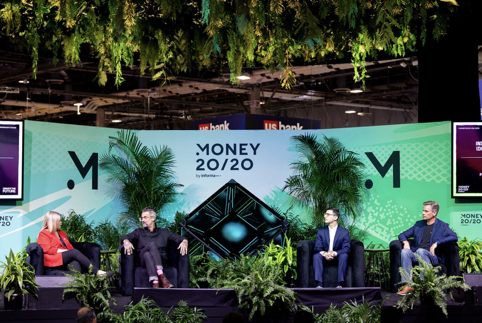 (Image caption) Scene from the Emergent Stage panel discussion at the Money20/20 US Conference 2025. In this written interview, Jessica Blue suggested that the conference should facilitate in-depth exchanges between different organizations to help them understand each other's business needs, operational constraints, and responsibilities. Photo courtesy of Money20/20.
Trust requires someone to take specific responsibility.
When GFM.News asked what institutional issues stablecoins, custody, settlement, digital identity, and tokenized assets all involve, Jessica focused on trust, then broke this down into four questions:
"Who holds the value, who verifies identity, who completes transaction settlement, and who bears responsibility when problems arise?"
These four questions fall under different aspects of financial services. The fact that a technology can perform a certain action is not sufficient to demonstrate that an institution can rely on the entire service in the long term. According to her answer, institutions also need to figure out how to integrate with existing systems, how to manage risks, and which regulatory framework applies.
At the intersection of traditional finance and decentralized finance, she focuses on practical applications such as settlement, liquidity, custody, and cross-border payments, while also outlining unresolved issues such as legal ownership, compliance, operational control, and governance. She examines trust from three perspectives: technology, counterparties, and regulatory frameworks.
These issues of accountability are particularly relevant to AI systems capable of performing tasks. Jessica believes that the immediate application of agent-based AI lies in assisting with workflows. Financial institutions have numerous complex and repetitive procedures, and the system can coordinate some of them; however, once AI begins to take action, the institution must answer questions such as what permissions it has, which decisions require human approval, what data it can access, and how to audit its activities.
She argues that governance should be taken into consideration from the very beginning of system design and deployment.
These arrangements are not abstract for ordinary people using financial services. If a payment goes wrong, an account is restricted, or an automated decision affects the use of funds, customers need to know who to contact, who is responsible for handling the matter, and how to trace the decision-making process. The convenience brought by technology needs to be supported by corresponding accountability arrangements.
In this interview, Jessica raised questions that organizations still need to answer. She didn't offer a complete set of governance rules, but her focus on authority, auditing, and accountability indicated the direction she hoped to bring to the discussion.
 (Image caption) May 2024, Korea Pavilion at Licensing Expo in Las Vegas: Exhibitors discuss business at their booths. Jessica Blue previously served as Vice President of Licensing Expo, and the brand licensing expo was an important platform for her to accumulate cross-industry exhibition experience.
The value of cooperation depends on what each party is willing to accomplish.
Jessica believes that important collaborations in the next one to two years will be based on complementary capabilities.
This aligns with her understanding of financial infrastructure. Payment networks, identity verification, asset custody, technology systems, and customer service each require specialized capabilities. The sustainability of the collaboration depends on how these capabilities are integrated and whether each party is willing to undertake the corresponding work.
What the conference can do is connect organizations with potential partners and allow undefined needs to be discussed. How the system is built, how funds are invested, and how responsibilities are allocated are still matters for participants to address within their respective organizations.
This also leaves necessary room for her standards in organizing conferences: valuable encounters can promote cooperation, but the outcome of cooperation depends on many conditions outside the conference venue. Subsequent achievements should not be attributed entirely to a single conference, and the usefulness of a conference cannot be judged solely by the atmosphere at the event.
When answering the last question, she mentioned a very specific timeframe: 2027. She hopes that people she meets for the first time this year will still be working together next year.
More than a decade ago, she described the sense of accomplishment in organizing an exhibition by the images of finished products in a store. Now, in the financial industry, the results to be observed take different forms: whether a settlement can be completed on a bank holiday, whether a collaborative system can continue to operate, and whether responsibility can be clarified when AI-processed transactions encounter problems. These are questions that institutions need to answer in their daily operations.
Once back in the office, participants will face budget constraints, system demands, colleagues, clients, and regulatory requirements. The significance of the discussions in the meeting room will gradually become apparent depending on whether they can continue under these conditions.
The 2026 conference has not yet opened, and the outcome remains to be seen. Jessica has already proposed her own criteria: are the answers clearer, are the relationships stronger, and are there people willing to take the next step? After the conference, these questions will remain for her, and for every participating organization.
Disclaimer
This article is based on written interviews and publicly available information and is intended for news research and informational reference only. It does not constitute investment, legal, or business cooperation advice. The opinions of the interviewees and their business plans do not equate to actual results; the conference arrangements are subject to the latest announcements from the organizers.