

Dina Titus's Nevada Years
On the eve of the election, I reread a political scientist's record of his time in Congress—nuclear waste, water supply, housing, and gambling regulation.
In 1977, Dina Titus came to Las Vegas to teach, and subsequently served in the state legislature and the U.S. House of Representatives, consistently focusing on how federal decisions affect Nevada. Leading up to the 2026 midterm elections, her record includes water supply arrangements that have become law, a nuclear waste proposal requiring local consent, and legislative advocacy concerning gaming and financial regulatory authority. Examining this record provides a more concrete understanding of this veteran legislator: what she pushed for, what obstacles remain in policy implementation, and who bears the associated costs and risks.
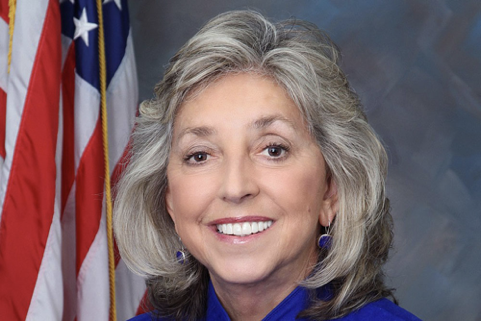 (Image caption) An official portrait of Dina Titus, depicting the veteran U.S. Representative. She taught at the University of Nevada, Las Vegas from 1977 and later served extensively in the state legislature and Congress, consistently focusing on the impact of federal policies on Nevada residents.
The water supply bill has become law, but gambling regulation remains a subject of judicial controversy.
GFM.News reporters first met Dina Titus on October 21, 2026, at a community gathering hosted by the Asian American group AAG in Las Vegas. With her silver-grey hair, she interacted with community leaders, entrepreneurs, and media representatives. Attendees included professionals from the fintech, real estate, and international trade sectors. Small business development, economic opportunities, and Asian American public participation were among the topics discussed at the event.
At that time, there were less than two weeks until the midterm elections. Early voting in Clark County began on October 17. Democratic Representative Dina Titus, representing Nevada's 1st Congressional District, was seeking re-election in the November 3 election against Republican Senator Carrie Buck.
AAG explicitly expressed its support for her re-election in its event materials. This meeting was not a formal interview, but our brief exchange with her became the starting point for further reviewing her record in Congress: which of the policies she promoted have been implemented, which are still pending, and how will they affect the lives of local residents?
Several issues closely related to Nevada are at different stages of policy development. The water bill is already law; housing vouchers and nuclear waste proposals are still pending; and the gambling regulation controversy surrounding sports event contracts involves both congressional legislation and judicial rulings. Understanding these differences is crucial to judging what a legislator has accomplished and what outcomes remain uncertain.
For long-term residents of Las Vegas, water supply, rent, and public services are more tangible daily occurrences than hotels, conventions, and shows. This article examines how Dina Titus responded to these local needs in Washington, D.C., based on legislation, government documents, rulings, and historical records.
 (Image caption) An aerial view of the Yucca Mountain nuclear waste disposal site, showing the surface facilities in the desert and the surrounding terrain. This site has been a focal point of Dina Titus's long-standing opposition to its reopening, as she insists that the site selection must obtain written consent from the state government, local government, and Indigenous tribes.
In 1977, a political scientist came to Las Vegas.
Dina Titus grew up in Tiffon, Georgia, and received her Ph.D. from Florida State University in 1976. The following year, she began teaching at the University of Nevada, Las Vegas (UNLV), a position she held until 2011. This more than thirty-year teaching career largely overlapped with her later political career. American government and Nevada politics were not only her research areas but also gradually became public affairs in which she became involved.
Her direct involvement with federal politics predates her first election. According to a 2013 report in the *Las Vegas Review-Journal*, in the spring of 1982, Dina Titus entered Senator Howard Cannon's Washington office through a university faculty internship program. Cannon assigned her research on the effects of radioactive fallout from atmospheric nuclear tests on residents in downwind areas, often referred to as "downwinders." After leaving the office, she continued her research and published *Bombs in the Backyard: Atomic Testing and American Politics* in 1986.
Years later, a desk preserved this connection. The same report recounts that Howard Cannon's daughter lent Dina Titus the desk her father had used in his Senate office, placing it in her Las Vegas district office. The young teacher who had been assigned to the research project back then was now sitting behind that desk, handling her own constituent affairs.
Radiation damage from nuclear weapons testing and the disposal of spent fuel from commercial nuclear power plants are two distinct policy issues. However, a review of Dina Titus's research and legislative record reveals a persistent concern: how much participation do residents have in making major decisions that affect local areas, and how are long-term risks distributed?
Twenty years in the state Senate, two defeats and a return to Congress
Dina Titus entered the Nevada State Senate in 1989, serving until 2008, and served as Minority Leader from 1993 to 2008. In 2006, she ran for governor as a Democrat but lost; in 2008, she was elected to the U.S. House of Representatives for the 3rd Congressional District, but failed to win re-election in 2010; in 2012, she was elected to the 1st Congressional District, and returned to the U.S. House of Representatives the following year.
This experience includes long tenure and two major election losses. In the 2026 election cycle, the Democratic Congressional Campaign Committee has included her on its Frontline priority support list, while the Republican Congressional Campaign Committee is targeting her for the 1st district. While experience and political connections can build parliamentary expertise, continued voter support ultimately depends on the biennial House of Representatives election.
To assess her legislative competence, one can refer to the Center for Effective Lawmaking, a joint venture between the University of Virginia and Vanderbilt University. This center uses fifteen indicators to measure the number of bills introduced by members, their progress, and the substantive nature of the policies. In the 118th Congressional assessment released in March 2025, Dina Titus received a legislative effectiveness score of 2.362, ranking third among House Democrats. The Democrats were the minority party in that Congress, and minority members typically received an average score of 0.55.
This rating measures a legislator's ability to advance legislation, but does not judge whether their policy direction is worthy of support, nor does it cover all aspects of their work, such as constituency services. The report also points out that provisions proposed by legislators may be incorporated into larger legislative programs; therefore, the fact that a bill does not become law on its own does not necessarily mean that its policy proposals have been completely rejected.
For voters, whether a legislator can push through policies and whether the policies themselves are in the public interest are two separate issues that need to be judged.
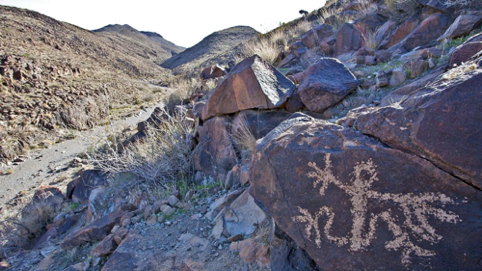 (Image caption) Rocks and ancient rock art within the Sloan Canyon National Monument. The monument was expanded by the Water Supply Act, which also allowed the Horizon Branch Pipeline to tunnel underground to improve water supply reliability in southern Nevada.
How much weight should local consent carry in nuclear waste site selection?
On April 26, 2017, the House Energy and Commerce Committee's Subcommittee on Environment held a hearing on a draft amendment to the nuclear waste policy bill. Dina Titus opposed proceeding with the Yucca Mountain nuclear waste disposal site, citing recommendations from the "Blue Ribbon Commission on the Future of Nuclear Energy" during the Barack Obama administration, arguing that site selection should obtain the consent of relevant state and local governments and Native American tribes, rather than simply soliciting opinions.
Republican Senator Dean Heller also opposed restarting the Yucca Mountain project during the hearing. On the other hand, witnesses representing the Nuclear Infrastructure Committee supported advancing nuclear waste disposal efforts, emphasizing the national need for such disposal. This hearing reflects two responsibilities that must be addressed simultaneously: respecting local concerns about risks and finding a viable disposal method for the long-accumulated nuclear waste.
On January 15, 2025, Dina Titus, along with fellow state representatives Steven Horsford and Susie Lee, introduced the Nuclear Waste Informed Consent Act (HR466).
According to the original text, before using the nuclear waste fund to pay for the disposal sites designated in the bill, the Secretary of Energy must enter into a written agreement with the governor of the state where the proposed site is located, the affected local government, eligible adjacent transportation route local governments, and the affected Indigenous tribes. The agreement must be signed by all parties and is legally binding; any modification or revocation requires the consent of all parties.
This proposal attempts to make local consent a legal prerequisite for the federal government to use specific funds. However, state governments, site locations, and communities and tribes along the transportation route may not have the same interests. An effective consent process must determine who has the right to participate and address issues when the parties cannot reach an agreement.
Spent fuel from nuclear power plants across the United States still requires long-term disposal. Opposing a particular site does not absolve this responsibility; meeting technical requirements for a project does not automatically resolve the issue of local acceptance. Dina Titus's proposal emphasizes safeguarding the rights of local participation and consent, but its policy effectiveness still needs to be evaluated within the context of a national nuclear waste disposal plan.
A water supply branch line has obtained federal legal support.
Water supply is an area where Dina Titus has achieved significant legislative progress in recent years. She and Senator Catherine Cortez Masto have respectively pushed for related legislation in their respective houses of Congress. The Sloan Canyon Conservation and Lateral Pipeline Act (HR972) was introduced in 2025 and became Public Law No. 119-91 on May 19, 2026.
The law increases the legal area of the Sloan Canyon National Conservation Area by 9,290 acres, from 48,438 acres to 57,728 acres. Simultaneously, the law requires the Department of the Interior, through the Federal Land Administration, to grant the Southern Nevada Water Authority land access and usage rights for the Horizon Branch Line project within one year of its enactment, waiving all related rent and fees. This arrangement allows some water pipelines to traverse the conservation area via underground tunnels.
The law also stipulates conservation conditions: pipeline construction must not cause permanent adverse impacts on the surface resources of the protected area, and the right-of-way must not cross legally designated wilderness areas, nor be located underground within them. Therefore, expanding the protected area and arranging water delivery facilities are included in the same law.
According to the Nevada governor's office, the existing South Valley Lateral water supply serves approximately one million people, covering about 40% of the residents and businesses in the Las Vegas Valley, including Henderson. However, the existing water supply system lacks backup facilities. The Horizon Lateral aims to increase water supply capacity and reduce the impact of disruptions to the existing route. Republican Governor Joe Lombardo has also publicly supported this legislation.
The law established the procedures for obtaining federal land use rights for the project, but it did not complete the project itself. Construction progress, final costs, and water supply performance still need to be tested during implementation. This project improves water delivery capacity and system reliability, but does not create new water sources; both are important to Southern Nevada, but they address different problems.
 (Image caption) A nighttime view of the Las Vegas Strip, showcasing the dense lights of casinos and tourist attractions. The city's gaming industry has brought Dina Titus into the debate over federal and state regulatory authority, particularly regarding the jurisdiction of sports event contracts.
Fluctuations in the tourism industry and the monthly rent that residents have to pay.
The Las Vegas Convention and Visitors Authority announced in January 2026 that it expects approximately 38.5 million visitors in 2025, a 7.5% decrease from 2024; the average hotel occupancy rate was 80.3%, a decrease of 3.3 percentage points; and the average daily room rate was $183.52, a decrease of 5%. Convention and event attendance was approximately 6 million, roughly the same as the previous year.
These data reflect the operating environment of the tourism industry and cannot be directly used to extrapolate changes in residents' income or rent. However, for those working in the hotel, catering, convention and exhibition, and related service industries, fluctuations in industry demand may affect working hours and income, but fixed expenses such as rent will not stop as a result.
Dina Titus's focus in housing policy is on whether the allocation of federal rental assistance can reflect local population growth in a timely manner. On March 31, 2025, she, along with Arizona Representatives Greg Stanton and Yassamin Ansari, introduced the Housing Vouchers Fairness Act (HR2525).
The original proposal authorized $2 billion in funding for fiscal year 2025 to provide additional rental assistance to eligible public housing agencies, with the funds allowed to be used to renew assistance in subsequent fiscal years until exhausted. Eligible agencies would need to serve areas that meet two criteria: a population of over 100,000 and one of the 25 areas with the highest population growth in the U.S. between 2012 and 2022.
When allocating assistance, the relevant authorities must consider the local population, the gap between the existing housing voucher allocation and housing affordability needs, and the historical inadequacy caused by the allocation formula failing to keep up with population growth.
The $2 billion mentioned here refers to the authorized appropriation amount listed in the original text and should not be interpreted as funds already disbursed or available for families to apply for. Even if the authorization becomes law, actual appropriation is still required; whether a family can use housing vouchers to rent a house depends on the supply of rental units, landlord participation, and the processing capacity of local agencies.
For applicant families, the policy's effectiveness is ultimately reflected in whether they can find suitable accommodation, whether the assistance can be sustained, and whether their rent burden is reduced as a result.
Who is responsible for regulating sports event contracts?
The Las Vegas gaming industry has brought Dina Titus directly into the debate over the jurisdiction of federal financial regulation and state gaming laws. On February 10, 2026, she introduced the Fair Markets and Sports Integrity Act (HR7477), proposing to amend the Commodity Exchange Act to prohibit entities registered under that act from listing, facilitating, or liquidating contracts based on sporting events or casino games. This is a proposed new prohibition and should not be interpreted as already enacted law.
Sports event contracts allow participants to trade on matters such as event outcomes. The core of the controversy lies in whether these products fall under the federal commodity derivatives scheme and whether state governments can simultaneously apply their state's gambling laws.
The Commodity Futures Trading Commission (CFTC) has presented a legal argument that differs from that of state regulators. On February 17, 2026, in its Ninth Circuit appeal case concerning the North American Derivatives Exchange versus Nevada regulators, the CFTC filed an amicus brief arguing that event contracts traded on its regulated markets fall under its exclusive jurisdiction. The agency also stated that event contracts can help businesses and individuals hedge event risks and provide market information about future events. This is the position presented by the regulator in the litigation, and not a conclusion accepted by all courts.
On August 28 of the same year, the Ninth Circuit Court of Appeals upheld the district court's decision to lift a partial preliminary injunction in another case, KalshiEX v. Assad. The injunction had restricted Nevada from enforcing state gambling laws regarding Kalshi's sports event contracts; lifting the injunction meant that Kalshi was no longer able to prevent state enforcement at this stage.
The court held that Kalshi failed to demonstrate the likelihood of success of his claim that "federal law excludes the application of state law." Regarding whether the sports contract in question constituted a swap transaction as defined by the Commodity Exchange Act, the court adopted a different interpretation than that of the Third Circuit Court of Appeals.
This ruling favors Nevada's exercise of gambling regulatory power, but as an appeal ruling in a preliminary injunction proceedings, it cannot be used to declare the legal status of all prediction market products definitively established. New Jersey regulatory officials filed a motion with the Supreme Court on September 2 regarding the case from the Third Circuit. As of October 23, the Supreme Court's publicly available case file had not yet released a decision granting the motion.
Product categorization affects regulatory authority, consumer protection requirements, and the competitive landscape for licensed gaming operators and trading platforms. Dina Titus seeks to clarify the scope of prohibitions through legislative amendments, while the courts determine federal and state jurisdiction under existing laws. Legislation and litigation may influence each other, but the progress of one process cannot be considered a conclusion of the other.
Her argument supports Nevada's right to maintain gaming regulation and aligns with the interests of local licensees in ensuring fair regulation and competition. Evaluating this argument requires examining the public safeguards provided by state regulation and considering the impact of limiting new products on competition and innovation. The rationale for maintaining the existing system needs to be demonstrated through concrete safeguards and actual results.
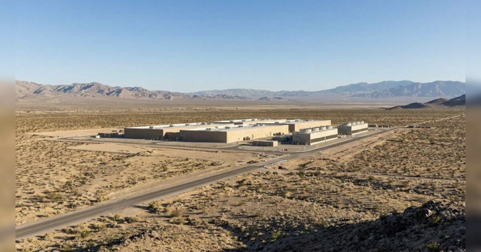 (Image caption) A large data center facility in the Nevada desert. Dina Titus questioned the community involvement, water and power grid impacts of developing such projects on federal land and pushed for a suspension of related state tax breaks.
What costs should local governments bear for the investment in data centers?
On July 23, 2026, Dina Titus wrote to Joe Lombardo requesting a suspension of state tax credits for data center projects on federal lands until the state legislature has the opportunity to review the issue in 2027. She cited the Townsite Solar 2 project near Boulder City, questioning whether the Federal Land Administration (FLA) had provided sufficient community involvement and environmental analysis when amending land access and occupancy permits.
According to a statement released by her office, the developer originally planned to build solar facilities on the relevant federal land, but later changed it to a data center. She cited residents' concerns about water usage, extreme heat, and grid resilience, demanding that the state government clarify the project's public impact before granting financial incentives.
The governor's office issued a response on August 18, clarifying that the renewable energy tax credit approved in 2024 applies to solar power generation and energy storage projects on leased land in Boulder City and cannot be directly transferred to data centers. The same project cannot simultaneously enjoy both the data center tax credit and the renewable energy tax credit; if eligibility requirements are not continuously met, the state government may, in accordance with regulations, reclaim the credit.
This response clarified the question of whether existing incentives could be retained, but land permits and environmental reviews are handled through separate administrative procedures. On September 1, the U.S. Department of the Interior's Board of Land Appeals granted a suspension of the Federal Bureau of Land Management's approval decision in an administrative appeal filed by Boulder City and environmental organizations. The Board considered that the appellants had presented compelling arguments questioning the authority's treatment of the data center and the original solar energy project as substantially identical and its application of the existing environmental analysis practices. This is a temporary measure in the administrative appeal process, not a final ruling by the federal court.
On September 16, Dina Titus further introduced the Public Lands Accountability Act. According to her office, the proposal requires that when an existing federal land use permit is converted to a data center, the environmental permitting process be restarted, and the impact on regional water supply and the employment arrangements proposed by the developer be assessed.
The state government has also added conditions. On September 17, Joe Lombardo signed Executive Order 2026-005, requiring applicants for pending data center tax credit applications to commit to paying the full amount of the local school support tax and covering costs for projects such as electricity supply, as well as meeting local water standards and grid reliability requirements. These conditions apply to state government credit applications and do not replace federal land approval or environmental reviews.
The process continues. According to a KTNV report on September 22, the Federal Land Administration applied to revoke its original approval decision and remand the case for further review; Boulder City objected to the remand, raising concerns about whether subsequent environmental assessments and public participation were clearly guaranteed. This application itself cannot be considered a reapproval of the project.
Data centers can serve remote clients, yet their land, water, and electricity needs remain concentrated locally. Media outlets, including GFM.News, that rely on cloud computing and artificial intelligence, are also users of this type of infrastructure. Determining whether an investment is worthy of public support requires comparing verifiable job creation, tax revenue, and service benefits with infrastructure costs, resource burdens, and community impacts. The size of the investment indicates the scale of the project, but it cannot solely demonstrate how much benefit the local area receives.
Community outreach extends to case services within federal agencies.
Dina Titus's interactions with the Asian American community are also documented in local news reports. KTNV reported in April 2021 on an anti-Asian hate rally in Las Vegas' Chinatown, attended by then-Governor Steve Sisolak and several local leaders. In the report, Titus stated that she was working with New York State Assemblywoman Grace Meng to push for federal legislation against hate crimes.
Attending events and speaking publicly are records of her involvement on relevant issues, but they cannot represent the entire Asian American community's evaluation of her. Community members differ in generation, profession, and political views, and their judgments of legislators may change depending on specific policies.
Another less-noticed aspect of the work is the district office's case services. Dina Titus's annual report, released on December 30, 2025, stated that it helped voters recover $2,323,418 in Social Security, Veterans Affairs, and tax refunds that year. This amount is a service outcome published by the office itself, not new funding allocated to the district by Congress.
A congressional office can assist residents in contacting federal agencies, checking cases, and following up on delays, but cannot replace the competent authority in determining eligibility for benefits, the amount of a tax refund, or the outcome of other cases.
For seniors awaiting welfare payments or families needing to confirm their tax refund progress, having a facilitator for inquiries is of direct practical value. For new immigrants unfamiliar with U.S. administrative procedures, knowing which agency to contact and what documents to prepare can reduce obstacles in the process. The quality of this type of service needs to be observed through response speed, processing time, and actual results.
 (Photo caption) On October 21, 2026, at a community meet-and-greet hosted by the Asian American group AAG in Las Vegas, U.S. Representative Dina Titus (left) posed for a photo and gave an interview to Indira Li (right), a special correspondent for GFM.News in Las Vegas.
Even after the election, the results of the project, budget, and services will still need to be assessed.
Dina Titus spent nearly half a century in Nevada, encompassing university teaching, state legislature leadership, congressional elections, and district service. Early in her career, she researched the impact of federal nuclear policy on local communities, and later, in her legislative work, she continuously addressed issues of local participation, public resources, and federal authority. This continuity is a key thread in understanding her political career.
Different tasks require different evaluation criteria. Water supply laws must consider whether projects can be implemented at a reasonable cost; housing assistance must consider whether families can find rental housing; nuclear waste policies must simultaneously address safety requirements, local consent, and national responsibility for disposal; and gaming regulation and data center development require clarifying public safety, commercial interests, and cost allocation.
Raising questions, advancing legislation, and facilitating actual improvements are interconnected but distinct tasks for legislators. The ultimate effectiveness of policies depends on budgetary processes, administrative implementation, judicial decisions, and local cooperation; it cannot be entirely attributed to or blamed on a single legislator.
On November 3, voters in District 1 will decide who will represent them in the next Congress. After the election, residents will still have to pay rent, use water, and may still need to apply for benefits or inquire about cases with federal agencies. Whether these policies and services improve their lives will continue to be a key factor in evaluating Dina Titus's performance.
Materials and Interview Notes
This article is based on publicly available information up to October 23, 2026, and the experiences of two journalists who participated in community events on October 21. The brief exchanges during the events were not formal interviews. Policy positions and performance information in this article are based on relevant documents and publicly available reports, primarily from the U.S. Government Publishing Bureau, congressional hearing documents, federal court files, Department of the Interior administrative rulings, Nevada state government announcements, the Center for Effective Legislation, the Las Vegas Convention and Visitors Bureau, and local media reports. Results published by the congressional office are acknowledged in the article. This article is a profile and public policy analysis and does not constitute support or opposition to any candidate; legislative, executive, and litigation developments may change after publication.