

Daniel Sieu: Who brings policies to people's attention?
— Thirty years of bridging businesses, communities, and opportunities in California.
Editor's Note: Why was a profile article rewritten after publication?
GFM previously featured Daniel Sieu in an article titled "Daniel Sieu: The Man Who Translates Policy into Opportunity," highlighting his long-standing work in minority enterprise development, community finance, public resources, and international business partnerships. Following the article's publication, Kevin Guo, founder of GFM.News, received a letter from someone with extensive experience in California public affairs and familiar with Daniel's public service background. The letter provided additional information about his services with the U.S. Department of Commerce's District Export Council, his support for small businesses and diverse communities during the pandemic, his visits to senior centers, and his involvement in emergency relief efforts following the 2025 Los Angeles wildfires.
These materials did not change the original judgment, but they filled in several important links in Daniel's public service trajectory, and made Daniel's image more complete: he has long assisted enterprises, capital and policy in establishing connections; when the crisis occurred, he also returned to the places in the community where manpower and resources were most needed.
GFM views its content as a public asset that can be continuously verified, updated, and cited. When new traceable information, credible supplementary testimonies, and verifiable public records emerge, the editorial team has a responsibility to re-examine existing reports, clearly state the sources, and ensure that the articles become more complete over time. This is how institutional media should operate.
Jeff Morgan
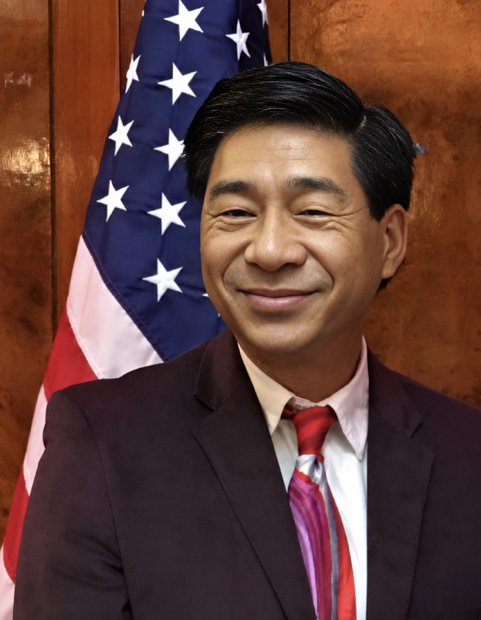 (Image caption) Daniel Sieu, Chairman of the California Investment Forum (CIF). He has long been involved in the development of minority businesses, economic promotion, and international business cooperation. He has participated in the work of the Minority Business Development Agency (MBDA) Business Center of the U.S. Department of Commerce and assisted businesses in processing U.S. Small Business Administration (SBA) disaster loan applications after the Los Angeles unrest.
How far is California from being ranked fourth or fifth, and a small business?
In April 2025, the California Governor's Office announced that, based on data from the International Monetary Fund and the U.S. Bureau of Economic Analysis, California's nominal GDP in 2024 was approximately $4.1 trillion, surpassing Japan's $4.02 trillion to become the world's fourth-largest economy, after the United States, China, and Germany. However, as annual data, exchange rates, and comparative methods continue to change, California's ranking between fourth and fifth place with Japan may still be subject to adjustment.
While macro rankings have symbolic significance, they fail to answer the most pressing questions a small business faces after a crisis: Will loans be approved? How do I apply for government aid? And who should clarify the procedures for insurance, taxes, labor, and reconstruction?
A large economy doesn't function on its own based on GDP figures alone. It requires countless people to bridge the gap between the institutional language of government departments, the professional jargon of capital markets, and the everyday language of the community. Daniel Sieu has long been situated at the intersection where these languages are mutually incomprehensible and resources are difficult to access.
He didn't stand in the control room of California's economic machine, but instead spent a long time in the places most prone to stagnation: minority businesses, immigrant communities, local governments, federal resources, state fiscal instruments, and international capital. Grand economic figures, if not translated into funds a business can apply for, an education savings plan a family can understand, or a market channel a community can access, will ultimately remain just a line of text in a report.
Daniel's job is to turn that line of text into a door.
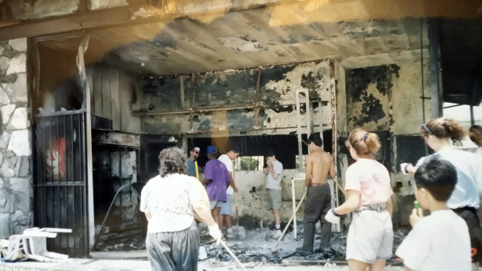 (Image caption) In the aftermath of the 1992 Los Angeles riots, volunteers cleaned charred walls and rubble inside a burned-down minority-owned shop. The scene depicted was exactly what Daniel Sieu faced at the beginning of his career: the shop was destroyed, cash flow was disrupted, and insurance, loans, and government aid were all written in institutional language that was difficult for ordinary people to access.
The Los Angeles turmoil left behind more than just ashes.
To understand Daniel Sieu, one must go back to the very beginning of his career.
In the aftermath of the 1992 Los Angeles riots, many businesses were left with more than just burned signs, broken glass, and looted shelves. For many Korean, African American, Latino, and other minority small business owners, the real challenges lay ahead: insurance claims, disaster loans, government aid, legal documents, rebuilding rules, and a host of incomprehensible procedures.
Resources are not entirely absent. The real difficulty lies in the fact that these resources are written in institutional language that is difficult for ordinary people to understand and even more impossible to fulfill. A company that has just lost its storefront, inventory, and cash flow often lacks not the will, but the ability to handle those forms, certificates, deadlines, and back-and-forth phone calls.
According to public information from the William & Stephanie Foundation, Daniel's economic development work began in the early 1990s when he assisted businesses affected by the Los Angeles unrest. He subsequently assisted businesses impacted by Hurricane Andrew, the Northridge earthquake, and other economic crises. While the forms of disaster differed, the predicament faced by business owners shared a similar structure: the government promised aid, banks demanded documentation, insurance companies followed procedures, and the business owner was left with only a store that had not yet reopened.
Daniel's career began not at a fancy conference table, but amidst the chaos and anxiety of a disaster. That experience taught him early on that public service cannot stop at the announcement of a plan; a plan must be explained, accompanied, and followed up by someone to truly reach those who need it.
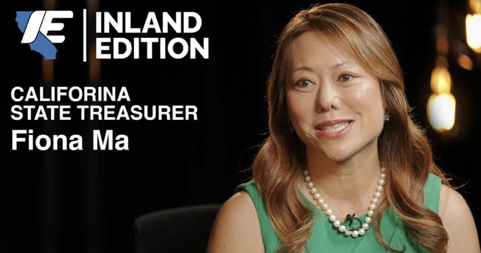 (Image caption) California State Treasurer Fiona Ma, through the William & Stephanie Foundation, has made numerous visits to businesses and organizations in the Chinese, Thai, Vietnamese, and ASEAN communities of Southern California to understand their practical difficulties, such as taxation and labor shortages. Daniel Sieu brings state-level policies (such as the CalKIDS children's education savings plan and the CalSavers retirement savings plan) into community gatherings and Thanksgiving events, turning macro-level fiscal tools into conversations at the dinner table.
Community lending tests one's judgment of people.
Later, Daniel ran a community lending organization serving minorities and small businesses. The William & Stephanie Foundation's public profile states that prior to the 2008-2009 financial crisis, the organization's default rate was consistently below 2%.
This information comes from the institution itself and may not be sufficient to constitute a complete independent audit conclusion, but it is worth understanding from another perspective. Financial institutions serving ethnic minorities, micro-enterprises, and immigrant entrepreneurs, if they judge risk solely based on a rigid set of forms, easily exclude many truly resilient businesses. Those familiar with the community can see the applicant's family's business history, the store's customer base, local mutual aid relationships, and can distinguish between short-term difficulties and long-term insolvency.
What Daniel established at this stage was a way of understanding businesses. A business is not just a financial statement; it is also a group of people struggling to make a living under the pressures of the market, family, community, and institutions.
He later brought this judgment into the federal business system and the larger public service network.
How to turn federal funds into a long-term channel
Around 2012, the U.S. Department of Commerce's Minority Business Development Agency supported SoCal Corporate Growth Partners in operating the MBDA Business Center in Southern California, providing services such as financing, procurement, export, and market expansion for minority businesses. In cooperation documents preserved by the City of Riverside, Daniel Sieu is listed as the Project Operator of the Riverside MBDA Business Center/SoCal Corporate Growth Partners, and is designated as President/CEO.
To outsiders, the MBDA Business Center may just be one project within the federal business system. But for a company still figuring out how to secure financing, get on government procurement lists, and access export markets, it could be a way to change its business direction.
MBDA's institutional mission is to help minority businesses access capital, contracts, markets, and technology services, enabling them to create jobs, increase revenue, and access larger domestic and international markets. Daniel worked at MBDA's business centers in Riverside and Pasadena, where the core mission remained clear: to break down abstract concepts like capital, contracts, markets, and exports into the next steps businesses can take.
Some of the public records left by the Pasadena Center reveal another side of this work. Daniel introduced MBDA services to the Thai Consul General in Los Angeles and his team, and also met with the Finnish Consul General in Los Angeles to discuss technological cooperation and bilateral trade opportunities. These occasions may appear to be diplomatic and business formalities, but in reality, they are opening up a previously unseen narrow path for local businesses.
For large corporations, internationalization is a standard choice in mature markets; for many minority-owned businesses, internationalization is first and foremost an imagination: that their products, services, supply chains, and cultural experiences might also be needed in another market. Only when consulates, business organizations, local businesses, and public resources begin to see each other can the market cease to be merely a distant place on a map.
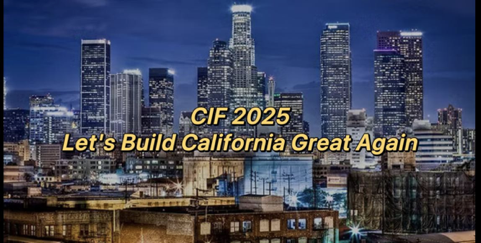 (Image caption) As the chair of the CIF organizing committee, Daniel Sieu steered the forum towards artificial intelligence, sustainable energy, medical technology, and cross-border investment, facilitating connections between international diplomats, consuls general, and California innovation projects. His work of "translating policy into opportunity" extends from small business loans to enabling international capital to see the value of young California startups.
He considered exports as part of the community economy.
A source familiar with Daniel’s public service experience and who has long been involved in California public affairs recently wrote to the author to add that Daniel was appointed by three consecutive U.S. Secretaries of Commerce to work with the U.S. Department of Commerce’s District Export Council, helping to strengthen international trade, support U.S. businesses and expand export opportunities.
The District Export Council, comprised of individuals with international business and export experience, collaborates with the U.S. Business Services system to assist businesses in understanding market information, export rules, compliance requirements, logistics, partners, and transaction risks. It is a mentoring network that brings international business knowledge to local businesses.
Daniel's role in this system continues the approach he developed from his work in post-disaster business services, community lending, and MBDA. For a small business familiar only with its local market, exporting is not an inspiring slogan, but a series of concrete questions: Who is willing to buy? Who is responsible for transportation? How is payment secured? Is the contract understandable? What happens if there are problems after the goods have cleared customs?
Transforming the "global market" into an understandable, verifiable, and explorable path requires more than just trade data; it also demands patience and trust. What Daniel has been doing for years is helping community businesses understand that international trade can be a world they can access.
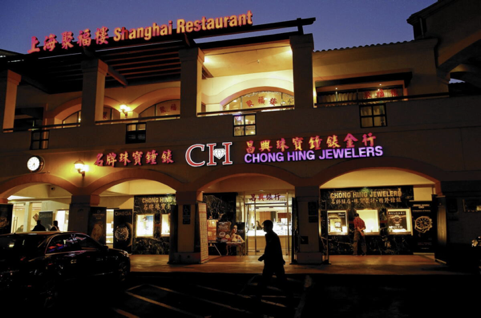 (Image caption) Night view of a Chinese business district in the San Gabriel Valley, Southern California. Restaurants, jewelry stores, and other shops along the street form the most concrete economic scene of the immigrant community. The William & Stephanie Foundation once organized the state treasurer to visit Chinese and Thai businesses, bringing questions about taxes, labor shortages, relief applications, and state savings instruments to these places where inquiries could be made.
Community Connector in the State Treasurer's Office
Daniel later founded and promoted the William & Stephanie Foundation, extending this connecting work to state-level public affairs, community service, and international cooperation scenarios.
This time, he was facing a more specific audience: the California State Treasurer's office, the Asian and ASEAN communities in Southern California, local cities, small business owners, young entrepreneurs, and state-level fiscal instruments that seem distant to ordinary families.
The foundation has long positioned itself as a bridge between the federal and state governments, and between the Asian and ASEAN communities. The word "bridge" is often used lightly, but in Daniel's work, it has many visible details.
In November 2021, the foundation organized a visit for California State Treasurer Fiona Ma to Chinese and Thai businesses in Southern California to understand the tax, labor shortages, and operational pressures faced by businesses during the pandemic. That same month, the foundation also organized an exchange between Fiona Ma and ASEAN community groups in Southern California, with assistance from community partners including Vietnam Television, the Consulate General of Cambodia in Los Angeles, and the NaFFAA Los Angeles chapter.
In December of the same year, the foundation organized a visit for Southern California businesses to Barstow. Fiona Ma addressed the event by phone, expressing her anticipation for future collaborations with the city. Barstow is neither Silicon Valley nor Hollywood; it is a city in the California interior often overlooked by grand economic narratives. The value of community connection work lies in bringing state-level resources, business dialogue, and public attention to such a place.
In 2022, Daniel, representing California State Treasurer Fiona Ma, attended the eighth anniversary event of logistics company LLP Global Group to congratulate the company. In 2023, the William & Stephanie Foundation collaborated with the Los Angeles Academy for the Performing Arts to host a business advice workshop for the arts and entertainment industry, as well as an early Thanksgiving community event with the California State Treasurer, discussing state-level tools such as the CalSavers retirement savings plan and the CalKIDS children's education savings plan.
These activities take many forms: shop visits, city exchanges, corporate events, educational lectures, and holiday gatherings. They all accomplish the same thing: to bring government public financial tools out of official websites, meeting rooms, and abbreviations, and into the everyday lives of people who can ask questions, discuss, and understand them.
During a pandemic, resources travel faster than panic.
In a letter to the author, a person familiar with Daniel's long career in public service wrote that during the COVID-19 pandemic, Daniel worked with Fiona Ma, government agencies, businesses, and community organizations to assist small businesses and under-resourced communities. They helped businesses understand government relief programs, organized educational webinars, connected key resources, and distributed essential supplies to multicultural community organizations.
That was a time that is difficult to summarize simply. Many businesses were not unwilling to apply for assistance, but rather did not know where to begin; many families were also unsure whether the available resources truly belonged to them. Differences in language, immigrant background, access to information, and digital skills meant that the same public policy produced completely different effects in different communities.
The letter mentioned that Daniel and Fiona Ma had also visited senior centers to provide much-needed supplies and support to elderly residents. This work may not appear in the most prominent news headlines, but it is the most concrete part of public service. The true power of a policy depends not only on the amount of money announced, but also on whether someone is willing to sit down and tell a business owner: you can apply for this resource; and on whether someone goes into the community to let an elderly person know they haven't been forgotten.
Daniel and Fiona Ma's years of collaboration in public service have fostered a deeper trust. An insider described in a letter that the two share a belief that public service must improve people's lives, strengthen communities, and ensure that government resources truly reach those who need them. The significance of this collaboration lies not in photos of them together at events, but in whether state-level tools can reach people who were previously far removed from the government through community trust networks.
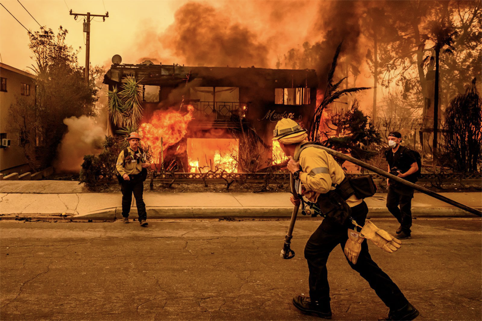 (Image caption) Firefighters lay hoses in front of a burning home during the 2025 Los Angeles wildfires. Sources added that Daniel, along with the state treasurer, businesses, and community partners, quickly mobilized emergency donations and distributed supplies to affected families after the disaster, continuing his consistent disaster relief efforts from turmoil and hurricanes to earthquakes and pandemics.
Bring CalKIDS and CalSavers to the dinner table
CalSavers targets California workers without employer-sponsored retirement savings plans; CalKIDS aims to get more families starting to save for their children's education. These names may seem complex and distant when they appear on government websites. However, basic security in retirement and access to more educational options for children are never abstract questions.
Daniel brings these state-level tools into the daily conversations of the Chinese, Thai, Vietnamese, and ASEAN communities through community events, business exchanges, and multi-ethnic gatherings. Taxes, labor shortages, retirement savings, education funds, and small business financing may seem to belong to different departments, but they are all related to a family's ability to see a stable future in California.
If no one is willing to bring CalKIDS into a family gathering, it might just be a page on a government website that never gets opened; if no one familiar with the community explains CalSavers, it might just be a name for an institution that an average worker doesn't have time to understand. What Daniel did was bring institutional language to places where it could be discussed, and then give that discussion a chance to turn into action.
Even after the wildfire, people still managed to reconnect the passageway.
After the Los Angeles wildfires in 2025, Daniel returned to the place he knew best.
The letter from an informed source indicated that he, along with Fiona Ma, businesses, nonprofits, and community partners, quickly mobilized to coordinate emergency donations and distribute critical supplies to affected families. This additional information provides an important timeline for Daniel's long history of public service.
More than thirty years ago, he faced small business owners in Los Angeles who couldn't understand the relief procedures after the unrest; then came hurricanes, earthquakes, economic crises, and the pandemic; in 2025, he faced families waiting for aid after wildfires. The names of the disasters have changed, but the questions people ask afterward haven't changed: Who should I contact now? What kind of help can I get? How do I get the resources listed in the news and on websites to reach me?
In the initial days of a disaster, the footage typically shows thick smoke, evacuations, press conferences, and donation figures. The longer part occurs after the cameras leave: insurance claims haven't been processed, shops remain closed, families still lack essential supplies, and communities are still searching for the next person they can turn to. The true weight of public service falls during this long and often unseen period.
A community road also leads to the entrance of capital.
In recent years, Daniel's work has expanded to the California Investment Forum. He serves as the chair of the forum's organizing committee, guiding discussions towards artificial intelligence, sustainable energy, medical technology, advanced manufacturing, international trade, and cross-border investment cooperation.
According to the California Investment Forum's public profile, Daniel has long been involved in strategic investment and international business development, and assists in building dialogue between governments, businesses, international delegations, research institutions, and startups. The forum has also described its influence as having invested over $1 billion; however, this figure is a general statement from the organization itself, and no complete list of transactions or independent audit data has been available. Therefore, it is more appropriate to understand it as the forum's own introduction to its work over the years, rather than an audited investment statistic.
Regardless of this number, the forum's activities in recent years have already demonstrated its working direction.
In September 2025, the California Investment Forum will host its annual summit in Los Angeles, attracting diplomats, consuls general, entrepreneurs, and industry representatives from various countries to discuss business opportunities arising from the 2028 Los Angeles Olympics, as well as the commercialization of medical innovation, clean energy, content technology, and artificial intelligence. The preceding U30 Global Innovation Alliance event showcased innovative projects from youth teams at Caltech, USC, and UC San Diego, bringing together policymakers, academics, businesses, and international partners in a unified arena.
This scene is far removed from the small shop in the aftermath of the 1992 Los Angeles riots, but Daniel's working methods remain true to their core principles. In his early years, he helped business owners access government resources; today, he helps international capital, industry partners, and policy stakeholders access California's innovative projects, youth teams, and community economies.
On one end are small businesses still filling out loan applications, and on the other end are international capital seeking technology, projects, and markets. Daniel has stood between the two for many years, understanding that they speak different languages and that if they could see each other, they could potentially create new opportunities together.
 (Image caption) Construction site of large venues and infrastructure in the Los Angeles metropolitan area; the completed complex and surrounding road network can be seen in the distance. In recent years, the California Investment Forum has shifted its focus to artificial intelligence, clean energy, medical technology, and business opportunities related to the 2028 Olympics, attempting to bring local projects, youth teams, and international capital to the same table for dialogue.
The warmth of a system lies in who is willing to open the door.
Whether California is the world's fourth or fifth largest economy will change with exchange rates, statistical years, and global economic cycles. What truly determines the strength of an economy is its ability to consistently and accurately deliver macroeconomic resources to specific individuals and projects.
Small business owners don't track GDP rankings every day. What they care about more is whether someone can explain a loan application form clearly; whether someone is still willing to answer the phone after a disaster; whether someone can explain public transportation in a way they can understand when their children need education savings; and whether someone is willing to help their businesses cross the first hurdle when they are preparing to go global.
Daniel Sieu's work over the past three decades has included business assistance after the Los Angeles unrest, the MBDA Business Center in Riverside and Pasadena, the Export Council's institutional network, public service between the State Treasurer's office and diverse communities, and international investment and youth innovation projects. His locations have changed, but his roles have remained consistently clear.
The warmth of a policy lies not in how beautiful the language it uses, but in whether it truly reaches a store, a family, an elderly person, or a startup team. What Daniel has been doing for years is reconnecting previously scattered resources, institutions, and people, allowing those who didn't know where the door was to step inside.
Disclaimer
This article is based on publicly available information from government agencies and institutions, as well as written statements from individuals familiar with Daniel Sieu's public service experience. References to individual service records and institutional achievements are presented prudently according to their source and do not constitute investment advice, a business commitment, or endorsement by any institution.