

Chen Ping: A person who is unwilling to depend on power
From Moganshan to Sunshine TV
In the spectrum of public figures in the Chinese-speaking world, there is a type of person who is the most difficult to define: he is neither a pure insider of the system nor a complete outsider; he is neither a simple businessman nor an intellectual who only knows how to criticize; he has been deeply involved in the historical scene, but ultimately chose to stand on the edge of the historical scene.
Chen Ping is such a person—from Moganshan to Sunshine TV. 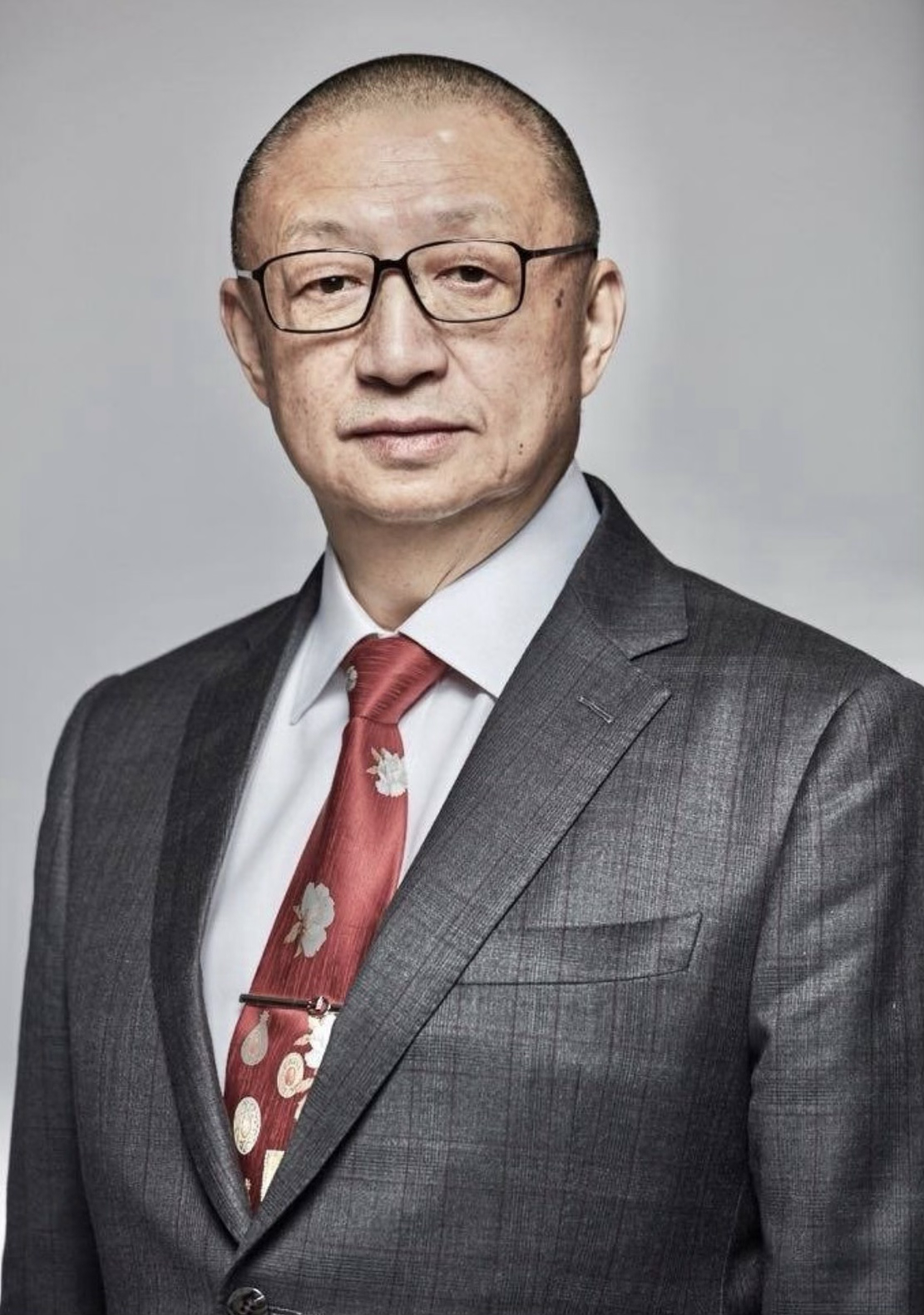 (Image caption) Chen Ping, Chairman of Taide Sunshine Group and Sunshine Media Group. Born in 1955, he comes from a "red second generation" family and was one of the youngest economic advisors in the early days of China's reform and opening up. He later transitioned into an independent media operator, always adhering to the bottom line of not relying on power and speaking the truth.
He embodies several seemingly incompatible identities: a member of the "Red Second Generation," a young economic advisor in the early days of China's reform and opening up, an entrepreneur in Hong Kong and overseas markets, a media operator for Sunshine TV and "Sunshine Affairs," and an independent commentator who has long insisted on public expression. Any one of these labels alone would be enough to constitute a complete life story; but it is only by layering them on one person that Chen Ping's truly unique qualities become apparent: the main theme of his life is not the transformation of his identities, but his constant attempt to preserve his independence.
Chen Ping once explicitly stated that he was unwilling to "eat the government's rice." This statement sounds like a personal stance, but looking back on his life, it's more like a systemic bottom line: not binding himself to the patronage of power, not exchanging dependence for security, and not trading silence for position. From participating in reform policy suggestions in the 1980s, to resigning from public office to go into business after 1989, and later running Sunshine TV and producing "Sunshine Current Affairs," even knowing that running media in the Chinese-speaking world is often a losing proposition, he still chose to continue. Because for him, media is first and foremost not a business, but a public instrument—a space for dialogue, a place reserved for truth and knowledge.
However, "public resources" are not abstract morality; they require specific conditions: independent resources, sustainable voice, and a dialogue space not unilaterally defined by power. Chen Ping's life's work has been an attempt to find realistic support for these three conditions in the Chinese-speaking world.
First, to understand Chen Ping, a young man who has crossed institutional barriers must first understand the origin of Chen Ping.
Chen Ping was born in 1955 into a revolutionary family; his parents were soldiers. He grew up in Wuhu, Anhui, and Shanghai, and his childhood and adolescence fell during one of the most turbulent periods in Chinese history.
For many people from revolutionary families, such a background naturally implies a sense of order and security: you know who you are, you know which side you're on. But the Cultural Revolution changed everything, including Chen Ping's initial perception of "which side to stand on."
During the Cultural Revolution, he simultaneously experienced the dual identity of a Red Guard and being called a "dog's offspring." This reversal of identity was not just a political trauma, but an extremely cruel real-world training: in the midst of political turmoil, one can instantly transform from "one of our own" to "unreliable," sliding from the legitimate side to the side that is questioned and purged.
This dual experience left not only scars, but also a natural wariness of the narrative of power. He understood earlier than many others that power is not abstract; it enters people's destinies, rewrites their identities, and determines who can speak and who cannot, and its rewriting often comes without warning.
This is the first structural condition of the Chen Ping model: his early awareness of power made him no longer believe that any form of power narrative is stable. Once your identity can be reversed overnight, you can no longer entrust your space of expression to any power source that you cannot control.
Many years later, when he sat in the studio of Sunshine TV, discussing current affairs and human nature in his usual casual manner, that frankness was rooted in the moment a young man witnessed power turn against him. He had seen that turn, which is why he was always reluctant to turn his back on it. 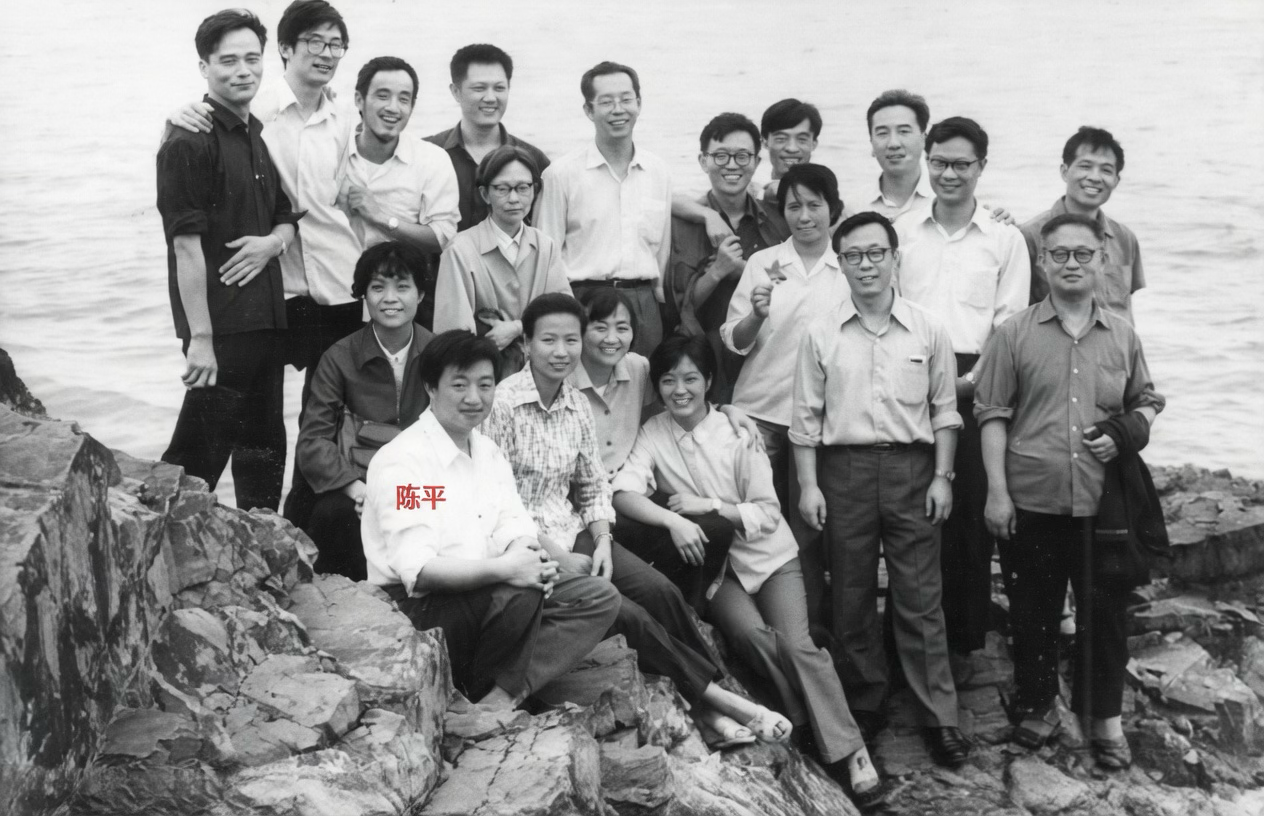 (Image caption) This precious black and white photograph shows a group of young intellectuals at the beach in the early 1980s. Chen Ping (front row, first from left) and Wang Qishan (back row, first from left) were both in their prime.
II. Moganshan: The Decade of Reform Ideals and Public Space
The period from 1979 to 1989 was the first major peak in Chen Ping's life, and also a decade in which the ideological energy of China's reform and opening up was rapidly released.
During those ten years, he became one of the youngest economic advisors in the early days of reform and opening up. He followed Xi Zhongxun on his inspection tour of the early Shenzhen Special Economic Zone and participated in proposing important suggestions such as the "Shenzhen Special Economic Zone Inspection Report," the "China Coastal Opening-up Strategy," and the "Eurasian Land Bridge Concept." In 1980, at the first China Science and Policy Conference held in Taihu Lake, he sat side by side with young advisors of the same generation, including Wang Qishan and Zhu Jiaming.
That was an era that seems almost unbelievable in retrospect: many young people, neither formally recognized as academic authorities nor fully incorporated into the system, participated directly in discussions of the national reform agenda with a strong sense of reality and a keen awareness of problems, conveying their ideas to the central government through papers and suggestions. They believed that knowledge could have an impact on reality. This belief is the most moving, and also the most vulnerable, aspect of that generation.
The most noteworthy moment in Chen Ping's history of reform that deserves to be rewritten is the Moganshan Conference in 1984. This gathering, officially titled the "Academic Symposium for Young and Middle-Aged Economic Scientists," was held in Moganshan, Deqing, Zhejiang Province, in September 1984, just before the Third Plenary Session of the 12th Central Committee of the Communist Party of China. It has since been regarded by many researchers as a landmark event in the history of reform thought: from over 1,300 papers, 124 official representatives were selected, prioritizing quality over seniority, to engage in intensive discussions on major issues such as prices, enterprises, openness, and the system.
Chen Ping, then 29, attended the conference as a representative from Shanghai, belonging to the Opening-up Group. His article, "The Strategic Position of Coastal Open Zones," co-authored with Xia Yulong, Tan Dajun, Cai Naizhong, and others, was selected for a special edition of the *Economic Daily* after the conference, becoming one of the important publicly released achievements of the Moganshan Conference. The article advocated using the coastal areas as a pioneer for reform, arguing that special economic zones were not merely windows for attracting foreign investment, but rather breakthroughs for the transformation of the entire national system. Later, the expansion of coastal open cities, the introduction of foreign investment, and the adjustment of the foreign trade system gradually became the core path of China's economic reform. Chen Ping was a participant in this history, not merely an observer.
But Moganshan holds a deeper significance for Chen Ping because it forms the second fulcrum of his spiritual structure: the public ideals of the reform era, which made him believe that knowledge and institutions could interact and that problems could be genuinely discussed. This belief was later revised by reality and squeezed by political pressure time and time again; but what makes Chen Ping special is that he did not let this belief completely die under pressure, but rather brought it into business, into the media, and into public expression that he continued even in his later years. 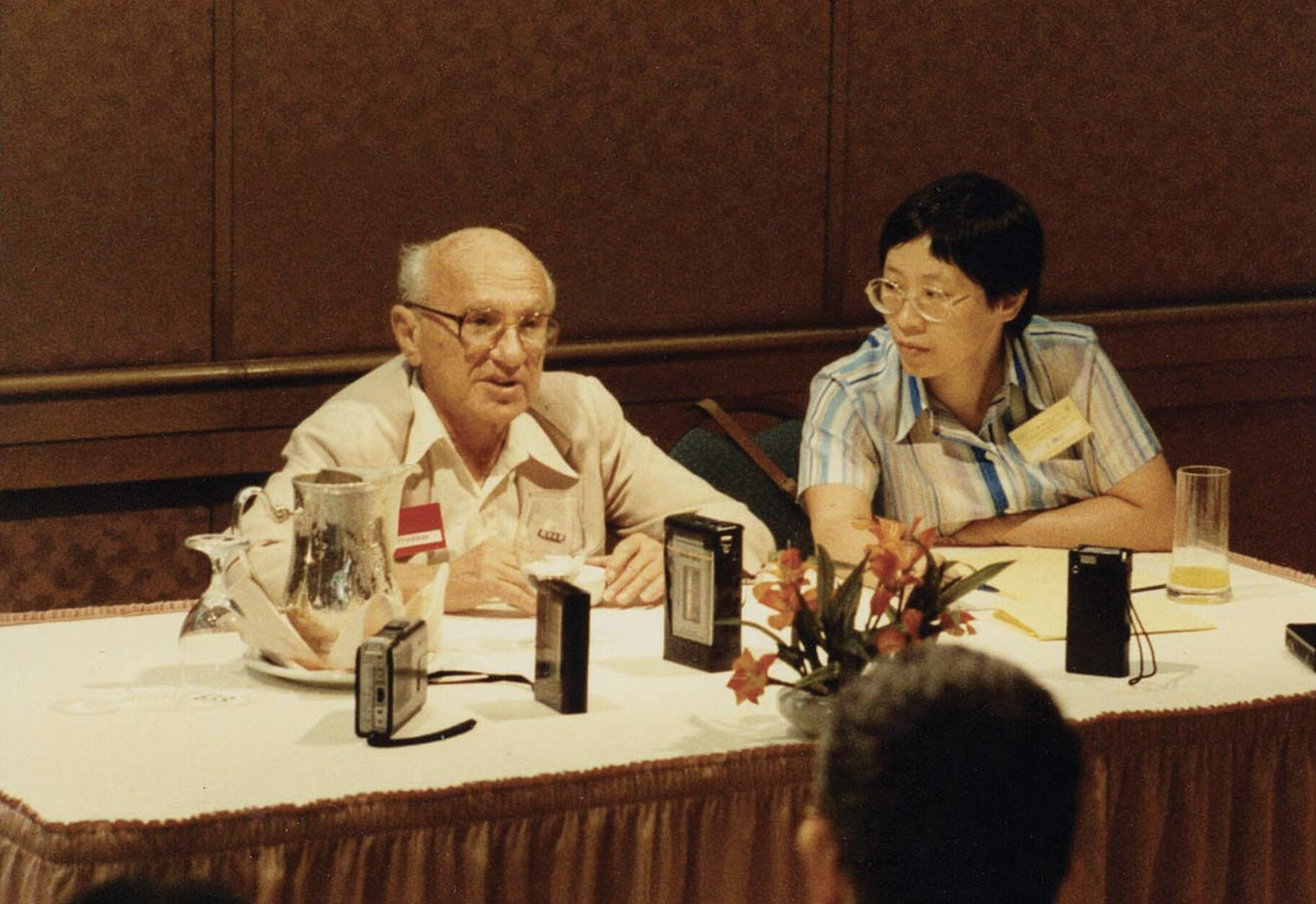 (Image caption) A symbolic scene from the 1984 Moganshan Conference (Academic Symposium for Young and Middle-aged Economic Scientists). 29-year-old Chen Ping, representing Shanghai, participated in the third group (Opening-up Group), co-authoring "The Strategic Position of the Coastal Open Zone." This marked the first significant peak of his life and a landmark moment in the release of the energy of China's reformist thought.
III. 1989: Breaking away from the system and paying the price.
1989 was a watershed year.
Following that historical turning point, Chen Ping chose to resign from his government post and venture into business. This choice, in today's context, might easily be interpreted as following the trend of the times, but in the context of that time, it carried a stronger sense of personal decision-making. He was not an ordinary career changer—he had been a young policy advisor within the system, perfectly capable of continuing along familiar paths. His choice to leave, and his repeated emphasis on his unwillingness to "rely on the government," represented a spiritual severing of ties with the system, and a proactive choice regarding his source of resources.
"Refusing government funding"—it's only four words, but behind them lies a series of sacrifices: giving up a stable bureaucratic stipend, giving up the moat of the system, and giving up the sense of security gained through dependence. But it is precisely in these sacrifices that he preserved a condition for himself to have a voice in the future.
This is the most crucial institutional choice in Chen Ping's model: he understands that in the Chinese-speaking world, if your space for expression depends on the permission of those in power, then that space will ultimately belong to those in power, not to you. Severing this dependence is a prerequisite for independent expression, not merely a moral stance.
This choice came at a real cost. And it is precisely because the cost was real that his subsequent persistence was not an act, but a path he continued to walk with a clear mind.
Fourth, operate without subservience: gain autonomy through the market and support expression through autonomy.
Around 1990, Chen Ping founded the Ted Times Group in Hong Kong, which later developed into the Ted Sunshine Group. Its business scope is quite extensive: energy, electricity, agriculture, and real estate in Southeast Asia; real estate, education networks, and electronics manufacturing in mainland China; and later, internet finance, blockchain, and decentralized cloud storage. He also had joint ventures with the Rockefeller family.
Chen Ping once recounted that in the familiar Chinese environment, his disdain for relationship-based economics often resulted in more losses than gains; however, he thrived in overseas markets. This statement is well worth careful consideration. It's not just about business gains and losses, but also illustrates a structural fact: in an order based on dependence and obedience, someone unwilling to bow down is naturally at a disadvantage; while in an order that formally respects rules, there is at least a space for activity where one doesn't have to rely on others.
In the Chinese-speaking world, for independent expression to be established, it often requires a resource structure that does not rely on power for support. Chen Ping's business path is not about accumulating wealth, but rather about building this resource structure. Exchanging the market for autonomy, and using autonomy to support expression—this is the institutional core of his business logic.
This fundamentally distinguished him from most reformist intellectuals of his time who went into business. Most people chose commerce to secure a safer and wealthier position. Chen Ping chose commerce so he wouldn't have to ask anyone for permission to speak.
For him, business was not about surrendering, but about self-preservation; not about bowing down, but about maintaining the conditions for standing tall. 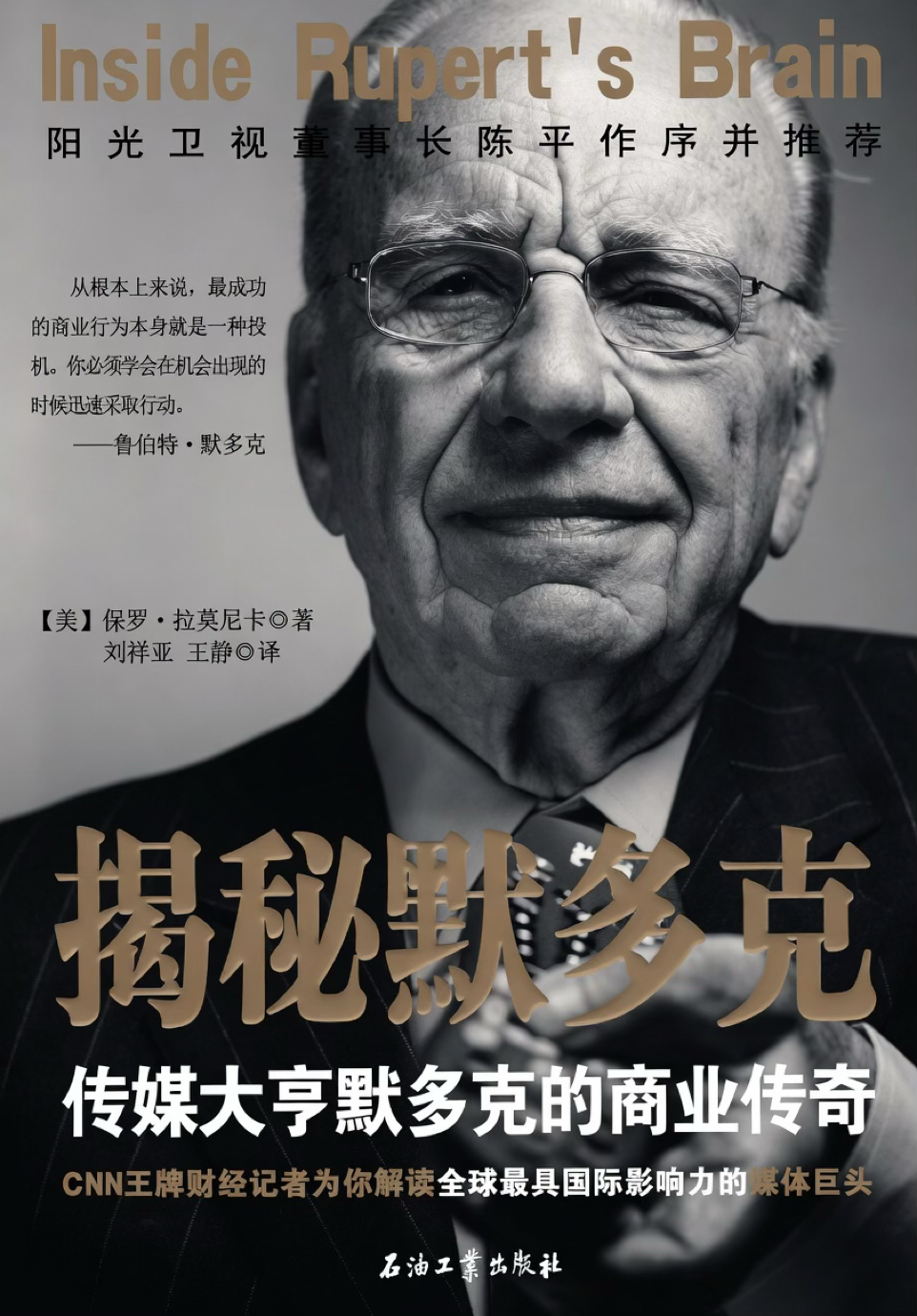 (Image caption) Cover of the book *Inside Rupert's Brain*. This book, with a foreword and recommendation by Chen Ping, Chairman of Sunshine TV, presents an intriguing intersection: a global operator who uses media as a tool of power meets a practitioner who emphasizes media independence and the value of public services, all within the same narrative framework. This intersection reveals the complex relationships and real-world connections between different paths in the Chinese-language media world.
V. Chen Ping's Model of Public Space: Neither a Mouthpiece nor an Opposition to the Media
In 2005, Chen Ping acquired a major stake in Sunshine TV through the Taide Sunshine Group, becoming its chairman. From that moment on, he was trying to build not just a media platform, but a public space model that is extremely rare in the Chinese-speaking world.
This model needs to be explained because it differs from several more common media formats.
It is not an official mouthpiece—Sunshine TV operates explicitly as an independent, non-official channel, providing a space for intellectuals and public figures who find it difficult to voice their opinions in mainstream media. It is not purely commercial entertainment—its historical and cultural documentaries and in-depth talk shows have been centered on public values from the outset, rather than driven by viewership. It is not underground opposition media—it operates openly and legally, attempting to create a space within the existing institutional framework where genuine discussions can take place.
Chen Ping is trying to establish a fourth possibility: a media space that preserves the ability of society to discuss issues outside of power.
Chen Ping personally hosts programs such as "Lunheng," with a style completely different from the refined and formulaic television hosts: no makeup, no affected manners, no pursuit of a stage presence, but rather a relaxed, direct dialogue imbued with thoughtful reflection and a touch of everyday life. He returns talk shows to their most original form: two or a few people sit down and genuinely discuss a problem, rather than performing a discussion process in the face of pre-set answers.
This style itself reflects his media philosophy: the media should not be merely a conclusion-generating machine, but a question generator; not a tool for providing answers for power, but a tool for preserving society's capacity to ask questions.
During its most active years, Sunshine TV attracted dissident intellectuals, independent scholars, and marginalized voices, enjoying considerable viewership and influence in mainland China. This influence reached a turning point in November 2009 when Sunshine TV was shut down in mainland China.
Chen Ping later called this incident a "blessing in disguise." After the broadcast was suspended, he shifted his focus more thoroughly overseas and became more certain of the path he wanted to take: not to be a media platform that could be co-opted at any time, but to maintain the media as an independent entity.
He published "My Confession," emphasizing the value of speaking the truth. Even though the media was a losing proposition, he still wanted to treat it as a public instrument and as an institutional responsibility.
VI. *Sunshine Times*: The Institutional Consumption of Independent Chinese-Language Media
In 2011, Chen Ping founded Sunshine Times in Hong Kong, launching it as a multimedia electronic magazine that focuses on current affairs, in-depth reporting, and a critical perspective. It reports on sensitive issues and touches on the boundaries of power. Its exclusive report on Leung Chun-ying's alleged scandals caused a sensation and became an instant bestseller.
However, the fate of independent media is often that the greater their influence, the higher the risk.
In June 2013, Chen Ping was attacked and injured by two men wielding wooden sticks outside the office building of the Hong Kong-based newspaper "Sunshine Times" in Chai Wan. While the official investigation has not yielded a clear conclusion, the timing of the incident is almost self-evident in public discourse. This is not merely a physical assault, but rather a systemic warning: in the Chinese-language public sphere, speaking the truth and conducting in-depth reporting sometimes involves more than just commercial costs; it carries real personal risks.
Sunshine Times later ceased publication. Chen Ping denied attributing this to mere political suppression, acknowledging that there were indeed real factors such as commercial losses and distribution pressures. However, there is a more important institutional observation here: political repression never necessarily involves directly ordering the closure of a media outlet; rather, it often uses various methods, such as shrinking advertising revenue, narrowing distribution channels, deepening audience fear, and capital concerns, to gradually drain independent media over a long period.
This is the deep-seated structure of the fate of independent Chinese-language media: they were not killed by a specific order, but rather dragged down by the systemic erosion of independent expression by the entire institutional environment. In this sense, commercial pressure and the political environment are never two lines that can be completely separated.
The fate of *Sunshine Weekly* is strikingly similar to that of many Hong Kong and overseas Chinese-language media outlets of its time—all of them attempted to provide in-depth content with an independent stance, and all suffered heavy pressure amidst political tightening and commercial imbalances. This similarity reflects a larger structural dilemma. 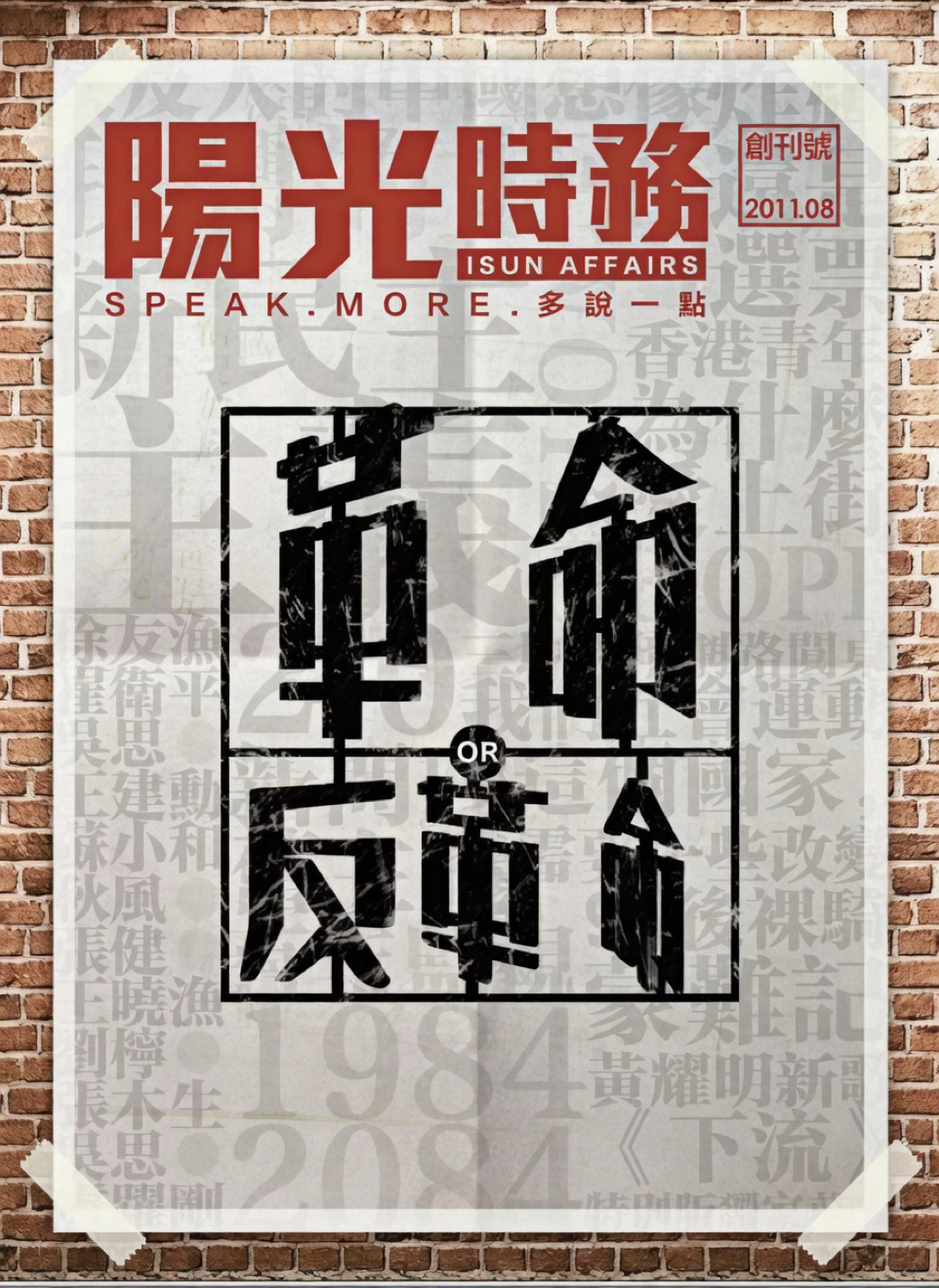 Image caption: In 2011, Chen Ping founded *Sunshine Times* in Hong Kong, known for its incisive and outspoken in-depth reporting, which garnered attention for exposing sensitive issues. The magazine ceased publication after an attack in 2013, reflecting the difficult fate of independent Chinese-language media under both political and commercial pressures.
VII. The Chen Ping Model: A Nameable Institutional Sample Now, Chen Ping's life can be broken down into a clearer institutional model.
He deserves to be written about not only because he told the truth, but because he tried to solve a more difficult problem: where do the conditions for telling the truth come from in the Chinese-speaking world?
If the survival of the media rests on the patronage of power, then it will ultimately find it difficult not to relinquish its boundaries to power. This is not a moral judgment, but a structural law. Chen Ping's choice is an attempt to defy this law with a different logic: first, gain some autonomy through commerce, and then use that autonomy to support public expression. This is not a romantic gesture, but a form of institutional self-salvation.
His model is based on three mutually supportive structural conditions.
First, his early wariness of power. The sudden reversal of his status during the Cultural Revolution made him no longer believe in the stability of power narratives, nor was he willing to entrust his space for expression to any power source he could not control.
Second, the public ideals of the reform era. Moganshan instilled in him the belief that knowledge and institutions could interact, and that problems could be genuinely discussed. This belief, even after being repeatedly revised under pressure, remained his intrinsic motivation for running a media outlet.
Third, the material foundation for commercial independence. It's about exchanging market resources for freedom of expression, rather than exchanging power for security. This is the core of his model, and also the most difficult to replicate—because it means you must be willing to pay a higher price commercially in exchange for independence in expression.
These three conditions are indispensable. Vigilance alone without ideals is mere cynicism; ideals alone without resources are mere martyrdom; resources alone without the first two are merely those of a businessman. Only when all three are combined does the Chen Ping model emerge.
The reformist youth of the 1980s later went down very different paths. Some stayed within the system to adjust their stance, some turned to pure business, some retreated to private life, and some continued to stand guard in the public sphere in solitude. Chen Ping took the most difficult and least advantageous path: neither completely retreating to private life, nor willing to integrate into power, and even less willing to become part of the noise of the times.  (Image caption) Sun TV is chaired by Chen Ping, and it is one of Chen Ping's important media ventures. Through Sun TV and the later-founded Sun TV program "Sun Affairs", he promotes current affairs commentary and public discussion in the Chinese-speaking world, representing a relatively independent media practice with an international perspective.
8. What did he prove? Chen Ping's story did not have a triumphant ending.
His independent media outlets ceased publication, his television station was shut down, his personal safety was threatened, and his business ventures were not without setbacks. From an institutional perspective, most of his attempts ended in failure.
But Chen Ping's importance has never lay in whether he successfully defended a media platform.
His importance lies in proving that in the Chinese-speaking world, if the media is to maintain a certain degree of publicness, it must first solve the fundamental problem of "not being funded by power." This is not just his personal discovery, but an institutional observation that can be verified, cited, and referenced by future generations.
His failure is also part of this observation—it illustrates that even if the issue of resource self-sufficiency is resolved, the systemic drain on independent expression within the entire institutional environment can still cause a media outlet to bleed under prolonged pressure. This is not a limitation of Chen Ping personally, but rather the true boundary of that structural dilemma.
In Murdoch's world, the media creates power. In Qiu Liben's world, the media survives in the cracks. In Chen Ping's world, the media is a public commitment that needs to be protected at a price—it cannot be bought or sold, it cannot be subservient to anyone, and it can only strive to keep dialogue going under the premise of "not being paid by the government."
Three people, three choices, three costs. Together they form a map that shows us all the possible positions and all the real costs in the relationship between media and power.
The spot where Chen Ping stood was the hardest to maintain his footing. But precisely because of that, it was the most worthy of being recorded.
Chen Ping, Chairman of Tideisun Group and Sunshine Media Group
Born in 1955 to military parents, Chen Ping grew up in Wuhu, Anhui and Shanghai. From 1979 to 1989, he served as an economic policy advisor during the early stages of China's reform and opening up. He accompanied Xi Zhongxun on a visit to the Shenzhen Special Economic Zone and participated in the third group discussion at the 1984 Moganshan Conference (an academic symposium for young and middle-aged economic scientists). He co-authored "The Strategic Position of the Coastal Open Zone," which was selected for publication in the *Economic Daily*. After 1989, he resigned from his public office and founded the Tai Tak Sunshine Group in Hong Kong, with business interests spanning energy, real estate, and technology. In 2005, he acquired a major stake in Sunshine TV, transforming it into an independent media platform focusing on history, humanities, and in-depth conversations. Sunshine TV was shut down in mainland China in 2009. In 2011, he founded *Sunshine Times* in Hong Kong, which ceased publication after an attack in 2013. Chen Ping has long insisted on independent expression, viewing the media as a public instrument. His media stance is "speaking the truth, revealing the facts, and seeking true knowledge," representing an institutionalized practice that attempts to support public expression through commercial self-reliance.
This article is part of GFM's "People" column, "Media Is Not Neutral: Between Public Instruments, Power, and Gaps." GFM focuses on people and events with institutional significance, documenting innovative practices that are verifiable, citationable, and trackable over the long term.