

Catherine Liu: AI can draft legal documents, but it cannot assume ultimate responsibility for people.
Key decisions in tech entrepreneurship, and the professional judgment accumulated by a lawyer over many years.
A transaction document, carefully revised by a lawyer, was flagged as having twelve "pitfalls" by the client's AI; in Liu Ruming's view, eleven of these were precisely to protect the client. This case reveals the gap between textual analysis and transactional judgment. Through a long phone conversation and an on-site interview at the opening of the Los Angeles branch, GFM.News traced this tech lawyer's career path and also explored an increasingly pressing question: when documents can be generated quickly, how should the work of understanding, verifying, and assuming responsibility for the consequences be accomplished?
Editor's Note
How professional judgment is formed, and how it maintains its value amidst technological change, are questions GFM.News continuously focuses on. Catherine Liu's career path provides a concrete window into this question: what kind of experience and assistance do founders need when facing choices regarding financing, transactions, and intellectual property rights? This profile also continues our exploration of our own work—after tools improve efficiency, how are verification and accountability implemented?
GFM.News Editorial Department
 (Image caption) Catherine Liu, founding partner of MagStone Law, has extensive experience in corporate law, venture capital, and cross-border transaction law. She focuses on how AI tools can assist legal work and the role of professional judgment in specific transactions.
West Los Angeles, see you again
On October 23, 2026, I met with attorney Catherine Liu again in West Los Angeles.
MagStone Law's Los Angeles office opened on this day. Located on Westside Towers on West Olympic Avenue, the two curved office buildings face each other across the plaza. Through the office's wide-open windows, the low-rise blocks stretch into the distance, with buildings and mountain ridges appearing under the same bright sky.
This time, I brought Christy, the host of the GFM.News video program "Every Shade of Gray" (Chinese name: "财经万象"), to conduct the interview, while I was responsible for filming.
Facing the camera, Christy posed a question to a situation many entrepreneurs face: limited funds, tight deadlines, and AI capable of quickly providing seemingly complete answers. When founders start using ChatGPT to handle legal issues, are they receiving genuine help, or just untested confidence?
Liu Ruming didn't rush to dismiss the tool. She uses AI herself and understands why entrepreneurs use it. Her concern is the next step: after obtaining the answer, does the user understand why it's true, and under what circumstances might it not be true?
As I listened behind the camera, I recalled a long phone conversation we had a few months ago.
We first met at an AI forum at Peking University and the University of Southern California, themed "Breaking Boundaries and Transformation." After our on-site exchange, I conducted a further interview about her professional experience and legal practice. A subsequent phone call lasted for over an hour.
On the phone, her voice was steady, and she would occasionally pause to confirm her wording when discussing legal details. That caution impressed me. She didn't make complex issues sound easy, nor did she hide her professional expertise behind difficult jargon.
We repeatedly discussed the following question: Documents can be generated by AI, but who decides whether they are applicable, who decides to sign them, and who faces the consequences of the decision?
Now, in the new office, this question has resurfaced. The two interviews, months apart, started differently but ultimately returned to the same point: when a decision will change a company's future, what should professionals offer?
The shoe-selling story my father told
Liu Ruming first seriously considered law because of a story his father told him.
Two salesmen came to the same island to sell shoes. The first man saw that no one on the island wore shoes and thought there was no market, so he left dejectedly. The second man saw the same scene but felt there was a great opportunity: everyone on the island didn't have shoes yet.
Her father used this story to explain to her that China's legal system was developing rapidly at the time, with many rules yet to be established and new laws emerging one after another. For young people preparing to choose a major, this meant a large number of unmet needs.
She remembered this story after graduating from high school and later chose to study law at Peking University.
Before enrolling in university, her image of a lawyer was closer to that of characters in movies and television: appearing in court, debating, and arguing for their clients. What truly changed her understanding was the few years she spent working at Junhe Law Firm after graduation.
At that time, foreign investment in China brought new transactions, but also a series of legal issues that needed to be clarified. She recalled that a partner once gave her a book related to the World Trade Organization (WTO) and told her: "Master this book, and you won't have to worry about making a living for the next five years."
Years later, she still remembered those words.
It showed her that legal work can occur before disputes arise: how a company enters the market, how a transaction is arranged, and how the rights of all parties are implemented. Lawyers are involved in the conditions that allow business activities to take place.
Afterward, she pursued further studies at the University of Hong Kong, worked at the US-based law firm Morrison & Foerster in cross-border transactions, and then studied at the University of Pennsylvania School of Law, gradually accumulating experience in US corporate and financial law practice. Her career path spans Beijing, Hong Kong, and the United States, involving company formation, financing, mergers and acquisitions, securities and technology transactions. These educational and professional experiences are also documented in the law firm's official resume.
She later settled in Silicon Valley.
There, a startup's legal needs often arise in tandem with its growth. Seemingly separate issues such as how the company is formed, how equity is allocated, how investment comes in, and how technological rights are acquired will converge again in the next round of financing or an acquisition negotiation.
In 2013, she and her partner founded MagStone Law. When she talked to me about this experience, she didn't describe it as a grand, pre-planned decision. The training at a large firm, the needs of her clients, and the gap in understanding between Chinese entrepreneurs and American legal services gradually pushed her toward this choice.
In an on-site interview on October 23, she explained that the firm's founding team has experience working at large law firms, and their services cover different stages of a company's development, from startup and venture capital financing to mergers and acquisitions and IPOs, as well as matters related to intellectual property rights, trademarks, real estate, and taxation. She stated that they have served over two thousand clients over the years.
On one wall of the new office, the logos of companies and organizations are neatly arranged. According to the law firm, the logos on the wall represent some of the companies and organizations they have served. For visitors, the first thing they see are familiar or unfamiliar names; for legal practitioners, behind every task lies a specific transaction, parties involved, and problems to be solved.
Listening to her recount her career path, I gradually understood that the judgment she spoke of was the result of professional training constantly being tested in practice. Books provide methods, but trading forces one to decide: how should the problem at hand be handled?
 (Image caption) Catherine Liu (left), founding partner of MagStone Law, is interviewed by Christy (right), host of GFM.News' "Every Shade of Gray," at the West Los Angeles office. They discuss the application of AI tools in entrepreneurial legal practice and the boundaries between professional judgment and responsibility.
Who exactly are those twelve "pits" protecting?
In a telephone interview, Liu Ruming recounted the story of a transaction term sheet.
The other party in the negotiations was taking a tough stance, and the client had specifically requested that the revisions not appear too drastic. She needed to accomplish two things simultaneously: address the risks the client was concerned about, and also ensure the other party was willing to continue the talks.
According to her recollection, she spent over an hour revising the text. Judging from the revisions, the document hadn't changed drastically, but the client's concerns had been addressed one by one through wording and clause arrangement.
After the document was sent out, the client quickly sent back a list: the AI found twelve "pitfalls" in the document, which were twelve problems that it thought might exist, and asked her to confirm them one by one.
After carefully reviewing the list, she discovered that eleven of the items were exactly the protections she had arranged for her clients; the remaining item had also been discussed with the clients.
She asked the client if they wanted to remove the protective clauses. After explanation, the client understood the difference between the list and the actual transaction.
What this case taught me is that a clause can have two faces simultaneously: a restriction for one party, but a necessary guarantee for the other. Without knowing who the user represents, what stage the negotiations are at, and which issues have already been exchanged, it's difficult to determine what a particular "abnormality" truly means.
Text can be analyzed in isolation, but transactions have their causes and consequences.
In an on-site interview in Los Angeles, Liu Ruming shared another example. A client told her that ChatGPT provided an answer to a certain question, but she disagreed. Further comparison revealed that even using the same tool, different question formats and provided context could yield different results.
She cautioned that if users have already expressed their desired conclusion in the question, the answer may also develop in that direction.
This adds another layer to the problem. Users of AI need to examine not only the tool's answers but also their own questions: Have they omitted facts that are unfavorable to them? Have they treated pre-existing premises as known conditions? Are they simply using a different approach to get the tool to agree with their own ideas?
This is often where the difficulty lies for founders who lack legal training. They may know what they want to do, but they may not know what questions they need to ask first.
What Liu Ruming values is the ability to check the answers even after they have been revealed.
The contract must be able to withstand the day when problems arise.
Many entrepreneurs expect legal documents to be complete, clear, and easy to sign.
Liu Ruming talked more about the times when things were no longer going smoothly.
When collaboration goes smoothly, contracts are often seen as merely a formality. It's only when delivery delays occur, data leaks arise, payment disputes arise, or the collaboration ends that each arrangement in the document begins to take on weight: Who bears the losses? Is there a limit to liability? Who owns the intellectual property rights? How long do confidentiality obligations last? After the collaboration ends, which usage rights still remain?
She gave an example over the phone: a small company provides services to a large technology company, and the contract includes a liability arrangement. From the perspective of the large company, the leakage of trade secrets or product designs could cause significant losses, and their demand for protection is justified.
But for small companies with only a few dozen employees, the same terms may mean unbearable risks.
At this point, the following questions need to be answered: Does the company understand the responsibilities it has accepted? Does the signatory have the appropriate authorization? Can the risks be controlled through negotiation, insurance, or other arrangements? In the worst-case scenario, will the company still be able to continue operating?
 (Image caption) Congratulatory flower baskets are displayed in front of the law firm's logo at the opening ceremony of MagStone Law's Los Angeles office. This office, located in West Los Angeles, is also the location of this on-site interview by GFM.News.
A grammatically correct and professionally worded document will not automatically answer these questions.
Thinking about this, I realized that fluency can sometimes lower one's guard. Rough writing makes people stop to check, while refined writing can make people feel complacent too early. When legal documents can be generated quickly, the patience required to understand them becomes even more important.
Christy asked some very practical questions on the spot: For startups with limited resources, when can they start using AI, and when should they consult a lawyer?
Liu Ruming's answer preserved the contextual differences. AI may be able to help with the initial discussion and data organization; however, if the user still does not understand the answer or how to decide after repeated questioning, further professional assistance is needed.
She did not deny the need for entrepreneurs to save costs. She cautioned that some costs are not visible at the time of signing but may surface in later disputes.
A five-minute first draft, how much work is left afterward?
Christy then raised a question directly related to the value of professional services: documents that used to take days to prepare can now be generated by AI in minutes. How should we understand the work and fees of lawyers?
This is a question worth exploring. If technology improves efficiency, customers should be concerned about how that efficiency is reflected in their service.
Liu Ruming doesn't shy away from the changes brought about by AI. She and her team use these tools to assist in organizing data, summarizing, researching, and drafting. Experienced lawyers using AI may also achieve useful results more quickly.
However, she pointed out that generating the written text is only one step. Whether the content is accurate, whether the basis is reliable, whether it fits the context of the transaction, and what has been omitted all need to be checked separately.
Clients also return with questions raised after the AI review. Some issues warrant serious discussion; others stem from a lack of context regarding the tool or a user misunderstanding the document. Lawyers need to address each issue individually and then explain the changes to the client. Sometimes, this process adds to the communication time.
In a previous phone interview, she used the ratio of 40% to 60% to explain the relationship between the initial draft and subsequent work: based on her work experience, the AI draft might only be about 40% complete, and a lot of follow-up questions, revisions, verifications, and additions would still be needed. This is her estimate based on her own practice, not a uniform ratio for all legal work, nor a statistic on the accuracy of AI responses.
What she really wanted to point out was how much work remained to be done after the first draft.
An experienced lawyer assisting founders in setting up a company typically needs to understand: Why is this company being established? Are there plans to attract investment? Are employees to be hired or equity incentives to be established? From which regions are the shareholders located? What technologies or other assets need to be included in the company? Are there any tax, immigration, or cross-border arrangements that need to be coordinated?
These answers will affect the architecture and future financing and transactions.
AI can help list questions, but users still need to determine which ones are relevant to them, which ones haven't been asked yet, and which answers require further verification.
Liu Ruming also discussed the training of young lawyers. While some repetitive tasks are handled by tools, law firms still need to consider: how can the next generation of lawyers gain opportunities to understand documents, participate in negotiations, and identify risks?
Judgment requires practice. People expect senior lawyers to spot problems at crucial moments, which means there needs to be a process for young lawyers to gradually develop this ability.
This discussion about efficiency ultimately points to a longer-term question: will the time saved by technology be used to reduce work or to do work more thoroughly?
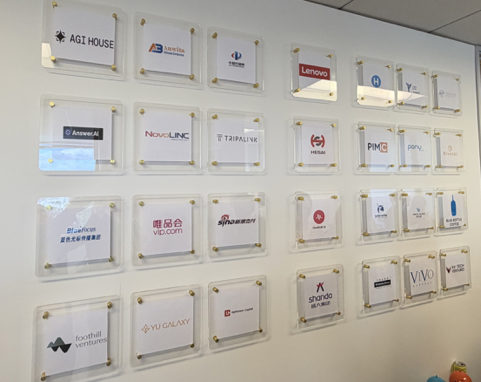 (Image caption) Some of the corporate and institutional logos displayed inside the Los Angeles office of MagStone Law. According to the law firm, these logos represent some of its past clients.
There needs to be an explanation between legal cultures.
Liu Ruming's cross-jurisdictional experience makes her particularly sensitive to differences in understanding.
Founders familiar with one market often bring their existing business habits when entering another. They may know how to negotiate prices, find customers, and build a team, but they may not be familiar with how to interpret contracts, determine liability, or handle disputes in the local market.
In the phone call, she said that when Chinese entrepreneurs enter the US market, they cannot simply look for a regulation that can be directly applied, nor can they assume that avoiding a certain prohibitive word has completed all the legal judgments.
American legal practice involves statutory law, case law, regulatory rules, and specific facts. For founders, it's not just about understanding what the statutes say, but also how those rules apply to their own transactions.
This gap in understanding may still exist even after the text has been translated into another language.
During the interview, she recounted a client who once asked AI to explain an early-stage financing agreement line by line. The client read extensively but still didn't grasp the most important meaning of the arrangement. Only after her brief explanation did the client understand the core concept.
This example makes the difference between "explaining" and "understanding" concrete. An answer can be very long, but what really needs to be clarified may only be one key point: how will the rights and obligations change after signing?
She also emphasized the specialization within the legal profession. National security review, taxation, securities, intellectual property rights, privacy, and labor issues each have their own areas of expertise. Even seasoned lawyers need to understand the boundaries of their own expertise and discern when other specialists should be involved.
AI can assist lawyers in understanding the context of adjacent fields more quickly. However, after identifying problems, it's still necessary to decide what to investigate, who to consult, and how to integrate opinions from different fields into the same transaction.
In her account, her professional maturity also included acknowledging that this task required a more suitable partner to complete it.
Once the product is made, who holds the rights?
Among the issues Liu Ruming has encountered with startups, the ownership of intellectual property rights is a task that is easily postponed.
Early-stage teams are typically busy developing products, finding markets, and securing funding. Founder agreements, outsourcing contracts, confidentiality arrangements, and how technology rights are transferred to the company are often seen as things that can be addressed later.
The issue only becomes pressing when investors begin due diligence or potential buyers request to see the documents.
She mentioned a common intuition: I paid for it, so it's mine.
But paying and obtaining full rights are not always the same thing.
When hiring external engineers to develop programs, hiring designers to create logos, or commissioning teams to build websites or applications, companies need to understand exactly what they are acquiring: the results themselves, a license for a specific purpose, or rights that can be further transferred?
In the United States, for example, "work made for hire" has specific applicable conditions and is not automatically established simply by paying a commission. The transfer of copyright ownership, except in cases stipulated by law, usually requires a written document signed by the rights holder or their authorized agent.
Therefore, in practice, arrangements for intellectual property rights transfer, confidentiality, employee inventions, and outsourced development need to be handled on a case-by-case basis. The distinction between an employee and an independent contractor cannot be determined solely by the contractual title. Different rights, different working relationships, and different applicable laws require separate assessments; a single, universal template cannot cover all situations.
In an interview on October 23, Christy brought up the topic of AI and open source resources again.
Liu Ruming pointed out that founders need to know where the technology they use comes from, who owns the relevant rights, and what licensing conditions must be followed when using it. These are all matters that must be clarified when a company is preparing to expand or be sold.
The ability of a product to function is a different test than the ability of a company to clearly demonstrate its right to develop, use, and dispose of it.
If early documents are not well prepared, they may still be salvageable later, but remediation often means renegotiating, finding signatories, handling disputes, and bearing the uncertainty of transaction delays.
For founders, a difficult situation might be that the product is complete, customers have started using it, and financing has entered a critical stage, but they find that there are still gaps in the source and transfer records of the core technology rights.
These documents are like the foundation of a company, and the foundation needs to be designed according to the building itself.
Agreements between founders should address rights and collaboration arrangements; intellectual property transfer and development contracts should handle core outcomes; governance documents suitable for the company structure should establish decision-making procedures; and terms of service and privacy documents should be consistent with the actual operation of the product. The names of the documents are not the end point; what matters is whether they are interconnected.
These arrangements do not guarantee a company's success. Their value lies in giving the company the opportunity, even after it has grown, to still clearly understand what it has, what it has promised, and what it can deliver.
 (Photo caption) Guests chat in the office corridor during the opening ceremony of MagStone Law’s Los Angeles office.
I also brought up media issues in the dialogue.
Towards the end of the earlier phone interview, I brought up some questions about GFM.News itself.
Founding an AI-driven financial media outlet means I experience the balance between efficiency and responsibility every day. Data can be collected faster, recordings can be transcribed faster, publicly available documents can be compared more quickly, and a first draft can be produced much faster.
As the founder, I know how important these efficiencies are to a team with limited resources. They make it possible to do things that would otherwise be impossible, and they allow us to reach our readers in more languages.
But as an article nears publication, specific questions remain: Is this figure based on fact? Does this statement accurately reflect the interviewee's meaning? Has an allegation been presented as fact? When readers use this report to understand the world, have we provided them with sufficiently reliable information?
Liu Ruming did not offer specific legal conclusions regarding media matters, which she was unfamiliar with. Instead, she began by discussing general principles and then returned the issue to the source of information.
Even before AI, journalists still needed to read government documents, company materials, and other media reports. Tools have accelerated the process of accessing information, but they haven't eliminated the need for verification.
Where did it originate? Is it the original source? Has the relayed information been distorted? Is it necessary to personally open the file and view the complete context?
These questions sound simple, but in practice they take time and require the judgment to stop and pause.
From her legal practice, I saw requirements similar to those of journalism: understanding a document, including knowing what it doesn't say; quoting a sentence, including understanding which question it's answering; using an answer, including acknowledging what you don't yet know.
For GFM.News, I hope that the time saved by AI will allow us to verify one more original document, ask one more key question, and give interviewees one more opportunity to clarify.
This is my understanding of "institutional media": information has a traceable source, judgments have verifiable basis, and errors have a way to be corrected.
The author's signature at the end of the article carries real weight. It reminds me that no matter how many tools are used, the content presented to the reader still requires the editor and author to bear their own responsibility.
 (Photo caption) At the opening ceremony of MagStone Law's Los Angeles office, founding partner Catherine Liu (center) poses for a photo with guests. From left to right: Solomon, IPO advisor ; Xuemei Wei, Managing Director of UBS International; Nala, co-founder of GFM.News; and Kevin Guo, founder of GFM.News.
The last name that fell
In a phone interview, I asked Liu Ruming: In the AI era, will the legal profession become a scarce asset?
She revised this statement. She placed more emphasis on the experience, insights, and judgments gained in practice.
This correction is worth keeping.
A job title alone cannot guarantee accurate judgment, nor can qualifications exempt one from verification. Professional value needs to be demonstrated in specific work: whether one can identify problems that the client is unaware of, whether one can explain the consequences of different choices, and whether one can make appropriate arrangements between efficiency and prudence.
She founded her own law firm and also serves founders. She understands that businesses need speed, need to control spending, and need to move forward with incomplete information. Therefore, her discussions about AI always have two sides: tools expand the capabilities of small teams, but also make users more aware of what they are doing.
In a live interview in Los Angeles, she affirmed that AI enables fewer people to do more work. This efficiency is a real opportunity. But when work involves the rights of others, a company's core assets, or unbearable responsibilities, speed still needs to be judged.
I thought of that term sheet with only minor revisions. On the surface, it might just appear to be a document without major changes; in practice, however, it contained an understanding of the client's situation, the negotiating counterpart, and the allocation of risks.
This type of work is not easily measured by the number of words, nor is it easily discernible from the number of minutes it takes to generate the document.
A phone call a few months ago gave me insight into the path she took to form these judgments. The live interview on October 23rd brought the same questions to a more direct level under Christy's persistent questioning: What do founders need, what can tools provide, and what else must professionals accomplish?
AI can write legal documents. However, once these documents are used in actual transactions, someone still needs to understand and verify them, and explain the significance of the signature to the parties involved.
Standing at the window of my tenth-floor office, the rooftops, streets, and distant mountain ridges of West Los Angeles unfolded layer by layer in the sunlight. The names Sunset Boulevard and Beverly Hills evoked another layer of association with this cityscape: movies, dreams, and countless people's anticipation of a new life. The city before me was more expansive and more concrete than any story on the screen. Some were starting companies, some were waiting for investment, and some were about to sign their names on a document. I think the weight of Liu Ruming's work over the years is revealed in these moments—helping someone preparing to move forward to see the path ahead clearly, and to understand the responsibilities they would bear.
⸻
Interview and Editing Notes
This article is a compilation of Kevin Guo's previous forum exchanges and telephone interviews with Liu Ruming, as well as a live interview conducted on October 23, 2026, hosted by Christy of GFM.News's video program "Every Shade of Gray" and filmed by Kevin Guo, and also references publicly available information. The analysis in this article is the responsibility of the author; the related discussions do not constitute legal or investment advice regarding specific matters.