

Carlos Domingo: Pulling RWA from the Crypto Narrative Back to the Financial System
Person ID: PZ-US-02-006
- Name: Carlos Domingo
- Country/Region: Spain/United States
- Cities: New York / Madrid
- Character Tier: PZ-B
- People in the field: Web4 / RWA / Fintech people
- Company/Organization: Securitize
- Identity/Position: Co-founder & CEO
- Types of fault lines: Capital structure fault lines, technology governance fault lines, globalization fault lines
Introduction: An RWA builder who doesn't talk about coin prices. In the crypto world, "on-chain" is a magical word.
It can be price, narrative, liquidity, community sentiment, or even the fuel for the imagination of the next bull market. It can turn an image into an NFT, a concept into a token, a white paper into a fundraising tool, and a story with no legal validity into a market valuation of millions of dollars within weeks. 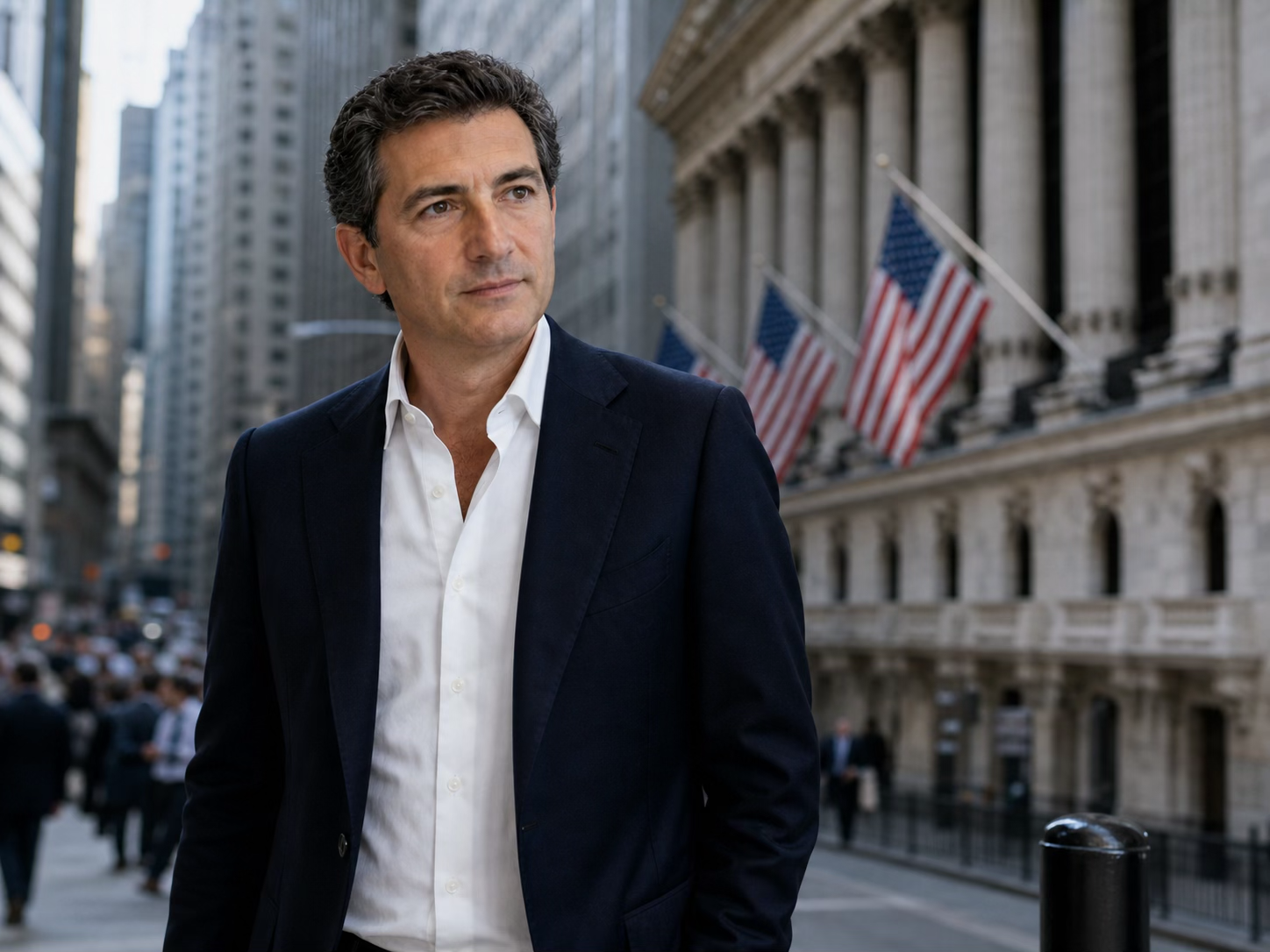 (Image caption) Carlos Domingo
The crypto world is never short of narratives. What it lacks is institutions.
Carlos Domingo also talks about "on-chain," but he uses a different language.
He talked about transfer agents, broker-dealers, ATS (Asset-to-Trade System), fund documents, investor vetting, regulatory frameworks, shareholder registers, and the complete lifecycle management of assets from issuance, registration, transfer, custody, trading to information disclosure. This language is almost non-existent in most crypto Twitter spaces. But in SEC offices, in BlackRock's fund structure, and in the compliance departments of traditional asset management firms, this language is the underlying syntax that truly determines whether an "asset" can survive in the financial market in the long term.
In June 2024, Carlos Domingo, as co-founder and CEO of Securitize, attended a hearing before the U.S. House Financial Services Committee on "How Real-World Asset Tokenization Promotes Efficient Markets" and submitted written testimony. In his testimony, he explicitly defined Securitize's mission as: providing businesses with a regulated path to tokenize financial assets and issue, sell, and trade securities on the blockchain in a compliant manner.
This is not the language of a Web3 white paper. This is the language of a statement to Congress.
Securitize is not simply a token issuing company, a DeFi protocol, or a Web3 project driven by market sentiment. It is a financial infrastructure company attempting to bring real-world assets into the blockchain for recording, issuance, transfer, and trading in a regulated manner. Its core is not the "coin," but rather licenses, documentation, transfer agents, investor qualifications, and regulatory responsibility.
This is precisely why GFM's "Biographies" chose to write about him.
He is neither a typical crypto entrepreneur nor a market speculator who rose to fame through the ups and downs of cryptocurrency prices. He is more like an institutional engineer standing between traditional finance and blockchain technology—attempting to rewrite parts of the capital market infrastructure in a slower, heavier, and less sexy way.
If the crypto narrative of the past decade has been an attempt to drag finance away from Wall Street and onto the blockchain, then Domingo's work is more like reverse engineering: bringing on-chain technology back into the context of regulated finance.
This direction may not be the fastest, but it may be more sustainable. 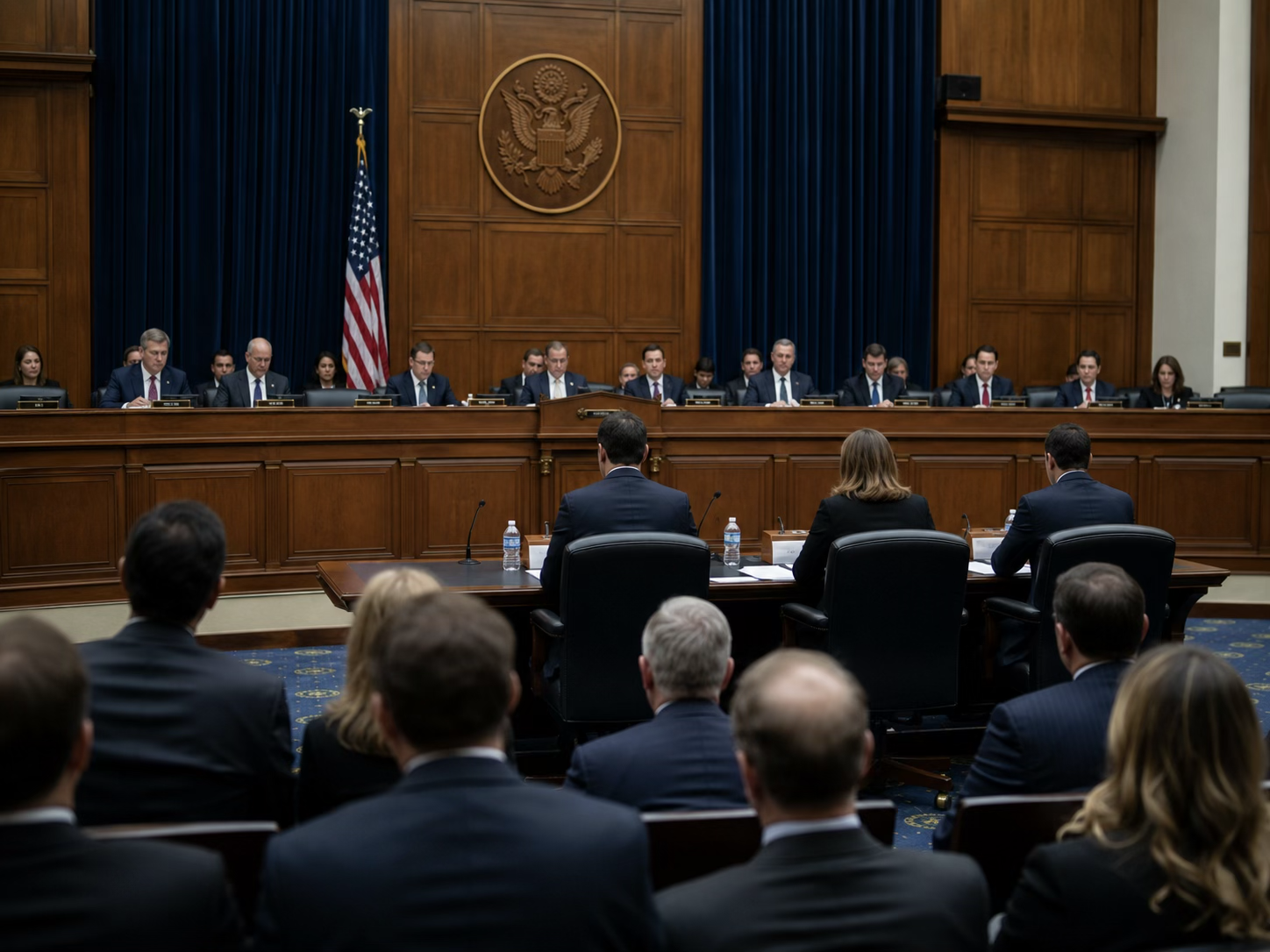 (Image caption) If RWA wants to enter mainstream finance, it cannot just stay on the crypto narrative, but must be tested by law, regulation and public accountability.
To understand Carlos Domingo, one must first understand his background, as it determines his fundamental perspective on tokenization, since he didn't come from the cryptocurrency world.
Publicly available information shows that Carlos Domingo did not start in the cryptocurrency speculation market. He has a long-standing background in enterprise technology, digital transformation, and innovation management, having worked with the R&D and digital businesses of large telecommunications groups such as Telefónica. Before joining Securitize, he founded SPiCE VC, accumulating practical experience in enterprise-level technology investment and global management.
Telefónica is one of Spain's largest telecommunications groups, with operations spanning Europe and Latin America. The environment of such large multinational corporations trains not single-application entrepreneurs, but infrastructure thinkers facing the pressures of large-scale organizations, regulatory differences across multiple markets, conflicting technical standards, and the coordination of institutional interests. Working in such an environment offers no luxury of "rapid experimentation and disruptive innovation." Instead, it fosters chains of responsibility, process control, multi-party compliance, and traceability.
This way of thinking is fundamentally different from that of many entrepreneurs who grew up directly from the Web3 community.
He didn't first believe in tokens and then look for assets that could be packaged; he first understood the institutional constraints of enterprise-level infrastructure and the operating logic of financial markets, and then looked back to think: what real problems can tokenization actually solve in regulated capital markets?
This difference in mindset determines that Securitize has never been a company whose core narrative revolves around "decentralization" or "eliminating intermediaries." Its core question from the beginning has been: within the existing legal framework, how can a digital method of securities recording make the issuance, registration, transfer, and trading of assets more efficient, transparent, and traceable?
This issue is far less exciting than "disrupting Wall Street".
However, it is closer to the underlying logic of how financial markets actually operate.
The true value of Securitize: its institutional framework, not the technology itself. Many people misunderstand Securitize's positioning, thinking it's a technology platform that helps companies "issue tokens." This understanding only grasps the surface verb and misses the more important structure.
Securitize positions itself as a platform for tokenizing real-world assets, offering a complete solution for asset managers, Web3 companies, DAOs, advisors, and investors. However, for GFM, what's more noteworthy is not the act of "tokenizing" itself, but rather the entire institutional framework necessary for this act to legally occur in the financial market.
In his congressional testimony, Carlos Domingo revealed the timeline for Securitize's establishment of its institutional status: July 2019, filing for SEC transfer agent registration; September 2020, obtaining broker-dealer and ATS-related licenses; and August 2021, receiving conditional approval from the SEC. These are not concepts from a technical white paper, but rather traceable institutional positions in the financial markets, representing traceable obligations to regulatory agencies in the form of legal documents.
What is the significance of this system of overlapping functions?
This means that Securitize doesn't just provide a tool for others to issue tokens; it establishes a complete framework that provides institutional support for the entire asset lifecycle—from issuance, registration, transfer, compliance, trading to reporting. Within this framework, each step has a corresponding legal entity bearing responsibility, every record is endorsed by a regulatory framework, and every transfer is confirmed by a transfer agent.
In the RWA world, many projects can tell similar stories. But few can simultaneously answer: What licenses do you have? Who is the issuer? Who is responsible for registration? Who is responsible for transfer restrictions? Who is responsible for investor vetting? Who is responsible for secondary market compliance? Who bears traceable responsibility in regulatory documents?
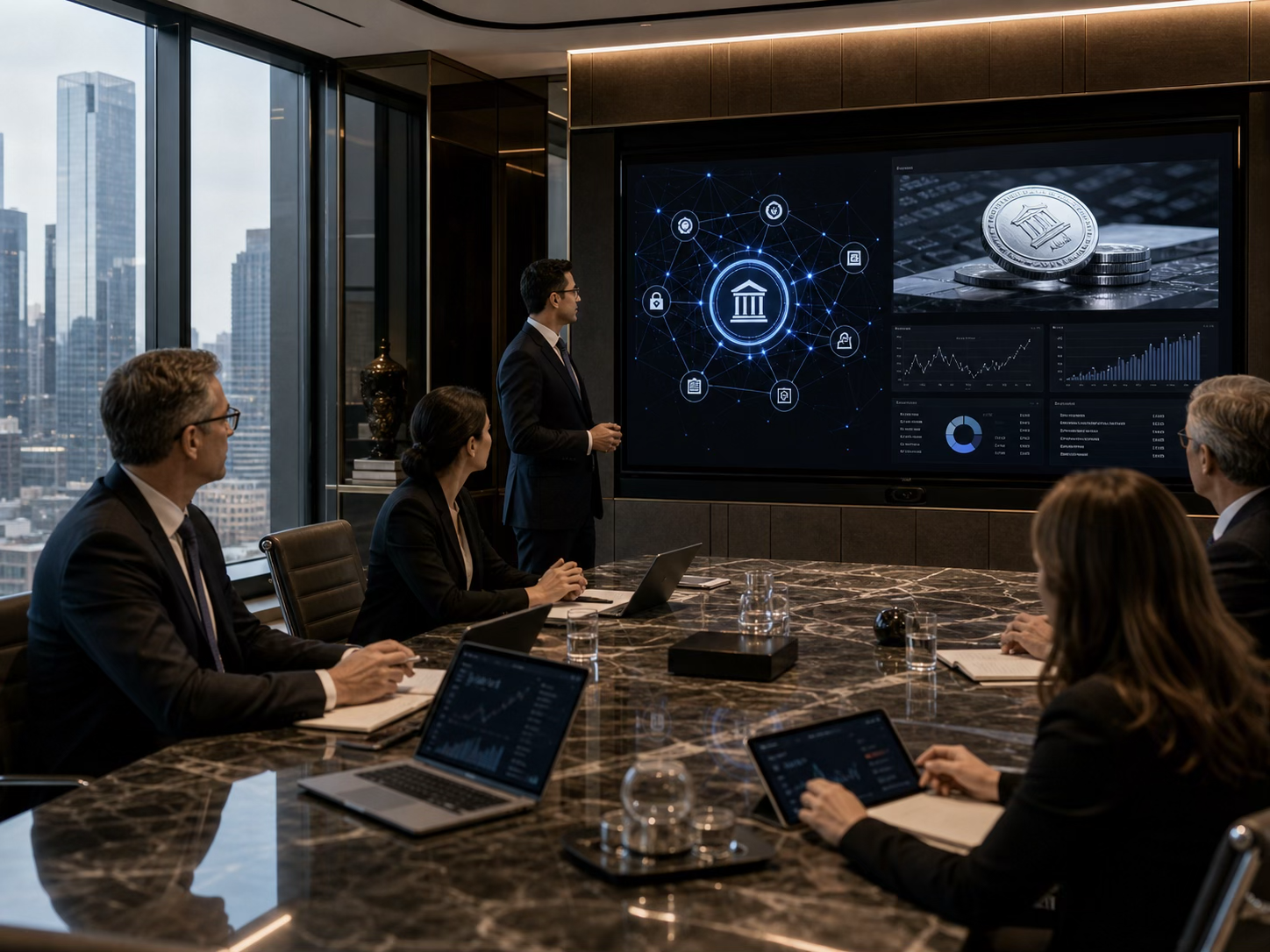
Securitize's competitive advantage lies not in the technology itself, but in the combined cost and regulatory barriers created by its technology and institutional framework. This barrier isn't built with money, but with time, accumulated compliance experience, and regulatory trust. Its replication is far more difficult than simply creating a set of code.  (Image caption) The digital securities platform is simultaneously processing asset registration, investor qualification verification, compliance checks, and transfer records. This is the core of the Securitize path: the token is not a new right itself, but a new type of recording and circulation interface for existing financial rights.
BlackRock BUIDL: A landmark test of institutional trust. If Securitize's institutional framework is a static foundation, then the partnership with BlackRock BUIDL is the first time this framework has been truly tested in the institutional market.
In March 2024, BlackRock launched the BlackRock USD Institutional Digital Liquidity Fund, or BUIDL, positioning it as its first tokenized fund issued on the public blockchain Ethereum. This was a historic moment in itself: the world's largest asset management company proactively chose to issue an institutional-grade fund product on a public blockchain.
BUIDL's design logic deliberately avoids the speculative aspects of the crypto market. It's closer to institutional-grade cash management products: the underlying assets are cash, short-term US Treasury bonds, and repurchase agreements; the token format serves for fund share recording, subscription, redemption, and on-chain holding arrangements. Its goal is not to pursue excess returns, but to provide traditional institutional liquidity management tools with a more efficient on-chain recording and circulation interface.
Within this architecture, Securitize's role deserves close examination. It is not merely a peripheral technology provider for BlackRock, but rather an infrastructure service provider deeply embedded within the fund's institutional framework, handling the entire process related to transfer agency, tokenization platform, distribution, and investor services. This means that Securitize's value extends beyond simply "putting assets on the blockchain," becoming an institutional interface between traditional asset management institutions and on-chain recording systems.
The deeper significance of this collaboration lies not in the numbers themselves, but in the institutional judgment it represents: BlackRock chose Securitize not because it was the cheapest or the fastest, but because it has licenses, a compliance structure, transfer agent qualifications, SEC registration records, and the ability to assume corresponding legal responsibilities in a regulated environment.
This is precisely what sets Carlos Domingo apart from many crypto entrepreneurs.
He wasn't saying "finance doesn't need regulation." He was saying that regulated finance can rewrite some of its processes using new infrastructure.
This distinction is very important.
From Private Companies to Public Markets: The Public Test of Institutional Migration. Private companies can choose their own narrative pace. Public markets do not.
In October 2025, Securitize announced a business combination agreement with Cantor Equity Partners II, aiming to go public via a SPAC. SEC filings show that the two companies signed a Business Combination Agreement on October 27, 2025. Upon completion of the transaction, the merged company is expected to become a publicly traded company with the ticker symbol SECZ, subject to regulatory approval, shareholder approval, and other customary closing conditions. Securitize's official announcement stated that the transaction values it at $1.25 billion; its investors include BlackRock, ARK Invest, Morgan Stanley, and Banco Santander.
This path to listing carries strong symbolic significance.
A company whose main business is asset tokenization is attempting to enter the public market, subjecting itself to public pricing by the capital market, SEC filing review, financial disclosure, and institutional investor evaluation. This means that RWA is no longer just a private project, an on-chain protocol, or a startup narrative, but is entering a new phase where it must prove itself with publicly available financial figures.
This new phase is brutal. In the private market, you can convince investors with a vision; in the public market, you must convince the market with quarterly revenue, gross profit structure, customer retention, and regulatory compliance records. The flexibility of narratives has shrunk dramatically, while the persuasive power of numbers has been amplified infinitely.
This brings a more fundamental question to the forefront: If a company claims to be RWA infrastructure, how should the market value it? Should it look at its AUM? Transaction volume? License portfolio? The depth of its partnerships with institutions like BlackRock, KKR, Apollo, Hamilton Lane, and VanEck? Or should it look at the degree of institutional integration it will have in future capital market recording, settlement, transfer, and compliance processes?
This isn't just a matter of securitization. It's a valuation language construction issue that the entire RWA industry must confront when entering the public market. The industry doesn't yet have a mature analytical framework to answer it.
The essential wording must be retained: as of the date of this verification, this business merger remains a proposed transaction, and its completion, listing arrangements, and SECZ code are all contingent upon the fulfillment of relevant conditions. GFM records this fact faithfully and makes no inferences beyond those stated in the publicly available documents.
 (Image caption) RWA’s real breakthrough is not market sentiment, but rather that large asset management institutions have begun to incorporate on-chain records into their fund operation processes.
NYSE and Computershare: The Interface Moment Between Traditional Markets and On-Chain Securities. If BlackRock BUIDL marked RWA's entry into the institutional asset management context, then the two nodes, NYSE and Computershare, enabled Securitize to begin touching the core infrastructure layer of the public securities market.
In March 2026, Intercontinental Exchange, the parent company of the NYSE, announced that the NYSE and Securitize had signed an MOU to collaborate on supporting tokenized securities and developing a digital transfer agent program. Reuters reported that Securitize would become the first authorized digital transfer agent to create blockchain securities for corporations and ETF issuers, and would work with the NYSE to develop regulatory, operational, and technical standards for digital transfer agents and tokenization agents.
The significance of this milestone lies in the fact that Securitization is no longer merely experimenting on the fringes of the private market, but has begun to enter the process of setting infrastructure standards for the public stock market. Those who set the standards often ultimately become the gatekeepers of the market.
In April 2026, Securitize announced a partnership with Computershare to support US companies issuing equity securities in a tokenized form. Computershare will act as a transfer agent for both traditional and tokenized assets and handle a full range of shareholder services, including dividends and proxy voting.
Computershare's identity is crucial. It's not a crypto-native company, but rather a widely used transfer agent in traditional financial markets, serving the shareholder register management of numerous US-listed companies. Its emergence signifies that Securitize's on-chain tools are directly connecting with the existing client base of traditional equity infrastructure, rather than creating a parallel system from scratch.
The institutional implications of this node are clear: the token is not a new right itself, but a new way of recording existing rights; the on-chain system does not replace traditional registration, but adds a traceable, programmable, and efficient digital interface to the existing registration framework.
The combination of NYSE and Computershare outlines the ultimate direction of Domingo's path: blockchain is not about creating a new world parallel to traditional finance, but about becoming an efficiency layer within the infrastructure of traditional financial markets, embedded in it rather than replacing it.
If the early vision of the crypto world was "escaping the financial system," then the new phase represented by Domingo is "reconstructing interfaces within the financial system."
This is a more difficult project, and also a more enduring one.
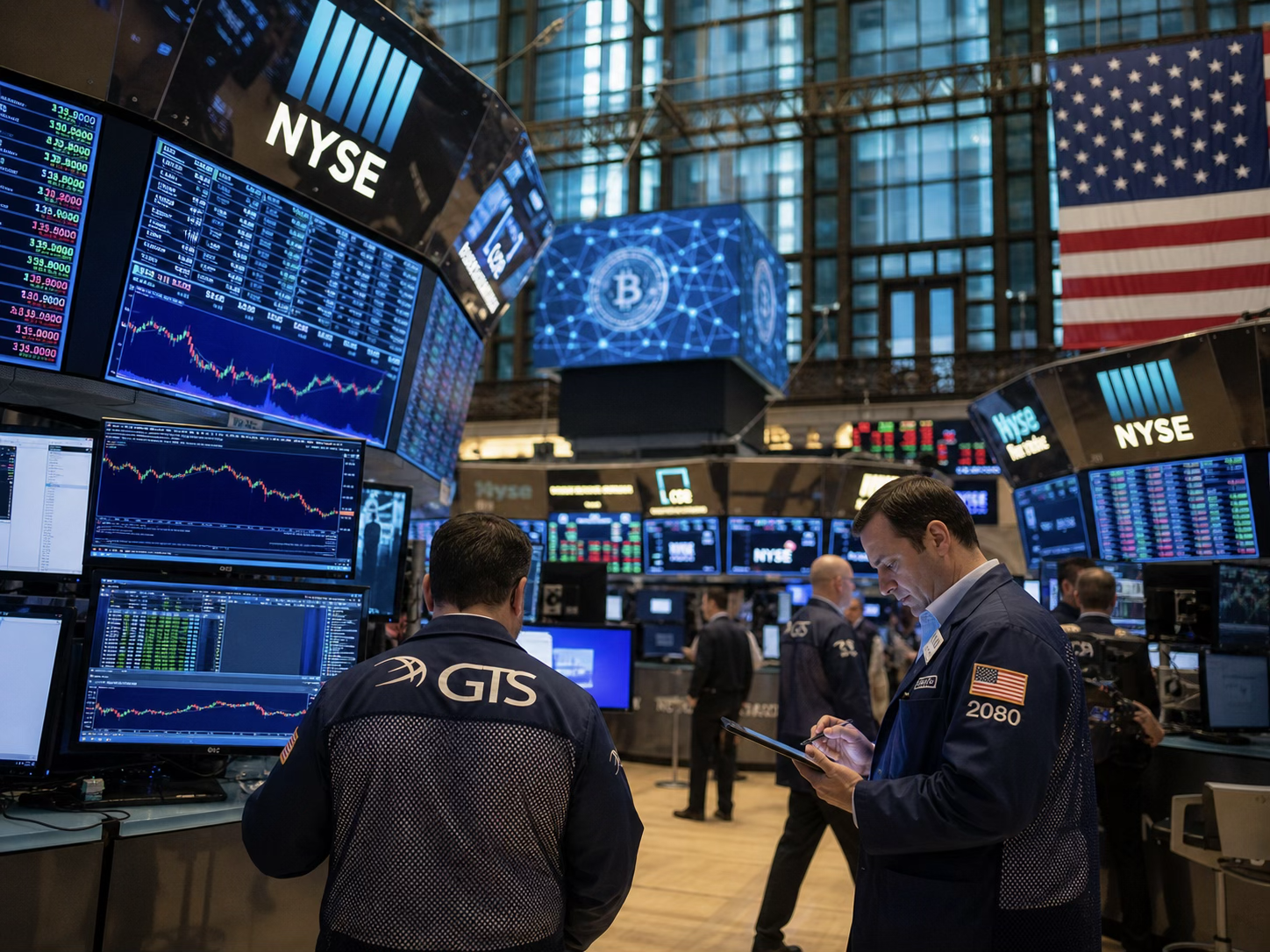 (Image caption) When RWA moves from the private market to exchanges, transfer agents and listed company equity registration systems, it will no longer face just technical issues, but the challenges of pricing, disclosure and compliance in the public market.
What he truly rewrote was not assets, but the grammar of assets.
Carlos Domingo's historical significance does not lie in his invention of tokenization.
Tokenization is not an invention of one person, nor is it a concept exclusive to one company. It is a technological direction that has been tried by countless people in countless ways over the past decade. Most of these attempts ultimately remain within the price cycle of cryptocurrencies, becoming the fuel and debris of round after round of market sentiment.
Domingo's value lies in reintegrating tokenization into the grammatical framework of the financial system, rather than letting it continue to drift in lawless territory.
In his approach, tokens are not tools for evading regulation, but rather a new way of recording financial assets; blockchain is not an anti-financial banner, but an efficiency layer of financial infrastructure; RWA is not a packaging term for market sentiment, but a new procedural grammar composed of rights, documents, qualifications, restrictions, transfers, custody, and transactions. This grammar gives an "asset" a complete sentence structure in the market: the subject is the issuing entity, the predicate is the transfer agent, the object is the registered investor, and the adverbial is the regulatory framework and compliance obligations.
Establishing this kind of grammar requires not speed, but patience in building up systems. It requires obtaining licenses first, then discussing business; establishing a compliance framework first, then discussing efficiency; assuming regulatory obligations first, then discussing scale; gaining the trust of institutions first, then discussing disruption.
This is not a path that all entrepreneurs are willing to take.
But it is likely the path that will be more able to weather economic cycles in the RWA industry.
 (Image caption) The importance of Carlos Domingo lies in the fact that he is not bypassing this system, but trying to make blockchain an efficient layer for shareholder registers, rights records and asset transfers.
Before anything is put on the blockchain, the rules must be in place first.
The most common misconception about RWA is that "on-chain" is seen as magic.
It seems that simply putting a name, a picture, a document, or a story on the blockchain automatically endows it with the attributes of a financial asset, automatically grants it a liquidity premium, and automatically brings it to the attention of institutional investors. This misconception creates a new bubble in every market cycle, only to burst in the same way.
But Carlos Domingo’s entire career path is the clearest and most convincing rebuttal to this misconception.
Before assets can be put on the blockchain, there must first be assets.
Before assets can be traded, rights must first be held.
Before rights can be recorded, there must be documentation.
A document must have a legal entity before it can be valid.
Before market transactions can take place, there must be regulatory boundaries.
Before technical efficiency, there must be a responsibility structure.
These six "priorities" are not conservatism or bureaucracy, but rather a collective protection mechanism that the financial system has accumulated through centuries of trial and error—protecting investors, protecting the market, and protecting the builders themselves from being devoured by their own narratives.
Domingo chose not to bypass them, but rather to integrate them one by one into its infrastructure, making them a moat rather than an obstacle. This made Securitize slower than most RWA projects, but also more stable.
For GFM, Carlos Domingo's story is not just a business case, but a methodological demonstration of institutional building. In an era of AI-generated content proliferation, the rise of RWA narratives, and the creator economy seeking new pricing methods, what is truly worth building is not yet another "on-chain story," but a set of institutional infrastructure that allows content, people, rights, data, and trust to be recorded in the long term.
He is not someone who stands outside of finance and shouts slogans.
He's someone who rewrites the interfaces within the financial industry.
This position is difficult to attain in any era, and it is also very important.
Disclaimer: This article is a research piece in GFM's "People" series, based on publicly available information, SEC documents, congressional hearing transcripts, and verified press releases. This article does not constitute investment advice or any recommendation to buy or sell securities. Copyright belongs to GFM; unauthorized reproduction or commercial use is prohibited.